
Best Open Source products of the year 2026
Explore the most innovative and popular open source products that captured the community's attention during year. These rankings help builders compare standout launches, understand what each product does, and discover practical tools shaping the future of technology.
Period
Yearly ranking
Published for
2026
Selection
10 ranked products
Ranked list
Community-backed open source picks
Each product profile includes the launch story, visual preview, and direct product link so readers can move from discovery to evaluation quickly.
01
Shadcn Space – Overview Shadcn Space is a comprehensive platform offering an extensive collection of beautifully designed, accessible, and composable UI blocks, components, and templates specifically tailored for React and Next.js applications. It aims to significantly accelerate UI development by providing production-ready patterns that can be easily integrated into modern web projects. The platform supports both free, open-source resources and premium offerings, catering to a wide range of development needs from individual projects to large-scale commercial applications. Key Features and Technical Stack The core philosophy of Shadcn Space revolves around a developer-first system, emphasizing predictable structure, reusable patterns, and full code ownership. This ensures that developers can extend and maintain interfaces across evolving products with confidence. The platform is built to integrate cleanly into modern React-based applications, leveraging TypeScript, Tailwind CSS with CVA, and shadcn/ui patterns, without imposing rigid framework or tooling structures. Key highlights of Shadcn Space include: Shadcn Components Library - Access a growing collection of beautifully crafted, fully customizable components built with shadcn/ui and Tailwind CSS. Premium & Free Shadcn Blocks - Explore production-ready UI blocks designed for real-world projects. Fully responsive, easy to customize, and optimized f or dark mode. Shadcn Templates - Start with free open-source templates or upgrade to premium templates for advanced layouts and production-level design. MCP Server - Works with AI Coding Tools and Editors, VS Code, Claude, etc. Registry-First CLI Installation - Install components quickly using a quick CLI command. Figma Kit - Built with consistency in mind. Components follow modern design standards and work perfectly within structured design systems. Shadcn Dashboard - Pre Built Shadcn Admin Dashboard with Built-in AI Prompts for Faster Development. Shadcn Form Builder - Generate Shadcn forms better than any LLM Model. Developer-First Experience - Copy, paste, and ship. Clean code structure, scalable patterns, and seamless integration into your existing React projects. Design System Ready - Built with consistency in mind. Components follow modern design standards and work perfectly within structured design systems. Open-Source Friendly - Built around community-driven principles, making it easy to adapt, extend, and contribute. Rapid Prototyping - Quickly turn ideas into polished interfaces using pre-built UI sections and layout blocks. Smooth Animations - Enhance user experience with elegant motion and interactive states while keeping performance in focus. Shadcn Space is recognized within the Shadcn community for its quality and utility, with numerous testimonials from developers praising its ability to streamline workflows and accelerate product delivery. Whether you're building a marketing site, a SaaS dashboard, or a complex web application, Shadcn Space provides the tools to create exceptional UIs efficiently.
02

Sipcode provides essential context hygiene for Claude Code by limiting verbose tool output and removing redundant information from sessions. This allows the model to focus on the actual signal rather than getting lost in noise, which has been shown to improve quality by 29 percent. It is an efficient, MIT-licensed solution that has demonstrated a median tool-output savings of over 60 percent on complex benchmarks.
03
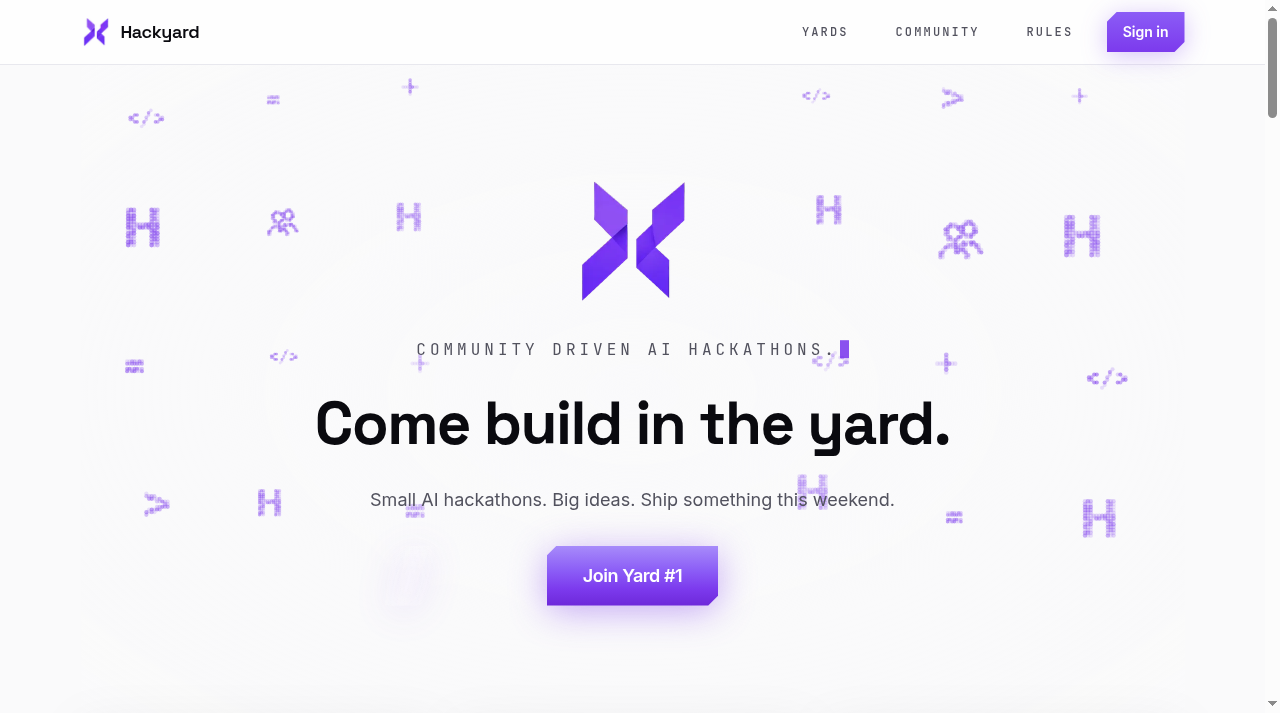
Hackyard hosts intimate, theme-based hackathons designed for solo developers. With participant caps between 20 and 100, every project gets the attention it deserves. Participants have one weekend to build, ship, and vote, fostering a scrappy and creative environment where shipping matters more than polish.
04


DevSpin is a random tech topic generator built to fuel a daily learning habit. Hit spin, get a topic pulled from a bank of a few thousand entries spanning frontend, backend, databases, infra, security, distributed systems, AI, and more. Check if you actually know it, and if not, go learn it, maybe write about it after. No login, no tracking, no history. Every spin is fully random. It's open source, so if you want to add topics or improve it, PRs are welcome.
05


Agent Island is a free, open-source status companion for Claude Code and Codex on macOS and Windows. It shows live session states and your-turn alerts so developers can step away from long-running coding-agent work and return when attention is needed. Session data is read locally; Agent Island does not require a product account and does not upload session data as product telemetry.
06

Hush is designed to clean up your audio environment by removing background noise, competing voices, and other interference during real-time calls. It ensures that your voice AI agents can hear exactly what matters without the distraction of ambient sounds. This leads to much clearer interactions and more reliable performance for your AI-driven communication tools.
07

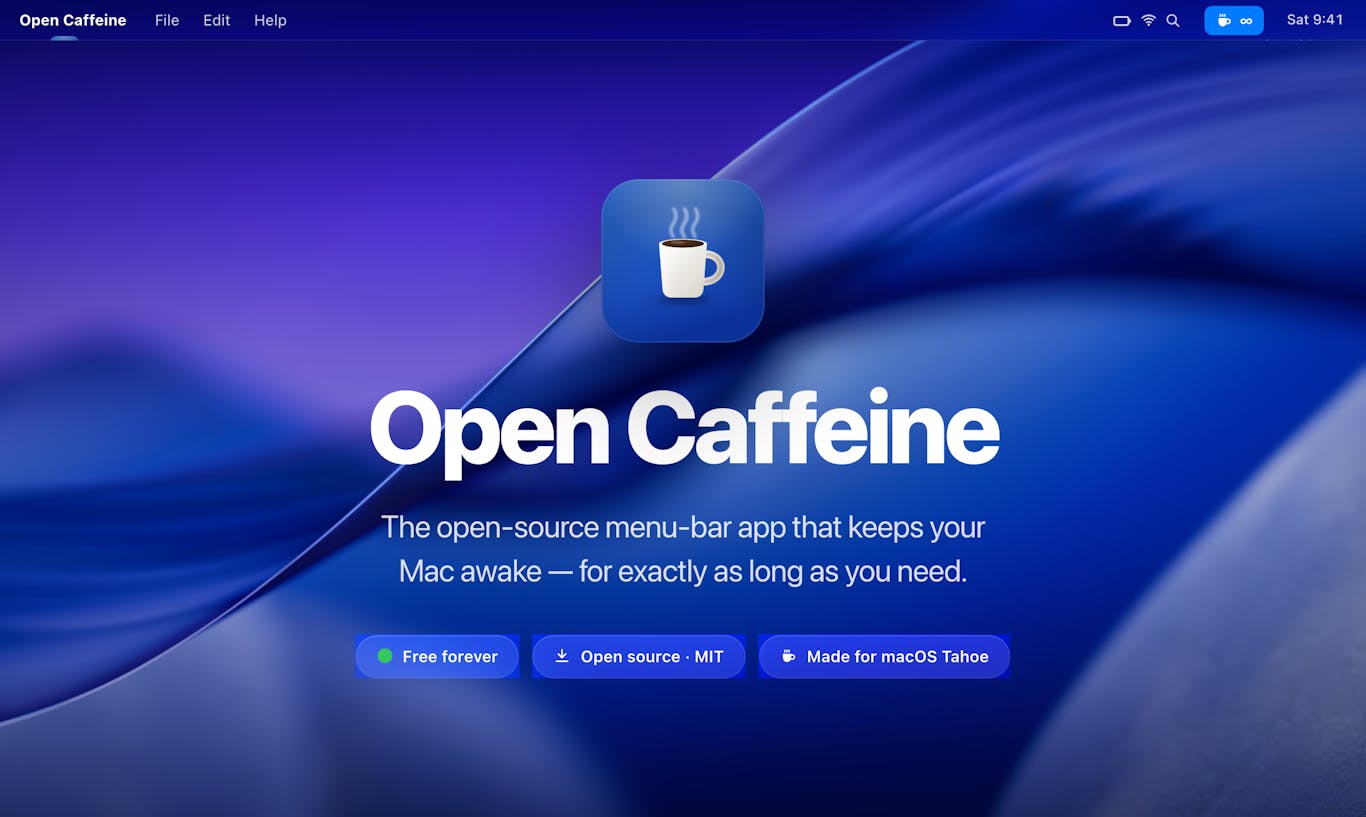
Open Caffeine is a native macOS menu bar application designed to keep your Mac awake for a specific duration you choose. It offers convenient presets, allows you to set a custom timer, and provides options to toggle screen sleep behavior. You can also use a global hotkey for quick access, display a countdown directly in your menu bar, and have it automatically stop when your battery reaches a low threshold. This open-source, Apple Silicon native utility is built for users who desire a simple, modern Caffeine-style tool without any unnecessary marketing or extra menu items.
08

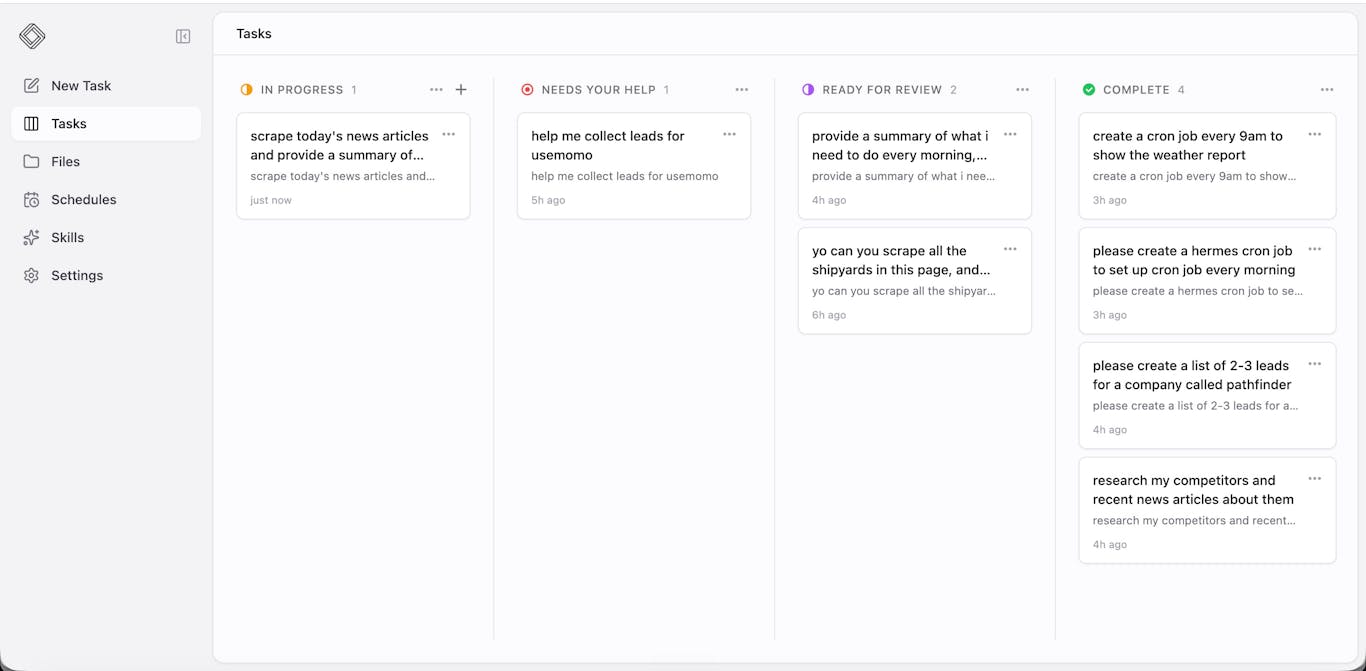
While your Hermes Agent excels at single tasks, managing multiple agents in parallel can quickly descend into chaos, leading to silently failing cron jobs, blocked tasks, and excessive time spent on troubleshooting rather than achieving results. Minions provides a powerful, unified task board to oversee all your agent operations with clarity and control. Each running task benefits from periodic check-ins, automatic retries when stuck, and intelligent escalation only after genuinely exhausting all alternatives. Currently compatible with Hermes Agent, Minions is continuously expanding its support to include more runtimes, ensuring robust and reliable multi-agent management for your complex workflows.
09

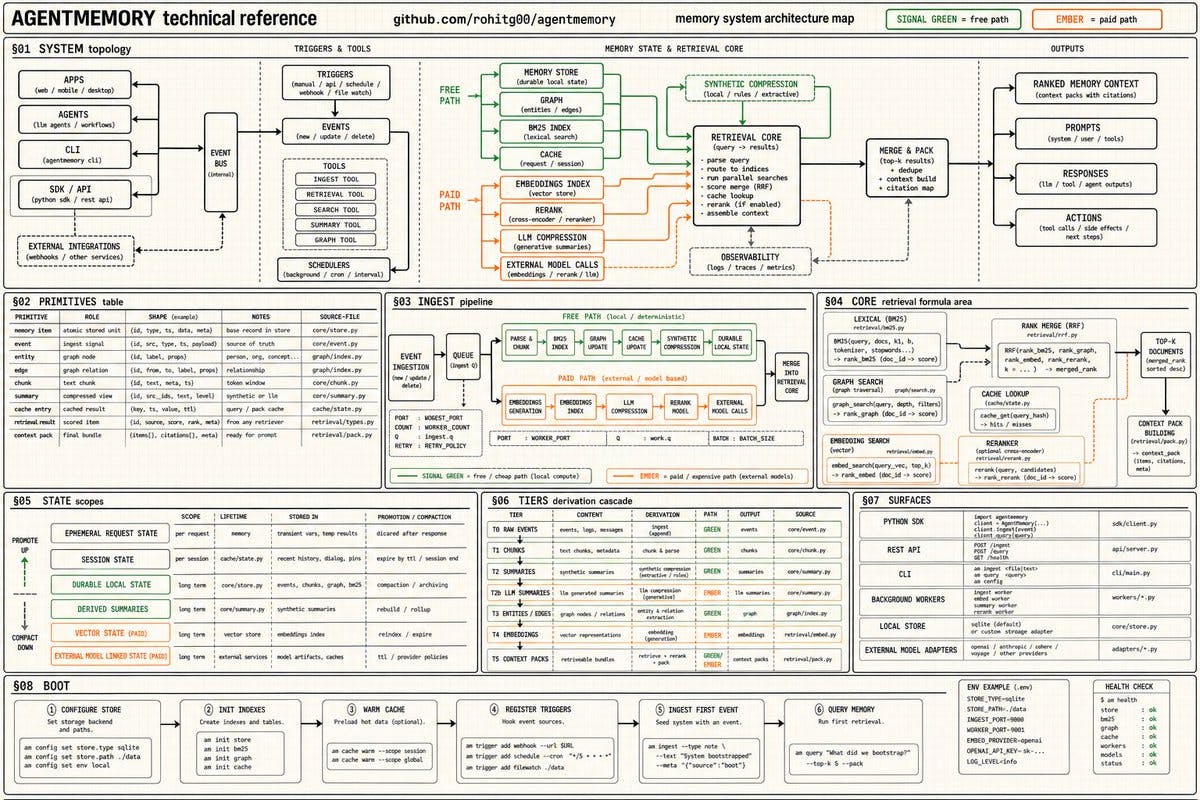
Unlock unprecedented capabilities for your AI agents by providing Hermes, Claude Code, and Codex with truly infinite memory. Agentmemory is rapidly gaining recognition, highlighted by its trending status on GitHub with over 5,000 stars, demonstrating its impact within the developer community. This innovative solution dramatically optimizes token usage; for instance, while a CLAUDE md dump might consume 22,000 tokens for 240 observations, Agentmemory achieves the same with only 1,900 tokens, representing a remarkable 92% reduction. Furthermore, as built-in memories become inefficient and invisible after just 1,000 observations, Agentmemory ensures 100% searchable and accessible memory retention. Benchmarked across 240 real coding sessions, it consistently delivers up to 95% fewer tokens per session, enables 200 times more tool calls before encountering context limits, and is proudly 100% open source, offering transparency and flexibility for advanced AI development.
10

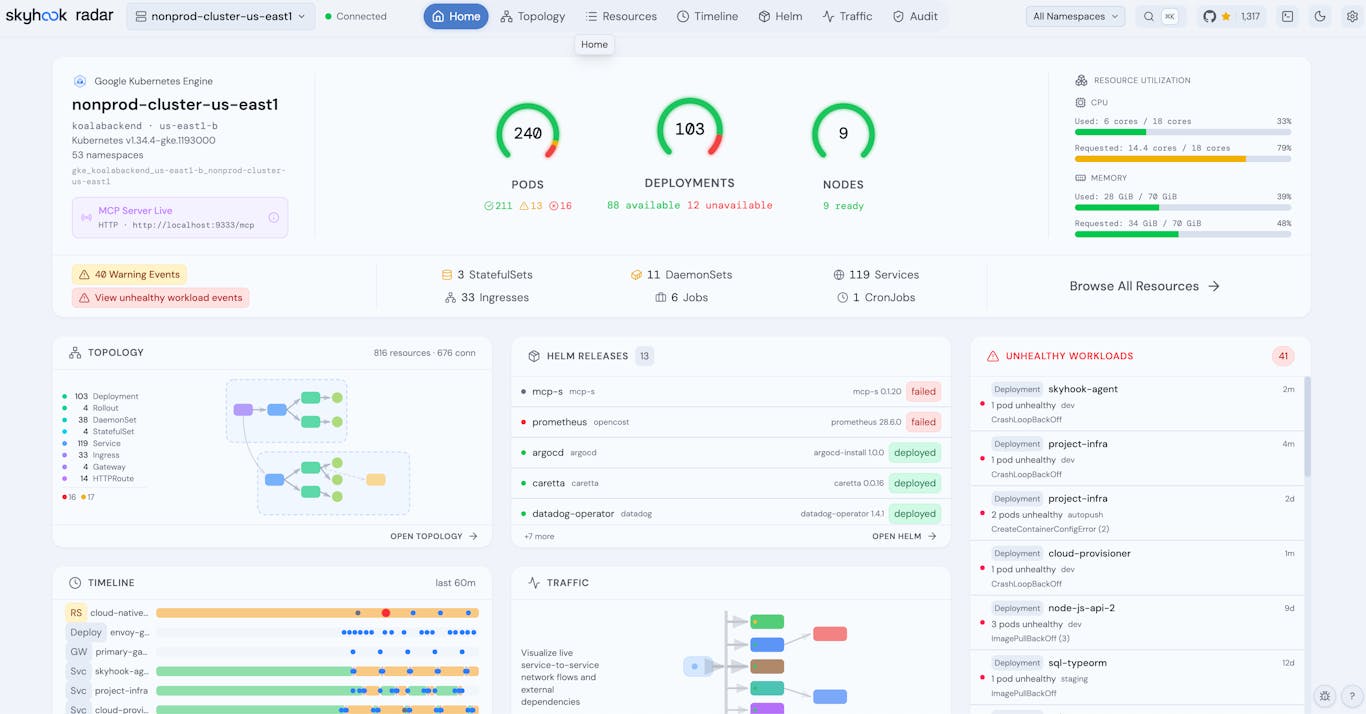
Radar consolidates your entire Kubernetes workflow into one exceptionally fast, open-source user interface. Gain unparalleled visibility with real-time topology mapping, resource utilization tracking, event monitoring, Helm chart management, and robust GitOps integration. It offers live traffic flow analysis, comprehensive security and best-practice checks, in-depth image filesystem inspection, and Multi-Cloud Protocol (MCP) support for seamless integration with AI agents. Deploy Radar effortlessly, either locally as a single binary or self-host it within your cluster with full RBAC and OIDC support, eliminating the need for external accounts, agents, or cloud dependencies. This powerful solution provides a complete operational overview for enhanced control and efficiency.