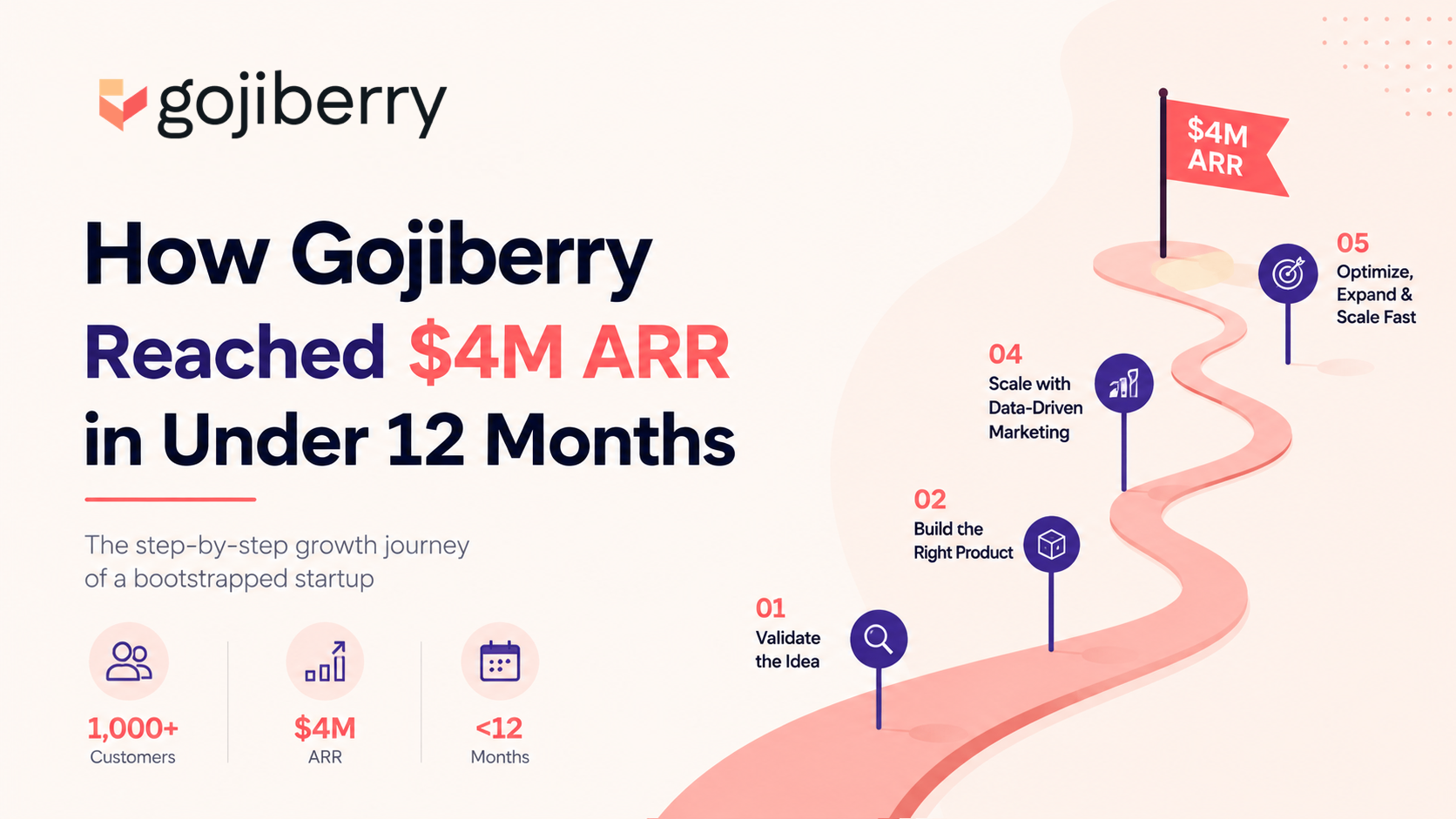
Can a three-person team really take a startup from zero to $4 million in annual recurring revenue in under a year, without a marketing department, without a funding round to lean on, and without paid ads for most of that journey?
Gojiberry AI did exactly that. The company builds AI agents that find, message, and book meetings with high-intent buyers, and it used almost none of the tricks most founders assume they need. No viral TikTok moment. No celebrity investor. No six-figure ad budget on day one. Just five growth stages, run one at a time, each one stacked on top of the last.
What makes this case study different from most "how we grew" threads is that Gojiberry AI's founders, led by CTO Dylan Txa and CEO Pierre-Eliott Lallemant, published the entire sequence publicly. That means every founder, developer, and marketer reading this can copy the exact order of operations instead of guessing at it.
This post breaks the growth story down into the five stages that actually built the revenue, and for each one, it explains how you can automate that same stage today using the AI and outbound tools available right now, so a solo founder or a small team can run this playbook without hiring a growth department first.
Key Takeaways
- Gojiberry grew from $0 to roughly $3.5 to $4 million in ARR in under 12 months, bootstrapped, before joining Y Combinator.
- Growth happened in five sequential stages, each mapped to a specific MRR milestone, and no earlier channel was ever abandoned once a new one was added.
- Stage 1 ran on cold outbound targeted only at buying-intent signals, not scraped lists, and produced 25 to 40 percent reply rates.
- Every stage of this playbook can now be automated with tools like Apollo.io, Clay, Instantly, PhantomBuster, and AI prospecting agents, which is the part most "growth story" posts leave out.
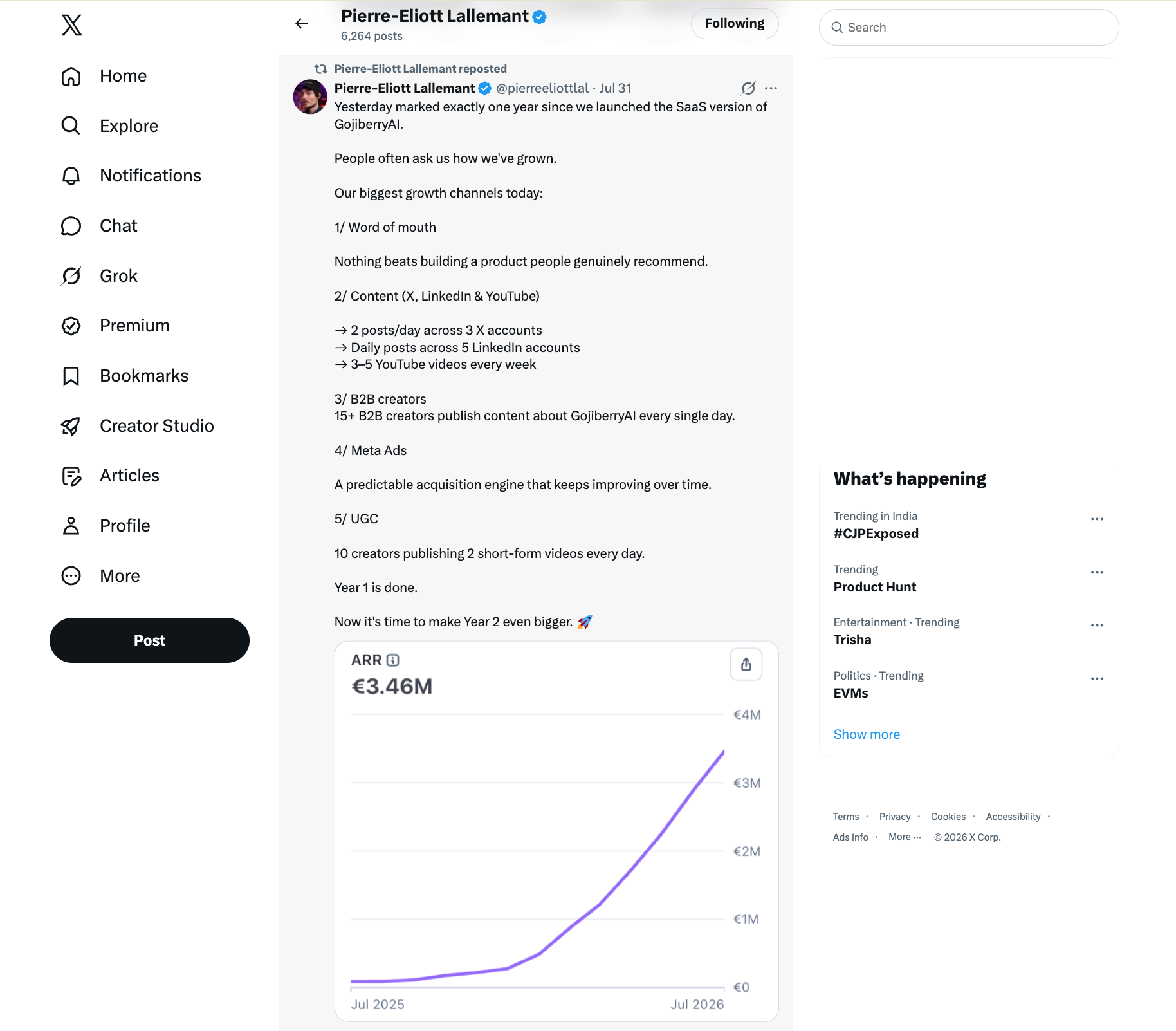
- The company launched in early 2025, crossed $1 million ARR in about 9 months, and reached roughly $3.5 to $4 million ARR and $300,000 MRR by month 11 or 12.
Gojiberry builds AI agents that automate the unglamorous parts of sales: researching leads, writing outreach messages, following up, and booking meetings. In practice, it does for its customers exactly what its own founders did manually in the early days, which is probably why the product resonates so well with the audience it sells to.
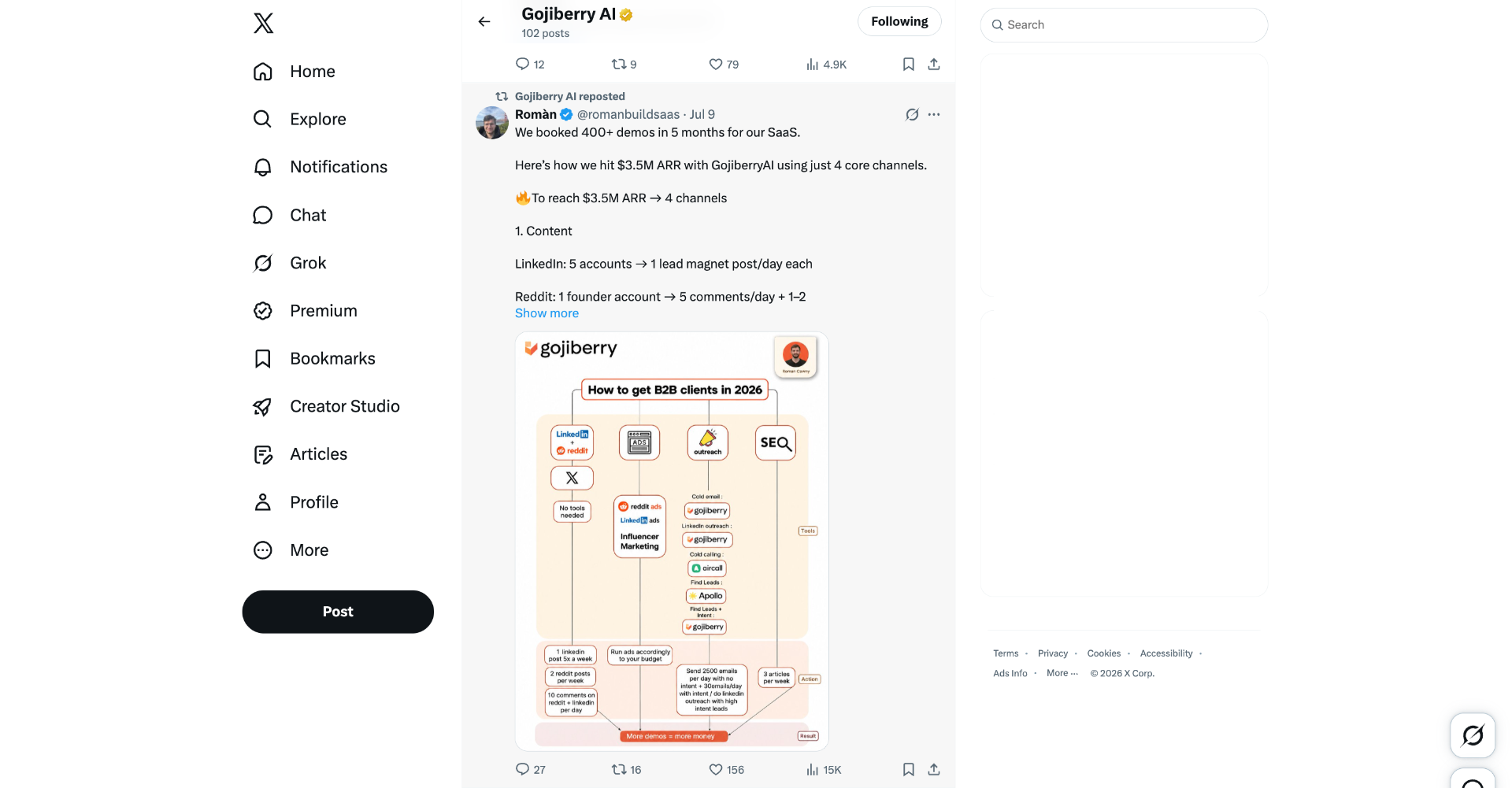
The company was founded in early 2025 by Dylan Txa, Pierre-Eliott Lallemant, and Romàn Czerny. It started the way most bootstrapped B2B tools do, with the founders using their own early product to land their first customers before pitching it to anyone else. Gojiberry publicly launched on Product Hunt in the months that followed, and within roughly nine months of starting, it had already crossed $1 million in ARR, fully bootstrapped and without outside funding. Growth accelerated from there. By month 11, the company was reporting close to $3.5 million in ARR, and it crossed $300,000 in MRR and roughly $4 million in ARR shortly after, which is around the point the team joined Y Combinator.
Pricing sits around $97 to $99 per month with a free trial, and the company now serves between 2,000 and 2,800 paying customers out of more than 5,000 businesses that have used the platform. None of that came from a single viral moment. It came from five stages, run in order, each one automated a little more than the last.
Gojiberry's revenue did not grow in a straight line pulled by five channels running at once. It grew in steps, where a single channel was pushed until it clearly worked, and only then did a second channel get added on top. This section walks through each stage the way it actually happened, followed by how a founder in 2026 can automate that exact stage instead of doing it by hand the way Gojiberry originally did.
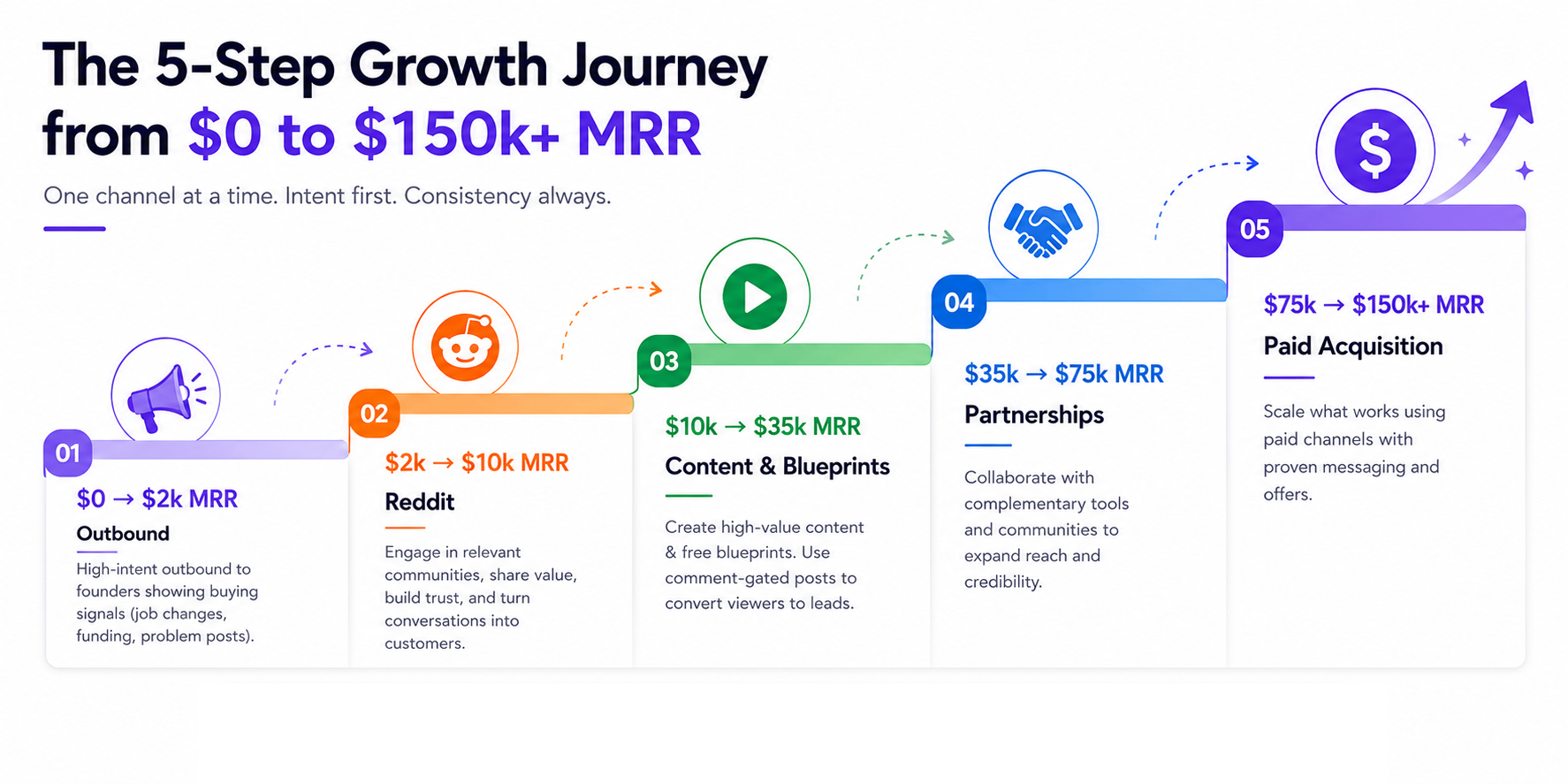
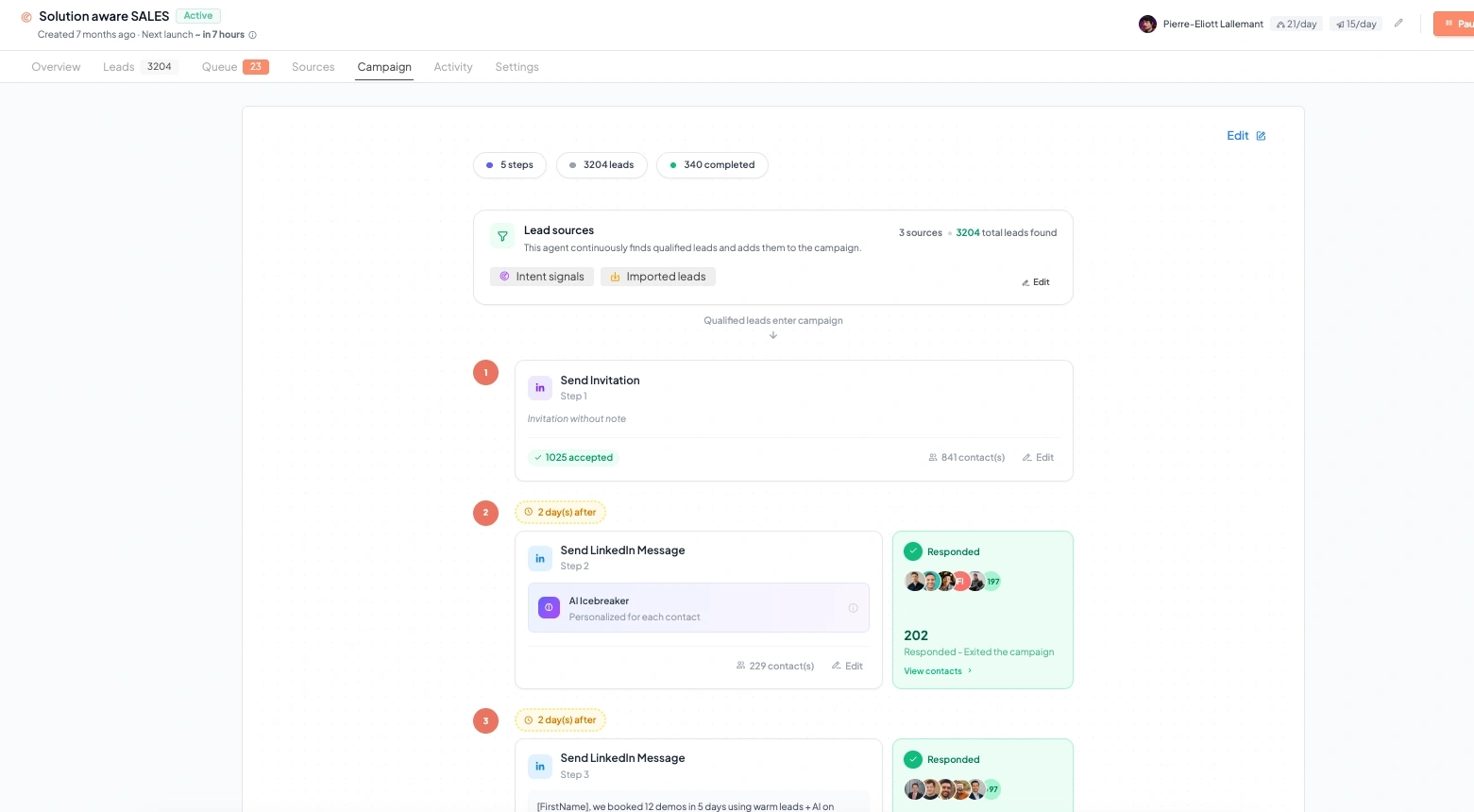
At this stage, there is no brand, no case studies, and no audience to lean on. The only lever available is direct outreach aimed at people who are already showing buying intent, which is why the team ran cold email and LinkedIn messages by hand, using their own early product on themselves before selling it to anyone else. There was no scraped list involved. Every prospect had shown a real signal first: a recent job change, a funding announcement, engagement with a competitor's content, or a public post describing the exact problem Gojiberry solves. That discipline is what produced a 25 to 40 percent reply rate, compared with the 1 to 2 percent typical of a cold, generic list.
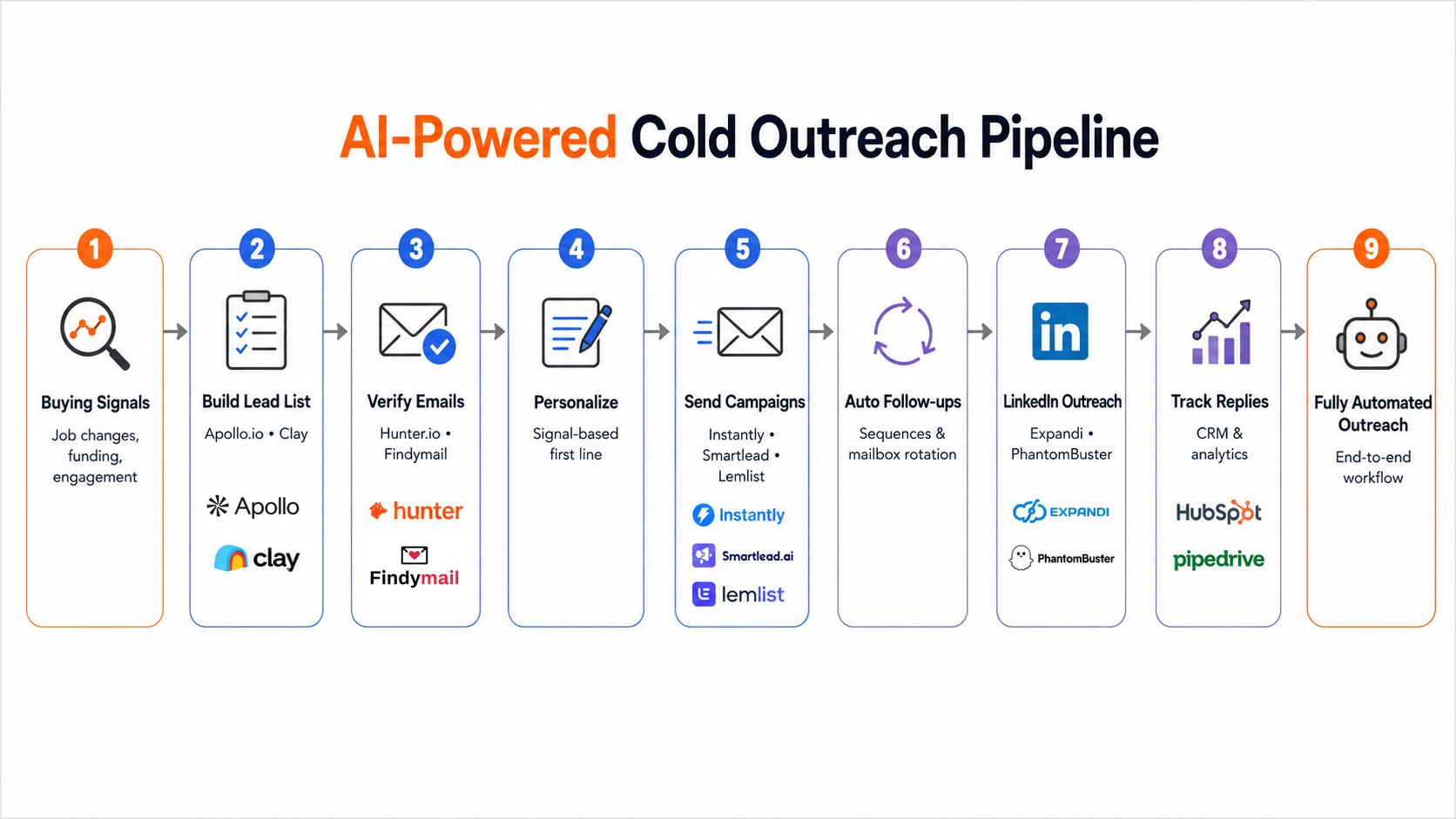
How to automate this stage today. The manual version of Stage 1 is what most founders picture when they hear "cold outreach," but almost none of it needs to be manual anymore. A tool like Apollo.io or Clay can build the same intent-based list that Gojiberry built by hand, filtering for job changes, funding rounds, and content engagement rather than just company size and industry. Hunter.io or Findymail then verifies the email address so the domain does not get flagged as spam. Once the list exists, Instantly.ai, Smartlead, or Lemlist can run the actual sending sequence, rotating across warmed-up mailboxes and handling follow-ups automatically. At the same time, the first line of every email stays personalized to the specific signal that got the prospect on the list in the first place. On LinkedIn, tools like Expandi or PhantomBuster handle the connection requests and follow-up messages once a working message has been tested manually. The entire loop, from finding a signal to sending a personalized message to logging a reply, is now close to what Gojiberry AIs own product automates for its customers.
Once outbound was working, the constraint shifted from message quality to volume, and Reddit solved that without any media spend. The team posted educational breakdowns inside SaaS-focused subreddits instead of anything that looked like an ad, and those posts generated more than 10 million organic views over time. The traffic was lower intent than outbound, but it was high volume and nearly free, and it flooded the trial funnel at a stage when volume mattered more than precision. The posts that performed best were the ones that read like a founder genuinely explaining a process, with the product mentioned briefly at the end rather than in the headline.
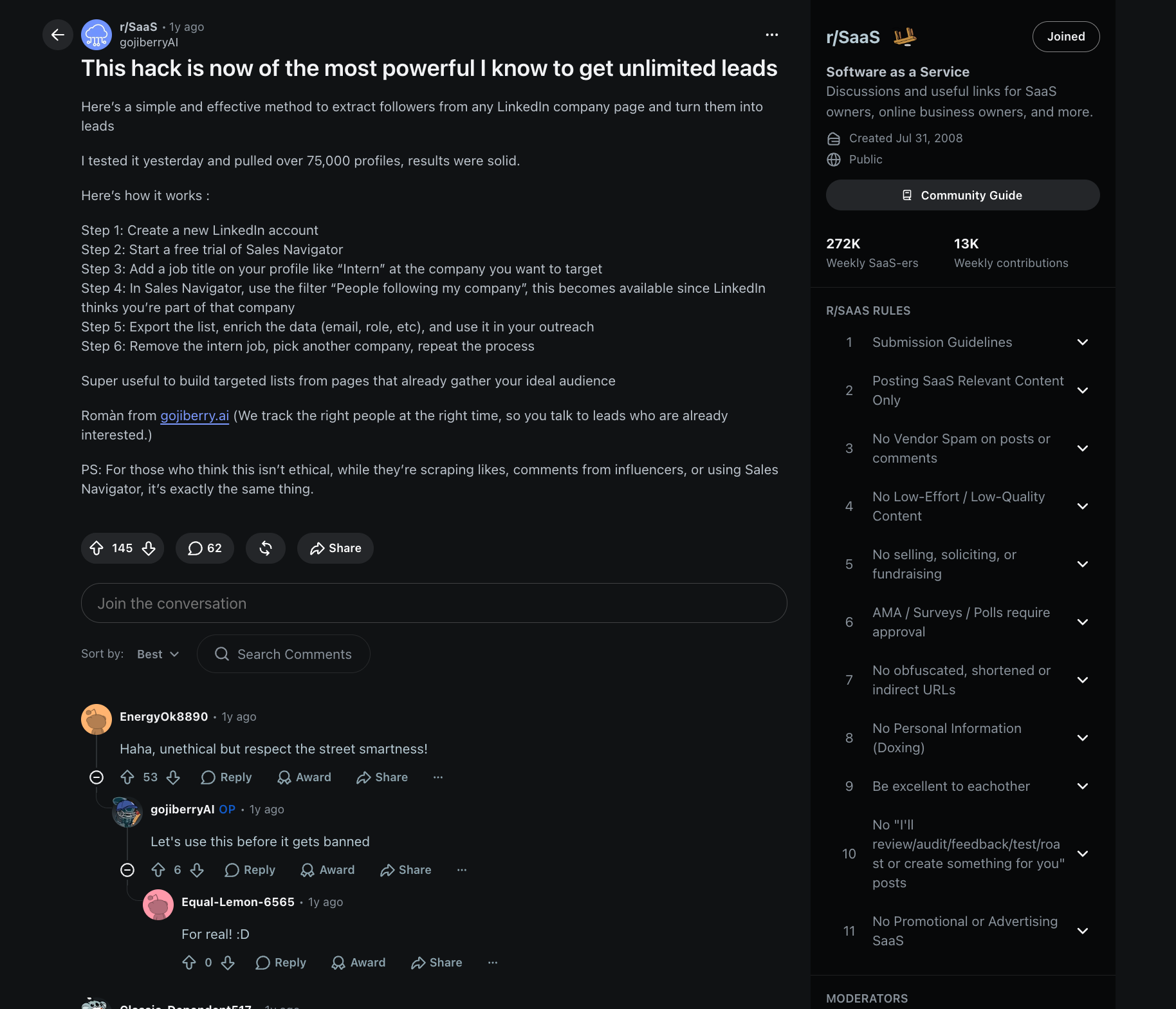
How to automate this stage today. Reddit punishes anything that smells automated, so full automation is the wrong goal here. What can be systematized is the research and repurposing around it. A social listening tool or a simple Reddit search alert can flag new threads in relevant subreddits the moment someone asks a question your product answers, so a founder can reply while the thread is still active instead of finding it three days late. Writing tools like Claude or ChatGPT can help draft the first version of an educational post from a rough outline, which still needs a human pass to sound native to the subreddit before it goes live. Once a post performs well, that same content becomes the raw material for Stage 3, so the actual "automation" win here is having a repeatable process for spotting, drafting, and repurposing rather than automating the posting itself.
At this stage, Gojiberry shifted from one-off wins to a repeatable content engine. LinkedIn posts, YouTube videos, and motion-design clips became the primary growth channel, and instead of gating any of it behind a sales call, the team gave away their internal processes as free blueprints. Content built reach, the blueprints built trust, and trust is what turned a reader into a trial signup without a founder ever getting on a call.
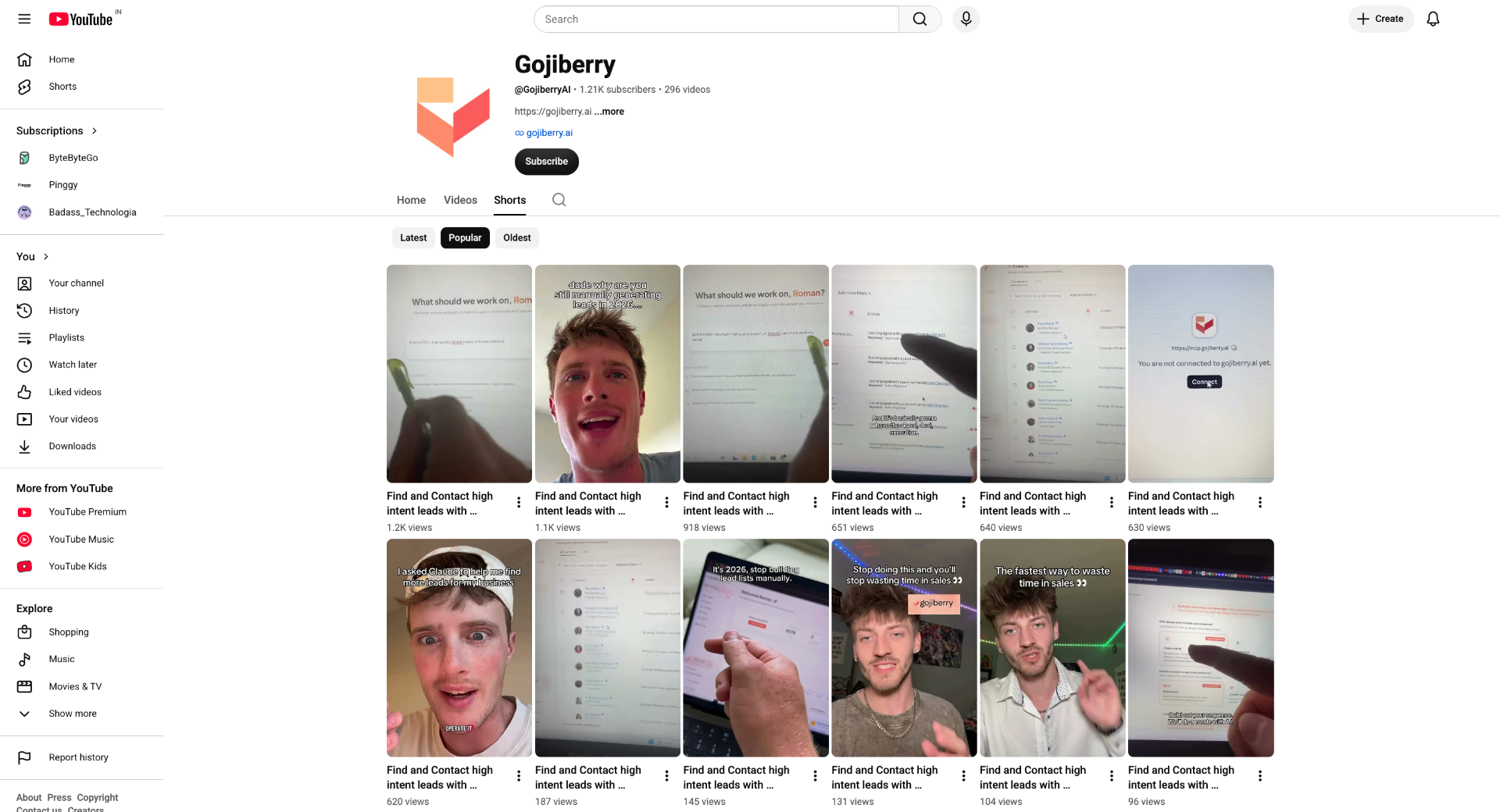
How to automate this stage today. Producing three content formats in parallel used to require a small team, and now it mostly requires a repeatable workflow. One core idea, usually the same idea that performed well on Reddit in Stage 2, gets turned into a long-form LinkedIn post, a script for a short video, and a one-page blueprint using a tool like Canva or Notion. AI writing tools can generate the first draft of each format from a single outline, which cuts production time from days to hours, while a tool like CapCut or Descript turns a script into a short motion-design clip without hiring an editor. The real unlock is treating every blueprint as reusable raw material: one well-made resource can be repackaged into a LinkedIn carousel, a YouTube walkthrough, and a Reddit answer, which is how a team of three produced enough content volume to compound without a dedicated content department.
With outbound, Reddit, and content already compounding, Gojiberry layered in partnerships. B2B influencers, sponsored newsletters, and a lifetime affiliate program brought in audiences the team had not built themselves, and this is also when the company joined Y Combinator, which sharpened execution speed across every other channel already running.
How to automate this stage today. A lifetime or recurring-commission affiliate program set up through Rewardful, FirstPromoter, or PartnerStack removes most of the manual tracking and payout work that used to make affiliate programs hard to run for a small team. Finding the right newsletters and creators to pitch is largely a research problem now, and a tool like Apollo or Clay can filter for newsletter operators and B2B creators the same way it filters for cold outbound prospects, based on audience relevance rather than raw follower count. The actual sponsorship pitch works best when it offers the free blueprint from Stage 3 as the sponsored content itself, since that performs better than a generic ad and costs nothing extra to produce.
By the time paid acquisition entered the mix, Gojiberry already had organic proof of what converted. Meta ads, Google ads, and influencer agencies scaled the message that had already worked for free, and the company's first serious hires across growth, sales, engineering, and product arrived once these channels were already producing revenue, not before.
How to automate this stage today. The safest starting point for a paid campaign is the best-performing organic post or video from Stage 3, since it has already been validated by a real audience at zero cost. Meta's own campaign tools can build a lookalike audience from existing paying customers rather than broad interest targeting, and a small daily budget, commonly around $1,000 a day to start, keeps the risk low while cost per trial and cost per paying customer are measured. Google Ads layered on high-intent search terms tends to convert faster than social traffic at this stage, since the person searching has already defined their own problem. Influencer agencies are brought in for scale rather than discovery, placing an already-proven message with more creators faster instead of guessing at a new one.
Most founders who try to copy a growth story like this one do not fail because the tactics do not work. They fail because they skip the discipline underneath the tactics. The most common mistake is running every channel at once from day one, on the theory that more activity means more results, when in reality it spreads a small team too thin to make any single channel work well enough to compound. A close second is buying a large, generic list and blasting it with cold email in the first week, which produces spam complaints and a damaged sending domain instead of customers, when a tight list of 100 genuinely high-intent prospects would have outperformed 5,000 cold names. On Reddit, the same impatience shows up as posting an identical promotional message across ten subreddits in a single day, which reads as spam to both moderators and the platform's own spam detection and can get an account banned across the entire site. On LinkedIn, founders often gate content behind a link instead of a comment keyword, not realizing that links quietly suppress reach on most platforms, which kills the visibility the content was created to earn. Further along, many teams launch paid ads with brand-new, unproven creative instead of scaling the organic post that already worked, which turns paid acquisition into an expensive way to discover what does not resonate, instead of an amplifier for something that already does. Every one of these mistakes comes from skipping a stage instead of finishing it.
Gojiberry's path from zero to roughly $4 million in ARR was not built on a viral moment or a lucky break. It was built on five stages, run one at a time, each one automated a little more than the last as the tools available caught up with what the founders were already doing by hand. Each stage mapped to a specific revenue milestone, and none of the earlier channels were ever thrown away once a new one started working.
For developers thinking about a side project, for solo founders trying to land their first paying customers, for business owners deciding where to spend their next marketing dollar, and for anyone working in SEO or content who wants to understand how organic growth actually compounds into revenue, this case study offers something rare: a growth story with the exact steps left in, along with the tools that make each step realistic to run in 2026. What remains is deciding which stage matches where the business is right now, and having the patience to automate and dominate it before adding the next.