
Blogs in link-building
stay updated with the latest news, insights, and guides on link-building from ProductWatch.
15 Best Backlink Marketplaces and Link Building Platforms in 2026
Building backlinks is still one of the most time-consuming parts of SEO. For SaaS founders, developers, indie hackers, agencies, and businesses, the difficult part is usually not knowing that backlinks matter. The difficult part is finding relevant websites, checking their traffic and authority, negotiating with publishers, creating content, following up, and tracking whether the placement actually went live. Backlink marketplaces simplify much of that process. Instead of finding every publisher manually, you can search a database of websites, compare metrics, choose a placement, and manage the order from one platform. However, not every backlink marketplace works the same way. Some focus on self-serve guest posts, some specialize in editorial outreach, some are designed for link exchanges, while others combine backlinks with digital PR, content creation, AI visibility, or managed SEO services. > Important: A backlink marketplace should not be treated as a shortcut to spam links. Google recommends focusing on helpful content and avoiding link schemes designed primarily to manipulate rankings. Relevance, editorial quality, traffic, and the actual value of the referring website matter more than simply collecting a large number of backlinks. For this comparison, the platforms were evaluated based on publisher selection, website metrics, topical relevance, link insertion options, guest posting, content support, transparency, campaign management, international coverage, and usefulness for SaaS founders and businesses. The ranking is based on the overall usefulness of the platform, not simply the number of websites listed. > QUICK SUMMARY > > * INSERT.LINK: A strong all-around marketplace for finding relevant pages, guest posts, link insertions, listicles, and PR placements, with page-level search and API/MCP capabilities for teams that want to automate link-building workflows. > * SearchEye: A large marketplace focused on vetted publications, transparent pricing, publisher approval, and placements that can also support visibility across AI search engines. > * Linkhouse: A mature marketplace with 90,000+ portals, 25 languages, 60+ filters, link insertions, guest posts, competitor backlink analysis, and campaign planning tools. > * Collaborator: A large digital PR and content distribution marketplace with 40K+ websites, thousands of Telegram channels, advanced filtering, and verified traffic data from Google Analytics and Search Console. > * WhitePress: A strong choice for international SEO campaigns because it combines a large publisher database with multilingual content, SEO metrics, publication management, and international targeting. > * Loganix: A more managed approach to link building, offering marketplace placements alongside niche edits, guest posts, premium editorial links, digital PR, and white-label SEO services. > * Authority Builders: Focuses on manually reviewed editorial placements from real websites, with guest posts, link insertions, high-authority links, and managed campaigns. > > Adsy, FatJoe, Accessily, Swappsy, Bazoom, Linksman, and Link Publishers are useful options for curated backlink placements, guest posts, publisher discovery, link exchange management, and affordable thematic backlinks. COMPARISON OF THE BEST BACKLINK MARKETPLACES | Rank | Platform | Key features | Minimum price | Best for | | : | | | : | | | 1 | INSERT.LINK | Page-level search, NLP relevance, guest posts, niche edits, listicles, PR, API/MCP, campaign management | From $20/link | SaaS founders, agencies, SEO teams, automated campaigns | | 2 | SearchEye | 50K+ publications, vetted publishers, publisher approval, transparent pricing, AI-search visibility | From $40 shown on marketplace | SaaS brands, digital PR, AI visibility | | 3 | Linkhouse | 90K+ portals, 60+ filters, guest posts, link insertions, backlink gap, Link Planner | From $15 listed marketplace offers | Agencies, businesses, international campaigns | | 4 | Collaborator | 40K+ websites, 3K+ Telegram channels, 70+ filters, GA/GSC verification, PR distribution | From $20+ per placement | SEO teams, SaaS companies, digital PR | | 5 | WhitePress | Large international database, multilingual content, 50+ filters, backlink monitoring, content publishing | From ~$20/link | International SEO and multilingual campaigns | | 6 | Loganix | Marketplace, niche edits, guest posts, premium editorial links, digital PR, white-label services | From ~$99/link | Agencies and quality-focused businesses | | 7 | Authority Builders | Manually vetted sites, guest posts, link insertions, high-authority placements, managed campaigns | From ~$177/link | High-quality editorial backlinks | | 8 | Swappsy | Backlink swaps, content collaborations, tool placements, partner discovery, DR/traffic filters | Free during beta | SaaS founders and genuine link exchanges | | 9 | Linksman | Guest posts, link insertions, visible traffic/DA/DR, country filters, marketplace management | From ~$150 listed offers | SaaS, agencies, niche-relevant placements | | 10 | Bazoom | Intelligent marketplace, content engine, strategy builder, insights, 80K+ media network | From ~$60/link | Businesses wanting managed link-building support | | 11 | Link Publishers | AI-powered marketplace, publisher database, digital PR, managed services, campaign support | From ~$75/link | Agencies, SaaS, digital PR | | 12 | FatJoe | Blogger outreach, niche edits, multilingual outreach, digital PR, white-label services, content | From ~$80/link | Agencies and done-for-you SEO | | 13 | PressWhizz | Publisher metrics, traffic graphs, referring domains, keyword/page search, guest posts, niche edits | From ~$20/link | Fast self-serve placements | | 14 | Adsy | Large guest-post database, site metrics, writing + placement, link insertions, content options | From ~$12/link | Budget-conscious SEO campaigns | | 15 | Accessily | Publisher marketplace, website monetization, buyer connections, order management, hosting ecosystem | From ~$20/link | Small businesses and publisher-driven campaigns | 1. INSERT.LINK INSERT.LINK ranks first because it combines the flexibility of a traditional backlink marketplace with more advanced page-level discovery. Instead of searching only by domain metrics, the platform focuses heavily on finding relevant pages and contextual opportunities. Its current marketplace lists more than 31,000 websites, while its page-level system analyzes more than 50 million indexed publisher pages. This is particularly useful for SaaS founders. Suppose a developer has built an API monitoring product. Finding a website with DR 70 is not enough. The better opportunity may be an existing article about API testing, webhooks, developer monitoring, or DevOps where the product can naturally fit. The platform supports link insertions, guest posts, listicles, press releases, PR publications, and fast-delivery placements. It also provides project and budget management, which is useful for agencies managing multiple clients. Another major advantage is automation. INSERT.LINK offers API and MCP access, allowing teams to connect marketplace data and link-building workflows with their own systems. That makes it particularly interesting for technical SEO teams and SaaS companies building repeatable acquisition workflows. PRICING From $20 per link. BEST FOR: SaaS founders, agencies, SEO teams, and businesses that want page-level relevance and scalable link-building workflows. 2. SEARCHEYE SearchEye takes a modern approach to backlink acquisition by connecting traditional SEO with AI search visibility. Its marketplace currently advertises more than 50,000 publications across different countries and niches. Buyers can see publisher information and pricing before ordering, while placements require publisher approval. One of its most interesting features is the focus on whether publications are already being cited by AI systems. The marketplace shows examples of publications associated with visibility in systems such as ChatGPT, Perplexity, and Gemini. For SaaS brands trying to build visibility beyond traditional Google results, this is an important differentiator. SearchEye is also useful when a company wants more control over publisher selection. Rather than purchasing an unspecified "high authority backlink," buyers can examine individual opportunities and decide which publication makes sense for the brand. For founders building a recognizable SaaS brand, this can be more valuable than simply increasing the number of referring domains. A relevant mention on a publication that potential customers actually read can contribute to referral traffic, brand discovery, and broader search visibility. PRICING From $40 for currently displayed marketplace offers. BEST FOR: SaaS companies, digital PR campaigns, AI search visibility, and brands looking for vetted publications. 3. LINKHOUSE Linkhouse is one of the more established platforms in this category and is particularly useful for businesses running larger or international campaigns. The platform says its database contains more than 90,000 portals across 25 languages. Its marketplace provides more than 60 filters and combines SEO data from external tools to help advertisers compare potential publishers. Linkhouse supports several formats, including sponsored articles, link insertions, advertising links, banners, and press mentions. This gives businesses more options than simply buying a guest post. Its Link Planner can also help create a campaign based on a domain and budget, while the Backlink Gap tool is designed to help compare a site's link profile with competitors. For businesses targeting several countries, this international inventory is one of Linkhouse's strongest advantages. A SaaS company expanding from the US into Europe, for example, can use country and language filters rather than searching for publishers manually in every market. PRICING From $15 for listed marketplace offers. BEST FOR: Agencies, SaaS businesses, international SEO campaigns, and companies that need advanced filtering. 4. COLLABORATOR Collaborator is more than a simple backlink marketplace. It combines guest posting, digital PR, website publishing, and Telegram distribution in one platform. The current platform advertises more than 40,000 websites and 3,000+ Telegram channels. It also provides advanced filtering with more than 70 parameters. A useful feature for businesses is the availability of verified traffic information. Collaborator says more than 8,500 websites have real Google Analytics data and more than 7,000 have been verified through Google Search Console. That matters because a website's DR alone does not tell you whether it can send meaningful visitors. A SaaS founder can compare traffic, geography, category, authority, and other metrics before selecting a placement. Collaborator is therefore a good fit for teams that want both SEO value and distribution. A product launch, research report, or industry article can potentially reach readers through the publisher's website and additional distribution channels. PRICING From $20+ per placement. BEST FOR: SEO teams, SaaS companies, agencies, and digital PR campaigns. 5. WHITEPRESS WhitePress is particularly useful when a backlink strategy needs to cover multiple countries and languages. The platform combines content marketing with link building and provides publishers across international markets. It supports content creation and publication while giving advertisers access to SEO metrics for comparing websites. This makes WhitePress useful for SaaS companies expanding internationally. A product targeting Germany, France, Spain, Poland, and the UK may need different publisher types and content languages in each market. The platform also provides tools for monitoring published links and managing campaigns, which becomes increasingly important once a company has dozens or hundreds of placements. For a small founder running a single website, the large inventory can feel overwhelming. But for an agency or international business, the ability to search across different markets from one dashboard can save substantial prospecting time. PRICING From approximately $20 per link. BEST FOR: International SEO, multilingual SaaS campaigns, agencies, and businesses targeting multiple countries. 6. LOGANIX Loganix is better suited to companies that care about the quality and execution of the placement rather than simply finding the cheapest backlink. The platform offers a marketplace alongside niche edits, guest posts, premium editorial placements, digital PR, brand mentions, and other SEO services. This makes it particularly useful for agencies. An agency can use Loganix for individual placements or combine it with managed SEO and white-label services. The marketplace model also gives buyers more control over selecting placements, while the managed services provide an alternative for teams that do not want to handle every part of the link-building process themselves. For SaaS founders, Loganix can make sense when the goal is to build a smaller number of stronger, relevant editorial links instead of buying a large volume of inexpensive placements. PRICING From approximately $99 per link. BEST FOR: Agencies, SaaS businesses, white-label SEO, and quality-focused link campaigns. 7. AUTHORITY BUILDERS Authority Builders focuses heavily on editorial quality and manually reviewed publisher relationships. The platform offers guest posts, link insertions, high-authority links, managed campaigns, digital PR, listicles, and other authority-building services. Authority Builders says its publisher relationships are developed through direct outreach and manual review rather than automated listings. This approach is designed to prioritize real websites and actual audiences. That makes the platform more appropriate for businesses that are willing to spend more for carefully selected placements. A B2B SaaS company competing for difficult commercial keywords may prefer several highly relevant editorial links rather than dozens of low-quality placements. The platform also provides managed campaign options, which can be useful when the founder understands the importance of backlinks but does not have time to manage publisher outreach. PRICING From approximately $177 per link. BEST FOR: High-quality editorial backlinks, established SaaS companies, agencies, and businesses targeting competitive keywords. 8. SWAPPSY Swappsy is different from most platforms on this list because its core model focuses on backlink exchanges and content collaborations. Instead of paying for every placement, founders can create a profile containing their website, niche, domain rating, and partnership requirements. They can then discover potential partners and request collaborations. The platform also supports tool and listicle placements, which can be particularly interesting for SaaS companies. A developer who has built a useful tool may find another website that wants relevant tools for a comparison article, creating a mutually beneficial opportunity. Swappsy includes filters based on metrics such as DR and traffic, along with built-in messaging and link tracking. For founders with limited link-building budgets, this model is worth exploring because the emphasis is on finding genuine partnerships rather than purchasing every backlink. PRICING Free during beta. BEST FOR: SaaS founders, indie hackers, bloggers, and businesses interested in genuine backlink exchanges. 9. LINKSMAN Linksman combines a backlink marketplace with broader link-building services. The marketplace displays information such as organic traffic, DA, DR, country, and offer type. Current listings include both guest posts and link insertions, allowing buyers to compare different placement options. This makes the platform relatively straightforward for founders who want to inspect actual opportunities before purchasing. The additional SEO tools are another useful feature. Linksman offers link analysis, backlink status checking, broken-link checking, and other SEO utilities alongside its marketplace. For SaaS founders, the ability to compare traffic and authority before selecting a placement can help avoid buying links based solely on a publisher's claimed metrics. PRICING From approximately $150 for currently listed guest-post offers. BEST FOR: SaaS companies, agencies, and businesses looking for visible publisher metrics and niche-relevant placements. 10. BAZOOM Bazoom combines a link marketplace with content and strategic SEO services. Its platform includes an intelligent marketplace, content engine, strategy builder, support, and insights. Bazoom also says its network includes more than 80,000 media outlets. This broader approach can be useful for businesses that do not want to manage the entire link-building process manually. For example, a SaaS founder can use the marketplace to identify publishers, while the content services can help create material suitable for those publications. Bazoom also targets agencies and direct clients, so it can work for both a company building links to its own website and an agency managing multiple client campaigns. PRICING From approximately $60 per link. BEST FOR: Businesses, agencies, SaaS companies, and teams that want marketplace access plus strategy and content support. 11. LINK PUBLISHERS Link Publishers positions itself as an AI-powered link-building and digital PR marketplace. The platform currently advertises more than 114,000 websites, more than 25,000 verified link builders, and more than 71,000 completed orders. The marketplace is designed to give buyers access to publisher opportunities while also offering managed services for companies that want additional support. One useful aspect for agencies is the combination of marketplace access and managed campaigns. That allows a team to start with individual placements and move toward larger campaigns when the process becomes more established. For SaaS companies, the digital PR component is also worth considering. A backlink campaign does not always need to revolve around traditional guest posts. Product launches, research, original data, and industry reports can create stronger reasons for publishers to mention a company. PRICING From approximately $75 per link. BEST FOR: SaaS companies, agencies, digital PR, and businesses looking for a large publisher marketplace. 12. FATJOE FatJoe takes more of a service-based approach than a pure self-serve marketplace. Its offerings include blogger outreach, niche edits, multilingual outreach, digital PR, media placements, content syndication, brand mentions, community mentions, and content writing. This makes FatJoe particularly useful for agencies that need to outsource link building rather than manually selecting and managing every publisher. The company also emphasizes white-label delivery, which means agencies can use the service as part of their own client fulfillment process. It reports more than 256,000 orders delivered since 2012 and offers a money-back guarantee on its services. For a founder without an SEO team, this managed model can be easier than learning how to evaluate hundreds of websites. The tradeoff is that there is less of the hands-on marketplace experience found on platforms built primarily around self-service selection. PRICING From approximately $80 per link. BEST FOR: Agencies, SaaS businesses, white-label SEO, and founders who want managed link building. 13. PRESSWHIZZ PressWhizz is designed around fast, self-serve backlink purchasing. Its marketplace provides publisher data including Moz and Ahrefs metrics, traffic graphs, referring domains, and other information. Buyers can filter publishers and even search for pages that already contain relevant keywords. That page-level search can save time because a relevant existing article may be more useful than simply choosing a domain with a high DR. PressWhizz supports both guest posts and link insertions, including niche edits. It also reports that most orders are delivered within 24 hours, although some publishers can take longer. For founders running short campaigns, this speed can be useful. Instead of waiting weeks for traditional outreach, a team can find a suitable publisher, place an order, and track the publication through the marketplace. PRICING From approximately $20 per link. BEST FOR: Fast self-serve campaigns, SaaS founders, SEO freelancers, and businesses that want detailed publisher data. 14. ADSY Adsy is a large guest-posting marketplace with a strong focus on publisher selection and content placement. The platform lets advertisers choose websites and order different publishing options, including writing and placement. Its FAQ explains that buyers can select a site and request content according to specific requirements, with additional charges depending on content length. Adsy also publishes detailed research based on its own marketplace. Its 2026 pricing study analyzed more than 52,000 websites and found that pricing varies considerably according to DR, traffic, niche, country, and whether the placement is a guest post or link insertion. That makes Adsy particularly useful for marketers who want a large selection and granular publisher comparisons. For SaaS founders, the platform can be useful when building links to specific product pages, comparison pages, integrations, or educational content. The important part is still selecting websites that are relevant to the actual audience rather than choosing solely on domain metrics. PRICING From approximately $12 per placement. BEST FOR: Budget-conscious SEO campaigns, guest posting, SaaS founders, and marketers who want a large publisher selection. 15. ACCESSILY Accessily connects website publishers with businesses looking for publishing opportunities. Its current platform is evolving beyond a simple guest-post marketplace into a broader publisher ecosystem covering hosting, monetization, buyer demand, orders, indexing, backups, and payouts. Accessily says it already connects more than 3,000 publishers with buyers. This publisher-focused approach makes the platform useful for businesses that want to discover websites while also giving publishers tools to manage their own inventory. For a small business or SaaS founder, the main attraction is simplicity. Rather than contacting publishers individually, the marketplace creates a central place to discover and manage opportunities. It is also useful for website owners themselves. Publishers can bring their websites to the platform, list them in the marketplace, and manage monetization and orders from one dashboard. PRICING From approximately $20 per link. BEST FOR: Small businesses, SaaS founders, publishers, and teams looking for a straightforward marketplace. HOW TO CHOOSE THE RIGHT BACKLINK MARKETPLACE The cheapest backlink is rarely the best backlink. A $20 placement on a website that has no relevant audience, declining organic traffic, and hundreds of unrelated outbound links may be less useful than a more expensive placement on a publication that regularly attracts the exact customers a SaaS company wants. Start with relevance. If a developer has built an API testing platform, look for technology, software development, DevOps, testing, backend, and developer publications. If the company sells accounting software, finance, accounting, small-business, and SaaS publications are more appropriate. Next, check organic traffic and traffic trends. A high DR does not automatically mean that a website has useful traffic. Platforms such as Collaborator provide verified traffic information for many publishers, while marketplaces such as PressWhizz and INSERT.LINK expose additional publisher or page-level data. Then check where the link will actually appear. A contextual link inside an established article can be very different from a link placed on a generic "sponsored posts" page. Finally, think about the purpose of the campaign. If the goal is SEO, prioritize relevant editorial placements. If the goal is referral traffic, prioritize publications with real audiences in the target market. If the goal is brand visibility, consider digital PR and listicle placements. If the goal is AI search visibility, platforms such as SearchEye are worth investigating because they specifically offer publication opportunities tied to AI citation visibility. BACKLINK MARKETPLACE VS. LINK EXCHANGE These two approaches are often confused. A backlink marketplace lets a business purchase a placement from a publisher or through a platform. The marketplace handles discovery, ordering, and often content or publication management. A link exchange works differently. Two websites agree to mention each other, either directly or through more sophisticated collaboration structures. For a bootstrapped SaaS, link exchanges can be attractive because they reduce cash costs. A developer tool might exchange a useful integration article with another complementary SaaS company, for example. Swappsy is specifically built around this type of relationship, with backlink swaps, content collaborations, and tool placements. However, exchanges should still be natural and useful to readers. Creating large-scale reciprocal linking purely to manipulate rankings can create SEO risk. CONCLUSION The best backlink marketplace depends on your goals, budget, and how much control you want over link building. INSERT.LINK is ideal for backlink discovery and automation, while SearchEye focuses on AI search visibility and digital PR. Linkhouse, WhitePress, and Collaborator are strong choices for large-scale publisher outreach. Loganix and Authority Builders suit quality-focused campaigns, while Adsy, PressWhizz, and Swappsy offer flexible options for smaller budgets. FatJoe and Bazoom are better suited to businesses looking for managed link-building services. The key takeaway is simple: choose backlinks based on relevance, audience, and editorial quality, not just DR or price. A link that genuinely helps readers and fits naturally within useful content is more likely to deliver sustainable SEO value over time.
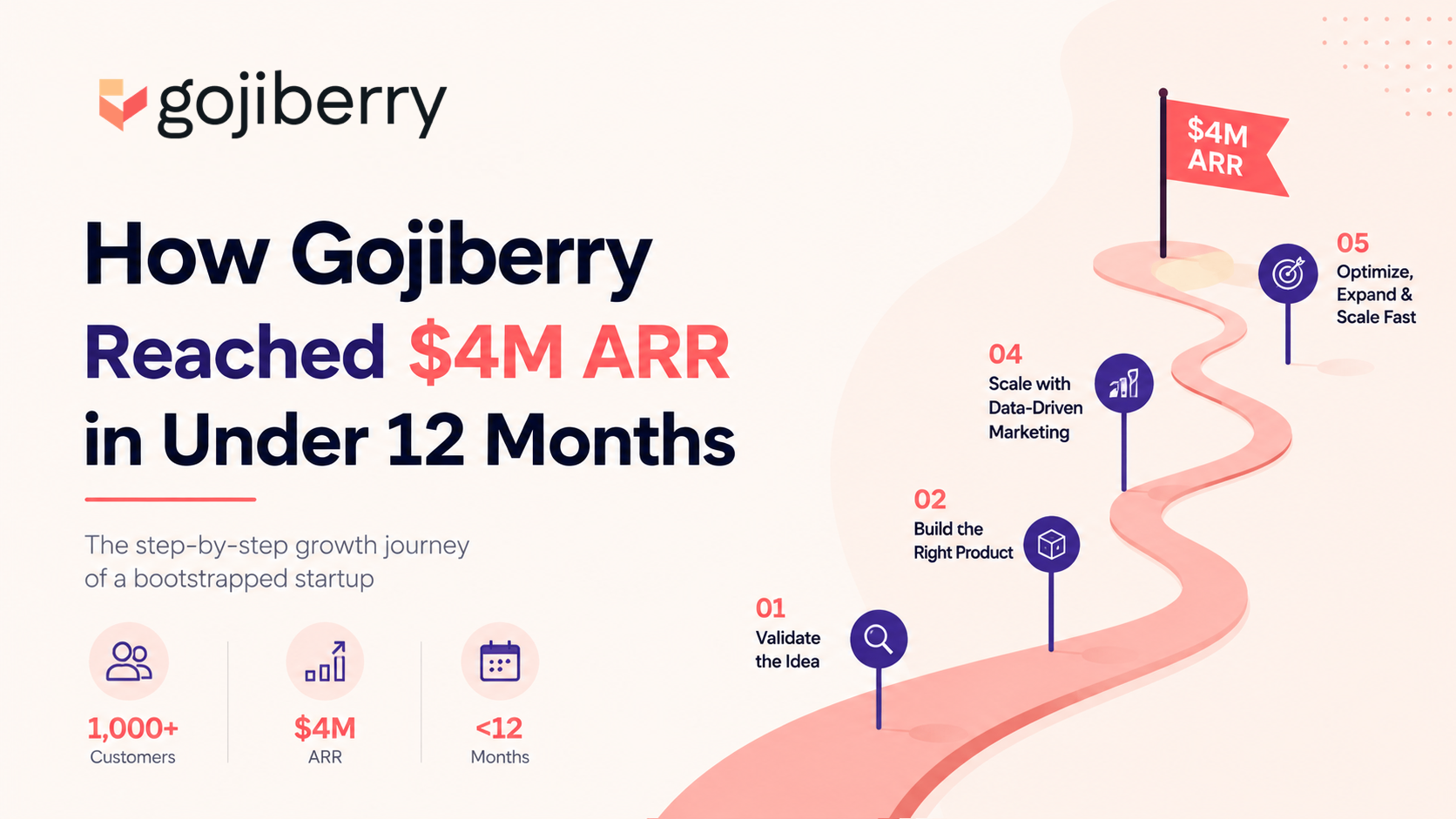
How Gojiberry Reached $4M ARR in Under 12 Months?
Can a three-person team really take a startup from zero to $4 million in annual recurring revenue in under a year, without a marketing department, without a funding round to lean on, and without paid ads for most of that journey? Gojiberry AI did exactly that. The company builds AI agents that find, message, and book meetings with high-intent buyers, and it used almost none of the tricks most founders assume they need. No viral TikTok moment. No celebrity investor. No six-figure ad budget on day one. Just five growth stages, run one at a time, each one stacked on top of the last. What makes this case study different from most "how we grew" threads is that Gojiberry AI's founders, led by CTO Dylan Txa and CEO Pierre-Eliott Lallemant, published the entire sequence publicly. That means every founder, developer, and marketer reading this can copy the exact order of operations instead of guessing at it. This post breaks the growth story down into the five stages that actually built the revenue, and for each one, it explains how you can automate that same stage today using the AI and outbound tools available right now, so a solo founder or a small team can run this playbook without hiring a growth department first. > KEY TAKEAWAYS > > * Gojiberry grew from $0 to roughly $3.5 to $4 million in ARR in under 12 months, bootstrapped, before joining Y Combinator. > * Growth happened in five sequential stages, each mapped to a specific MRR milestone, and no earlier channel was ever abandoned once a new one was added. > * Stage 1 ran on cold outbound targeted only at buying-intent signals, not scraped lists, and produced 25 to 40 percent reply rates. > * Every stage of this playbook can now be automated with tools like Apollo.io, Clay, Instantly, PhantomBuster, and AI prospecting agents, which is the part most "growth story" posts leave out. > * The company launched in early 2025, crossed $1 million ARR in about 9 months, and reached roughly $3.5 to $4 million ARR and $300,000 MRR by month 11 or 12. A QUICK LOOK AT GOJIBERRY AI Gojiberry builds AI agents that automate the unglamorous parts of sales: researching leads, writing outreach messages, following up, and booking meetings. In practice, it does for its customers exactly what its own founders did manually in the early days, which is probably why the product resonates so well with the audience it sells to. The company was founded in early 2025 by Dylan Txa, Pierre-Eliott Lallemant, and Romàn Czerny. It started the way most bootstrapped B2B tools do, with the founders using their own early product to land their first customers before pitching it to anyone else. Gojiberry publicly launched on Product Hunt in the months that followed, and within roughly nine months of starting, it had already crossed $1 million in ARR, fully bootstrapped and without outside funding. Growth accelerated from there. By month 11, the company was reporting close to $3.5 million in ARR, and it crossed $300,000 in MRR and roughly $4 million in ARR shortly after, which is around the point the team joined Y Combinator. Pricing sits around $97 to $99 per month with a free trial, and the company now serves between 2,000 and 2,800 paying customers out of more than 5,000 businesses that have used the platform. None of that came from a single viral moment. It came from five stages, run in order, each one automated a little more than the last. THE 5-STAGE GROWTH SEQUENCE, AND HOW TO AUTOMATE EACH ONE Gojiberry's revenue did not grow in a straight line pulled by five channels running at once. It grew in steps, where a single channel was pushed until it clearly worked, and only then did a second channel get added on top. This section walks through each stage the way it actually happened, followed by how a founder in 2026 can automate that exact stage instead of doing it by hand the way Gojiberry originally did. STAGE 1: $0 TO $6,000 MRR, PURE OUTBOUND At this stage, there is no brand, no case studies, and no audience to lean on. The only lever available is direct outreach aimed at people who are already showing buying intent, which is why the team ran cold email and LinkedIn messages by hand, using their own early product on themselves before selling it to anyone else. There was no scraped list involved. Every prospect had shown a real signal first: a recent job change, a funding announcement, engagement with a competitor's content, or a public post describing the exact problem Gojiberry solves. That discipline is what produced a 25 to 40 percent reply rate, compared with the 1 to 2 percent typical of a cold, generic list. How to automate this stage today. The manual version of Stage 1 is what most founders picture when they hear "cold outreach," but almost none of it needs to be manual anymore. A tool like Apollo.io or Clay can build the same intent-based list that Gojiberry built by hand, filtering for job changes, funding rounds, and content engagement rather than just company size and industry. Hunter.io or Findymail then verifies the email address so the domain does not get flagged as spam. Once the list exists, Instantly.ai, Smartlead, or Lemlist can run the actual sending sequence, rotating across warmed-up mailboxes and handling follow-ups automatically. At the same time, the first line of every email stays personalized to the specific signal that got the prospect on the list in the first place. On LinkedIn, tools like Expandi or PhantomBuster handle the connection requests and follow-up messages once a working message has been tested manually. The entire loop, from finding a signal to sending a personalized message to logging a reply, is now close to what Gojiberry AIs own product automates for its customers. STAGE 2: $6,000 TO $25,000 MRR, THE REDDIT BREAKTHROUGH Once outbound was working, the constraint shifted from message quality to volume, and Reddit solved that without any media spend. The team posted educational breakdowns inside SaaS-focused subreddits instead of anything that looked like an ad, and those posts generated more than 10 million organic views over time. The traffic was lower intent than outbound, but it was high volume and nearly free, and it flooded the trial funnel at a stage when volume mattered more than precision. The posts that performed best were the ones that read like a founder genuinely explaining a process, with the product mentioned briefly at the end rather than in the headline. How to automate this stage today. Reddit punishes anything that smells automated, so full automation is the wrong goal here. What can be systematized is the research and repurposing around it. A social listening tool or a simple Reddit search alert can flag new threads in relevant subreddits the moment someone asks a question your product answers, so a founder can reply while the thread is still active instead of finding it three days late. Writing tools like Claude or ChatGPT can help draft the first version of an educational post from a rough outline, which still needs a human pass to sound native to the subreddit before it goes live. Once a post performs well, that same content becomes the raw material for Stage 3, so the actual "automation" win here is having a repeatable process for spotting, drafting, and repurposing rather than automating the posting itself. STAGE 3: $25,000 TO $75,000 MRR, CONTENT PLUS FREE BLUEPRINTS At this stage, Gojiberry shifted from one-off wins to a repeatable content engine. LinkedIn posts, YouTube videos, and motion-design clips became the primary growth channel, and instead of gating any of it behind a sales call, the team gave away their internal processes as free blueprints. Content built reach, the blueprints built trust, and trust is what turned a reader into a trial signup without a founder ever getting on a call. How to automate this stage today. Producing three content formats in parallel used to require a small team, and now it mostly requires a repeatable workflow. One core idea, usually the same idea that performed well on Reddit in Stage 2, gets turned into a long-form LinkedIn post, a script for a short video, and a one-page blueprint using a tool like Canva or Notion. AI writing tools can generate the first draft of each format from a single outline, which cuts production time from days to hours, while a tool like CapCut or Descript turns a script into a short motion-design clip without hiring an editor. The real unlock is treating every blueprint as reusable raw material: one well-made resource can be repackaged into a LinkedIn carousel, a YouTube walkthrough, and a Reddit answer, which is how a team of three produced enough content volume to compound without a dedicated content department. STAGE 4: $75,000 TO $150,000 MRR, PARTNERSHIPS AND X With outbound, Reddit, and content already compounding, Gojiberry layered in partnerships. B2B influencers, sponsored newsletters, and a lifetime affiliate program brought in audiences the team had not built themselves, and this is also when the company joined Y Combinator, which sharpened execution speed across every other channel already running. How to automate this stage today. A lifetime or recurring-commission affiliate program set up through Rewardful, FirstPromoter, or PartnerStack removes most of the manual tracking and payout work that used to make affiliate programs hard to run for a small team. Finding the right newsletters and creators to pitch is largely a research problem now, and a tool like Apollo or Clay can filter for newsletter operators and B2B creators the same way it filters for cold outbound prospects, based on audience relevance rather than raw follower count. The actual sponsorship pitch works best when it offers the free blueprint from Stage 3 as the sponsored content itself, since that performs better than a generic ad and costs nothing extra to produce. STAGE 5: $150,000-PLUS MRR, PAID ACQUISITION AND HIRING By the time paid acquisition entered the mix, Gojiberry already had organic proof of what converted. Meta ads, Google ads, and influencer agencies scaled the message that had already worked for free, and the company's first serious hires across growth, sales, engineering, and product arrived once these channels were already producing revenue, not before. How to automate this stage today. The safest starting point for a paid campaign is the best-performing organic post or video from Stage 3, since it has already been validated by a real audience at zero cost. Meta's own campaign tools can build a lookalike audience from existing paying customers rather than broad interest targeting, and a small daily budget, commonly around $1,000 a day to start, keeps the risk low while cost per trial and cost per paying customer are measured. Google Ads layered on high-intent search terms tends to convert faster than social traffic at this stage, since the person searching has already defined their own problem. Influencer agencies are brought in for scale rather than discovery, placing an already-proven message with more creators faster instead of guessing at a new one. MISTAKES THAT QUIETLY KILL THIS PLAYBOOK Most founders who try to copy a growth story like this one do not fail because the tactics do not work. They fail because they skip the discipline underneath the tactics. The most common mistake is running every channel at once from day one, on the theory that more activity means more results, when in reality it spreads a small team too thin to make any single channel work well enough to compound. A close second is buying a large, generic list and blasting it with cold email in the first week, which produces spam complaints and a damaged sending domain instead of customers, when a tight list of 100 genuinely high-intent prospects would have outperformed 5,000 cold names. On Reddit, the same impatience shows up as posting an identical promotional message across ten subreddits in a single day, which reads as spam to both moderators and the platform's own spam detection and can get an account banned across the entire site. On LinkedIn, founders often gate content behind a link instead of a comment keyword, not realizing that links quietly suppress reach on most platforms, which kills the visibility the content was created to earn. Further along, many teams launch paid ads with brand-new, unproven creative instead of scaling the organic post that already worked, which turns paid acquisition into an expensive way to discover what does not resonate, instead of an amplifier for something that already does. Every one of these mistakes comes from skipping a stage instead of finishing it. CONCLUSION Gojiberry's path from zero to roughly $4 million in ARR was not built on a viral moment or a lucky break. It was built on five stages, run one at a time, each one automated a little more than the last as the tools available caught up with what the founders were already doing by hand. Each stage mapped to a specific revenue milestone, and none of the earlier channels were ever thrown away once a new one started working. For developers thinking about a side project, for solo founders trying to land their first paying customers, for business owners deciding where to spend their next marketing dollar, and for anyone working in SEO or content who wants to understand how organic growth actually compounds into revenue, this case study offers something rare: a growth story with the exact steps left in, along with the tools that make each step realistic to run in 2026. What remains is deciding which stage matches where the business is right now, and having the patience to automate and dominate it before adding the next. REFERENCES: 1. Reddit Strategy Playbook 2. The LinkedIn High Intent Outreach System: How We Booked 12 demos in 5 days with AI (powered by CLAUDE OPUS 4.8)
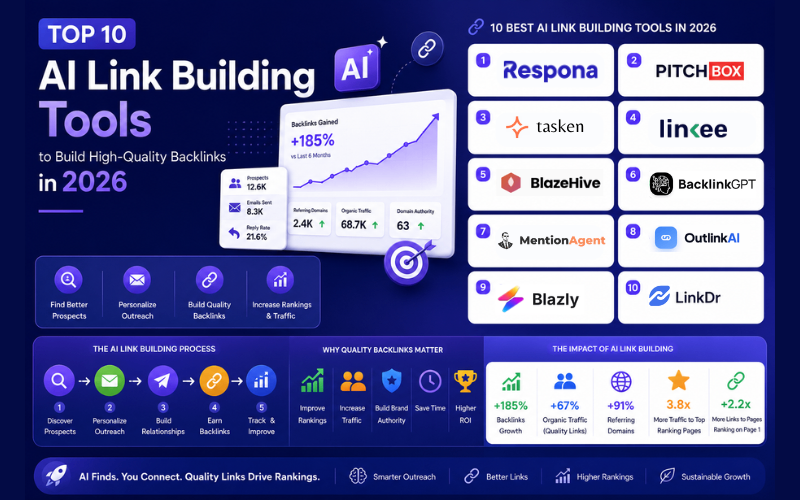
Top 10 AI Link Building Tools to Build High-Quality Backlinks in 2026
Building high-quality backlinks is one of the most challenging parts of SEO. Finding relevant websites, reaching the right people, personalising outreach, and managing follow-ups can quickly become time-consuming, especially as your website grows. For founders, marketers, agencies, and SEO professionals, scaling link building manually is rarely sustainable. AI is changing that by automating prospect discovery, outreach, follow-ups, and backlink management. While some platforms focus on AI-powered outreach, others specialise in digital PR, backlink prospecting, managed link building, or creating link-worthy content. The goal isn't to replace human relationships but to eliminate repetitive work so teams can focus on strategy and earning quality backlinks. This guide compares the best AI link building tools in 2026, covering their features, pricing, strengths, and ideal use cases. Whether you're running a startup, managing an agency, or growing an enterprise website, you'll find the right platform to build better backlinks and scale your SEO efforts more efficiently. > QUICK SUMMARY > > Choosing the right AI link building tool depends on how involved you want to be in the outreach process and the size of your SEO campaigns. > > * Respona is one of the strongest options for businesses that prefer a fully managed service, handling outreach and publisher relationships while charging only for successful placements. > * Pitchbox remains the industry standard for agencies and enterprise SEO teams that need advanced prospecting, outreach automation, CRM capabilities, and AI-powered personalisation. > * Tasken AI takes a different approach by building custom AI automation systems that businesses own, making it ideal for agencies looking to scale without relying on traditional SaaS subscriptions. > * Linkee offers an affordable platform that combines prospect discovery, email verification, outreach, and campaign management. > * BlazeHive offers a different approach to link building by focusing on AI-powered SEO automation. Instead of managing outreach campaigns, it helps businesses create search-optimised articles, interactive landing pages, and other link-worthy content that can naturally attract backlinks. > > If you're looking for AI agents that automate prospect qualification and personalised outreach, BacklinkGPT, MentionAgent, and Outlink AI each provide different levels of automation for link acquisition and digital PR campaigns. COMPARISON TABLE | Tool | Best For | Core Feature | Starting Price | Free Plan | Platform | | : | : | : | : | : | : | | Respona | Managed link building | Done-for-you outreach and editorial placements | Pay per placement | ✗ | Cloud Service | | Pitchbox | Agencies & enterprise SEO | Prospecting, outreach CRM and AI personalisation | $210/month | ✗ | Cloud SaaS | | Tasken AI | Custom AI automation | Bespoke AI-powered link building workflows | Custom | ✗ | Cloud Service | | Linkee | Budget outreach automation | Prospecting, email discovery and outreach | $80.83/month | Trial | Cloud SaaS | | BlazeHive | AI SEO & content automation | Buyer-intent keyword research, automated content generation, interactive SEO pages, CMS publishing | $99/month | 3-day free trial | Cloud SaaS | | BacklinkGPT | AI outreach automation | AI prospect qualification and personalised outreach | $149/month | Trial | Cloud SaaS | | MentionAgent | SaaS founders | AI outreach with built-in email infrastructure | $99/month | Trial | Cloud SaaS | | Outlink AI | Digital PR & outreach | End-to-end AI outreach automation | $175/month | Trial | Cloud SaaS | | Blazly AI | AI growth platform | SEO, GEO, backlinks and content workflows | From $40/month | ✓ | Cloud SaaS | | LinkDR | Fixed-price backlinks | AI-assisted backlink marketplace | Pay per placement | ✗ | Cloud Platform | 1. RESPONA Building high-quality backlinks often requires much more than sending outreach emails. Finding trustworthy websites, identifying the right contact, pitching relevant content, and following up consistently can take weeks for a single campaign. Respona approaches this challenge differently by combining AI-assisted research with a fully managed link-building service. Rather than simply providing outreach software, the platform helps businesses secure editorial backlinks through its own outreach team, allowing customers to focus on growing their business instead of managing campaigns. Unlike traditional outreach platforms, Respona's managed service handles prospect research, publisher outreach, content creation, negotiation, and placement management. Businesses simply define their target pages, preferred anchor text, and quality requirements, while the Respona team works with vetted publishers to earn relevant backlinks. Since customers pay only for successfully published placements, the service offers a more predictable alternative to running large in-house outreach campaigns. For teams that prefer managing outreach themselves, Respona also provides several AI-powered SEO utilities, including backlink analysis, email discovery, and prospect research tools. These features help users discover relevant websites faster while reducing the manual effort involved in building outreach lists. Combined with its managed services, the platform can support businesses at different stages of their link-building journey. One of Respona's biggest advantages is its focus on quality rather than volume. Instead of pursuing thousands of prospects through automated email sequences, the platform prioritises editorially relevant websites with genuine traffic and authority. This approach makes it particularly attractive for SaaS companies, startups, agencies, and brands that want sustainable backlink growth without relying on low-quality link networks. PRICING Respona offers pay-per-placement pricing based on publisher quality and authority. | Placement Tier | Pricing | | : | : | | Starter | $100 per placement | | Standard | $160 per placement | | Authority | $240 per placement | | Power | $400 per placement | | Elite | $500 per placement | BEST FOR Businesses, startups, agencies, and marketing teams looking for a managed link building solution that delivers editorial backlinks without handling outreach internally. 2. PITCHBOX For agencies and enterprise SEO teams running multiple outreach campaigns simultaneously, Pitchbox has become one of the most established platforms in the industry. It combines prospect discovery, relationship management, outreach automation, reporting, and AI-powered personalisation into a single platform, making it easier to manage thousands of conversations without losing track of opportunities. Pitchbox begins by helping users discover relevant publishers using integrations with leading SEO platforms such as Ahrefs, Semrush, Moz, and Majestic. Once prospects have been identified, the platform automates much of the outreach process by generating personalised emails, scheduling follow-ups, organising conversations, and tracking campaign performance. Instead of switching between multiple tools, SEO teams can manage their entire outreach workflow from one dashboard. Recent AI capabilities have made Pitchbox even more effective for large campaigns. Its AI-powered personalisation creates customised opening lines based on each prospect's website, while AI reply assistance helps users respond more efficiently to incoming conversations. Template generation and automated workflows further reduce repetitive tasks, allowing agencies to scale outreach without sacrificing relevance or quality. Another strength of Pitchbox is its collaboration features. Agencies managing multiple clients can organise campaigns separately, monitor team performance, generate white-label reports, and track backlink acquisition from a central workspace. This makes it suitable for businesses running complex SEO campaigns where visibility, reporting, and workflow management are just as important as outreach itself. Although Pitchbox has a higher starting price than many newer AI tools, its mature feature set, extensive integrations, and enterprise capabilities continue to make it one of the strongest choices for professional link building teams managing outreach at scale. PRICING | Plan | Pricing | | : | : | | Pro | $210/month | | Advanced | $420/month | | Scale | $825/month | | Enterprise | Custom pricing | BEST FOR SEO agencies, enterprise marketing teams, digital PR professionals, and in-house SEO departments managing large-scale outreach campaigns across multiple brands or clients. 3. TASKEN AI Most AI link building platforms provide a fixed set of features through a monthly subscription. Tasken AI takes a different approach by building custom AI-powered link building systems that businesses own and control. Instead of adapting your workflow to a SaaS platform, Tasken develops automation tailored to your outreach process, making it particularly appealing for agencies and enterprises with unique requirements. The platform focuses on automating every stage of link acquisition, from prospect discovery and domain qualification to personalised outreach and reply management. AI helps identify relevant websites, evaluate backlink opportunities, classify responses, and organise outreach campaigns, while businesses retain complete control over how the system operates. Because the infrastructure is designed specifically for each client, it can integrate with existing CRMs, internal databases, email platforms, and SEO tools without forcing teams to change their established workflow. One of Tasken AI's biggest advantages is ownership. Unlike traditional software subscriptions where access ends when the subscription expires, Tasken develops AI systems that can be deployed within a company's own infrastructure. This gives agencies greater flexibility, improves data privacy, and reduces dependence on third-party platforms as outreach operations grow. Although Tasken AI requires a larger initial investment than self-service SaaS products, it becomes increasingly valuable for businesses running large-scale outreach campaigns or managing multiple clients. Agencies can automate repetitive work while maintaining their own branding, workflows, and operational control. PRICING Tasken AI provides custom pricing based on project requirements and implementation scope. BEST FOR SEO agencies, enterprise marketing teams, and businesses looking for fully customised AI-powered link building automation rather than a standard SaaS platform. 4. LINKEE AI For freelancers, startups, and smaller SEO teams, affordability often matters just as much as automation. Linkee AI combines backlink prospecting, email discovery, outreach management, and SEO metrics into a single platform without the complexity or cost associated with many enterprise solutions. It is designed to simplify link building while keeping campaigns organised from start to finish. The platform maintains a large database of websites that users can filter based on relevance, authority, organic traffic, and other SEO metrics. AI assists with identifying suitable backlink opportunities, verifying contact information, and creating personalised outreach messages that improve response rates. Instead of exporting data between several different tools, marketers can manage prospect discovery, outreach, and campaign tracking from one dashboard. Another advantage of Linkee AI is its built-in verification process. Before outreach begins, the platform analyses websites for relevance and quality, helping users avoid low-value opportunities that are unlikely to generate meaningful backlinks. This saves time while improving campaign efficiency, especially for businesses running outreach with limited resources. Because the platform balances automation with affordability, Linkee AI is well suited for businesses beginning their link-building journey. It offers enough functionality to replace several standalone outreach tools while remaining accessible for individuals and smaller marketing teams. PRICING | Plan | Pricing | | : | : | | Free Trial | 14 days | | Essential | $80.83/month | | Pro | $164.17/month | | Agency | $298.33/month | BEST FOR Freelancers, startups, bloggers, and small marketing teams looking for an affordable AI-powered outreach platform with integrated prospecting and email discovery. 5. BLAZEHIVE BLAZEHIVE BlazeHive is an AI-powered SEO automation platform designed to help businesses grow organic traffic with minimal manual effort. Instead of functioning as a traditional link-building tool, BlazeHive automates the entire SEO workflow, including buyer-intent keyword research, content planning, AI-assisted writing, optimization, and publishing. One of its unique strengths is its ability to create both SEO articles and interactive landing pages, such as calculators and generators, which are more likely to attract backlinks naturally and increase user engagement. The platform also emphasizes visibility in AI-powered search engines like ChatGPT, Claude, and Perplexity by creating content optimized for both traditional search results and AI citations. BlazeHive connects directly with popular CMS platforms such as WordPress, Webflow, Ghost, Framer, Contentful, Storyblok, and Strapi, allowing businesses to publish content automatically without moving between multiple tools. Another notable feature is its AI detection and humanization system, which rewrites generic AI-generated content before publication to improve readability and reduce the risk of publishing repetitive, low-quality copy. Instead of relying on multiple SEO tools, content writers, and publishing platforms, BlazeHive combines the entire workflow into a single automated system. Although BlazeHiveis primarily an SEO automation platform rather than a dedicated backlink outreach tool, it contributes to link building by helping businesses publish high-quality, buyer-focused content and interactive resources that naturally earn backlinks over time. For startups, SaaS companies, agencies, and founder-led businesses looking to scale content marketing without building a large SEO team, it provides an efficient alternative to managing multiple disconnected tools. PRICING BlazeHive offers a 3-day free trial, and its Complete Engine plan starts at $99/month, which includes AI keyword research, automated content generation, interactive page creation, SEO validation, CMS publishing, and integrations with major content management systems. BEST FOR Startups, SaaS companies, agencies, and businesses looking to automate SEO content production, create link-worthy assets, and grow organic traffic through AI-powered publishing. 6. BACKLINKGPT Many outreach platforms help users find prospects and send emails, but BacklinkGPT goes a step further by acting as an AI-powered link-building agent. Instead of simply generating prospect lists, the platform analyses your website, evaluates backlink opportunities, identifies the right contacts, and drafts personalised outreach messages with minimal manual effort. This makes it particularly useful for founders, startups, and small marketing teams that want to automate repetitive outreach tasks without sacrificing quality. The workflow begins by analysing your website and competitors to discover relevant backlink opportunities. Rather than treating every website equally, BacklinkGPT uses AI to assess whether a prospect is worth contacting, helping users prioritise high-quality websites over low-value opportunities. It can also identify the appropriate contact person, generate personalised outreach emails based on the prospect's content, and continue monitoring acquired backlinks after they go live. Another valuable feature is backlink monitoring. Instead of manually checking whether earned links remain active, the platform continuously tracks existing backlinks and alerts users if links are removed or modified. This allows businesses to protect the value of previous outreach campaigns while maintaining a healthier backlink profile over time. BacklinkGPT is designed for users who want an intelligent assistant rather than a traditional outreach platform. By combining prospect evaluation, personalised communication, and backlink monitoring, it reduces much of the manual work involved in running successful link-building campaigns. PRICING | Plan | Pricing | | : | : | | Starter | $149/month | | Growth | $399/month | | Scale | $999/month | BEST FOR Founders, startups, SEO professionals, and marketing teams looking for an AI-powered assistant that automates prospect evaluation, personalised outreach, and backlink monitoring. 7. MENTIONAGENT For many SaaS businesses, earning editorial mentions can be just as valuable as acquiring traditional backlinks. MentionAgent focuses on helping businesses secure relevant mentions by combining AI-powered prospect discovery, personalised outreach, and built-in email infrastructure into a single platform. Unlike many outreach tools that require separate email services, warm-up software, and automation platforms, MentionAgent brings everything together under one subscription. The platform continuously identifies relevant articles, blogs, and websites where your business could naturally be mentioned. AI then creates personalised outreach messages based on the existing content instead of relying on generic templates, helping campaigns feel more authentic and improving response rates. Built-in email hosting and automatic domain warm-up simplify campaign management even further, particularly for founders and small teams without dedicated outreach infrastructure. One of MentionAgent's unique capabilities is its focus on AI search visibility. In addition to traditional backlink opportunities, the platform monitors how brands appear across leading AI search platforms, helping businesses understand how they are being referenced in AI-generated responses. As AI-powered search becomes increasingly important, this additional visibility can provide valuable insights beyond conventional SEO metrics. Because it combines outreach, email infrastructure, and AI visibility tracking, MentionAgent offers an efficient solution for businesses looking to strengthen both traditional search performance and emerging AI search presence without managing multiple subscriptions. PRICING | Plan | Pricing | | : | : | | Free Trial | Available | | Starter | $99/month | BEST FOR SaaS companies, startups, founders, and small marketing teams looking for an affordable AI outreach platform with built-in email infrastructure and AI visibility monitoring. 8. OUTLINK AI Managing prospect research, outreach, follow-ups, reply handling, and backlink verification manually can quickly become overwhelming as campaigns grow. Outlink AI automates almost the entire outreach process, allowing businesses to manage link-building campaigns with minimal manual intervention while maintaining personalised communication throughout the campaign. The platform discovers relevant backlink opportunities, qualifies prospects using AI, generates customised outreach emails, schedules follow-ups, and manages conversations directly from connected email accounts. Instead of switching between prospecting tools, email platforms, and spreadsheets, users can monitor every stage of the outreach process from a single dashboard. A feature that sets Outlink AI apart is its digital PR automation. The platform can identify journalist requests and media opportunities, helping businesses respond quickly with AI-assisted pitches. This expands link building beyond traditional guest posting by creating opportunities to earn editorial mentions from news publications and industry websites. Outlink AI also includes backlink verification and campaign reporting, giving teams clear visibility into acquired links, outreach performance, and overall campaign progress. Combined with its AI-powered automation, these features make it a practical choice for businesses that want to scale outreach while reducing repetitive administrative work. PRICING | Plan | Pricing | | : | : | | Starter | $175/month | | Growth | $390/month | | Scale | $1,250/month | BEST FOR SEO agencies, digital PR teams, startups, and businesses looking for an end-to-end AI platform that automates prospecting, outreach, follow-ups, and backlink management. 9. BLAZLY AI Unlike traditional outreach platforms that focus solely on backlink acquisition, Blazly AI positions itself as an AI-powered growth platform where link building is one part of a broader SEO and content marketing strategy. Alongside backlink outreach, the platform includes tools for SEO, Generative Engine Optimization (GEO), social media publishing, lead generation, and AI content creation. This makes it an attractive option for startups and small marketing teams that prefer managing multiple growth activities from a single dashboard instead of subscribing to several independent tools. Blazly AI's backlink module helps users discover relevant websites, verify contact information, create personalised outreach emails, and monitor campaign performance using AI-assisted automation. Rather than relying on generic templates, the platform generates outreach messages based on the prospect's website and content, making communication feel more natural and improving engagement. Since all outreach activity is managed alongside SEO and content workflows, businesses can coordinate backlink campaigns with new content launches and ongoing marketing initiatives. Another area where Blazly AI stands out is its focus on AI search visibility. As search continues evolving beyond traditional search engines, the platform helps businesses optimise content for AI-powered discovery while maintaining strong SEO fundamentals. This integrated approach allows marketing teams to build backlinks, improve content visibility, and strengthen organic growth without constantly moving between different applications. While Blazly AI may not offer the enterprise-level campaign management found in larger outreach platforms, its combination of affordability, automation, and multi-channel marketing features makes it a practical solution for businesses looking to simplify their growth stack. PRICING Pricing varies depending on the selected product module, with plans starting from approximately $40/month. Businesses can subscribe to individual modules or combine multiple products into a broader marketing suite. BEST FOR Startups, content marketers, SaaS companies, and small marketing teams looking for an AI platform that combines SEO, backlink outreach, AI visibility, and content marketing in one place. 10. LINKDR For businesses that prefer predictable pricing over monthly outreach software subscriptions, LinkDR offers a different approach to link building. Instead of managing prospecting and outreach campaigns yourself, the platform allows users to purchase editorial backlinks based on clearly defined authority and traffic requirements. This makes budgeting easier while removing much of the uncertainty associated with traditional outreach campaigns. The platform begins by analysing competitor backlink profiles and identifying websites that may also be relevant for your business. AI assists with evaluating backlink opportunities, filtering low-quality websites, and recommending publishers that closely match your niche. Users can then select placements based on Domain Rating, estimated organic traffic, and content type before placing an order. This transparent process provides greater control over campaign quality while simplifying decision-making for businesses that need backlinks quickly. Unlike many backlink marketplaces, LinkDR also incorporates AI into its outreach workflow by generating personalised communication based on each publisher's existing content. This helps maintain higher editorial relevance while improving the likelihood of successful placements. Businesses can also choose additional review services for greater quality assurance before links are secured. Because pricing is based on individual placements rather than ongoing subscriptions, LinkDR appeals to businesses running occasional campaigns or those wanting complete visibility into acquisition costs before committing to a project. It also works well alongside outreach platforms by allowing marketers to supplement their existing campaigns with carefully selected editorial placements. PRICING | Domain Rating | Starting Price | | : | : | | DR 30+ | $160 per placement | | DR 40+ | $240 per placement | | DR 50+ | $400 per placement | | DR 60+ | $500 per placement | Additional fees may apply for premium placement types or manual publisher review. BEST FOR Businesses, agencies, startups, and SEO professionals looking for transparent, fixed-price editorial backlinks without committing to long-term outreach software subscriptions. CONCLUSION AI is making link building faster by automating prospect discovery, personalised outreach, follow-ups, and backlink management. Instead of replacing SEO professionals, these tools help businesses spend more time building relationships and creating content that earns quality backlinks. Each platform in this guide serves a different purpose. Respona delivers managed link building, while Pitchbox is ideal for large-scale outreach. Tasken AI provides custom AI workflows, and Linkee offers an affordable all-in-one outreach solution. BacklinkGPT, MentionAgent, and Outlink AI use AI to automate outreach and prospecting, BlazeHive helps create link-worthy SEO content with AI, Blazly AI combines SEO and backlink workflows, and LinkDR simplifies acquiring editorial backlinks through a transparent marketplace. The right tool depends on your goals, budget, and workflow. Whether you're a founder, marketer, agency, or enterprise team, choosing a platform that fits your strategy will help you build stronger backlinks, improve search visibility, and achieve sustainable organic growth.