Finding a UGC creator is easy. Finding someone who can explain a SaaS product clearly, create short-form videos that hold attention, deliver quickly, and fit a small budget takes a more structured process.
For solo founders and small SaaS teams, the goal is not to find the biggest creator. It is to find several creators who can produce usable content at a reasonable cost, test them quickly, identify what works, and repeat the process.
UGC also does not necessarily mean paying an influencer to publish to their own audience. A creator can simply produce videos that the SaaS company publishes on TikTok, Instagram Reels, YouTube Shorts, its website, or in paid campaigns. If the creator is also expected to publish the content on their own account, that is a separate requirement and should be discussed separately.
Quick Summary
- Search TikTok, Instagram, and YouTube using your product category, customer problem, competitor names, and use cases, not just “UGC creator.”
- On Instagram, try #UGCcreator, #UGCforhire, #UGCportfolio, #TechCreator, #SaaSCreator, and #AICreator.
- Explore communities such as r/UGCcreators, r/UGCForBrands, r/ugc, and r/SaaS on Reddit.
- Use Modash for faster creator discovery and filters. Alternatives include HypeAuditor, Favikon, Heepsy, and Upfluence.
- For ready-to-hire UGC creators, check Billo, JoinBrands, Insense, and Collabstr. For a broader comparison, see 14 Best UGC Creator Platforms for SaaS, Startups and Brands in 2026.
- Use Fiverr or Upwork to compare portfolios and project prices.
- Review 3–5 recent videos. Check the hook, delivery, pacing, framing, and whether the creator can explain a product naturally.
- Contact 20–30 creators, then test 3–5 with a small project before scaling.
- Confirm price, turnaround, revisions, raw footage, organic usage, paid-ad usage, and usage duration before starting.
- Give creators the audience, problem, product, key message, length, and CTA, while letting them handle the presentation.
- Track creators using UTM links, signups, activated users, paid conversions , and cost per customer. Save strong performers for future campaigns.
TikTok is useful for finding affordable UGC creators because you can judge how someone actually creates content instead of relying only on a portfolio or follower count.
Start by searching “UGC creator”, then go broader with niche-specific terms such as AI tools, productivity apps, tech tips, software tutorials, startup tools, AI workflows, coding tools, marketing tools, storytime, GRWM, and educational content. You can also search competitor names + review, tutorial, alternatives, or how to use to find creators who already understand the category.
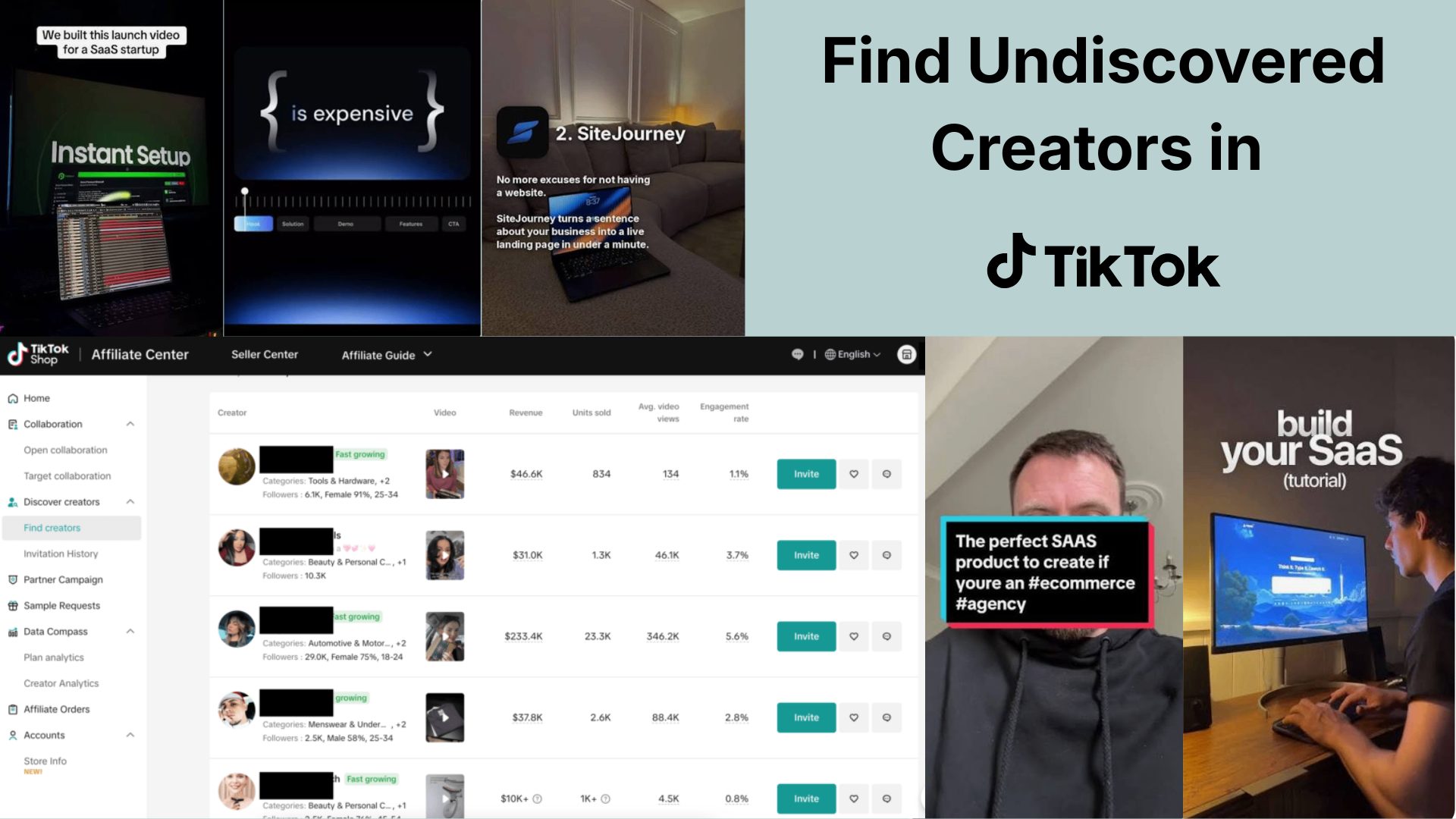
When you find a potential creator, check their recent videos for the first-frame hook, first few seconds, facial expression, lighting, framing, captions, pacing, and natural speaking style. Look for creators who consistently make engaging videos, not just accounts with one viral post.
Follower count should be a screening signal, not the main selection criteria. Also ask shortlisted creators for a 15–30 second sample video explaining themselves or a simple product. This quickly shows camera comfort, energy, clarity, and whether their delivery feels natural rather than overly scripted.
The goal is to find undiscovered creators with strong content instincts, giving you more people to test without starting with expensive creator rates.
Instagram is another useful source because Reels make it easy to evaluate a creator's presentation style before starting a conversation.
Start with hashtags such as #UGCcreator, #UGCforhire, #UGCportfolio, #UGCcommunity, #UGCcontent, and #UGCcreatorforhire. Then narrow the search with terms such as #SaaSCreator, #TechCreator, #TechUGC, #AICreator, and #ProductivityCreator.
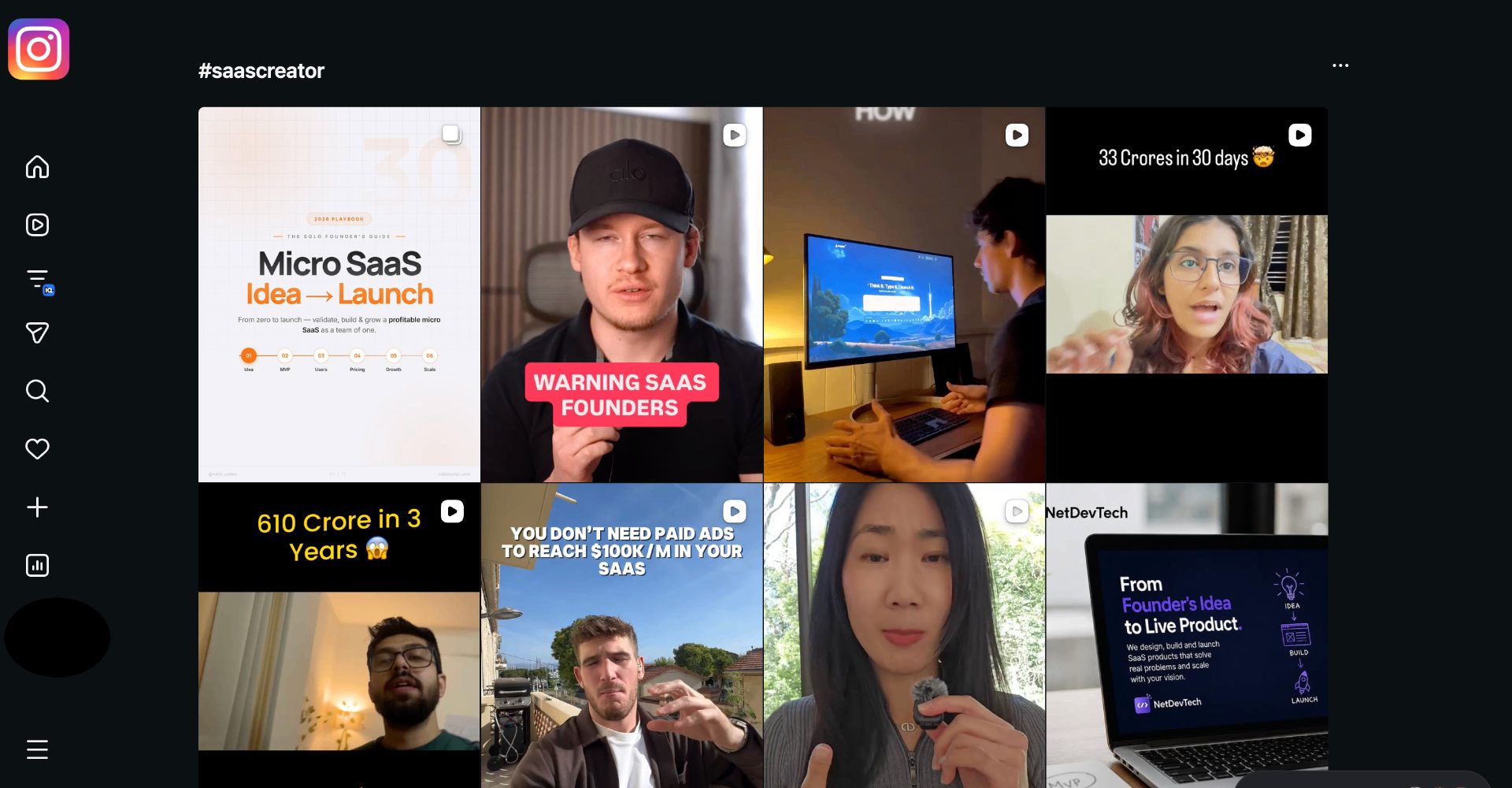
You can also search directly for topics such as AI tools, SaaS tools, productivity apps, startup tools, and marketing tools. The aim is to find creators who already make content around software and technology rather than simply finding people who describe themselves as UGC creators.
Competitor accounts are particularly useful. Find companies selling to a similar audience and review their Reels, tagged posts, creator collaborations, and product demonstrations. If the same creator appears in multiple technology or SaaS campaigns, add that creator to the shortlist.
Brighter Click also recommends competitor profiles, tagged content, Reels, and Instagram discovery features as sources for creator research.
YouTube can be especially useful for SaaS because existing videos reveal whether a creator can explain software without relying on a brand-written script.
Search for phrases such as [category] software review, [category] tools, best [category] tools, [product type] tutorial, [problem] solution, [competitor] review, and [competitor] alternatives.
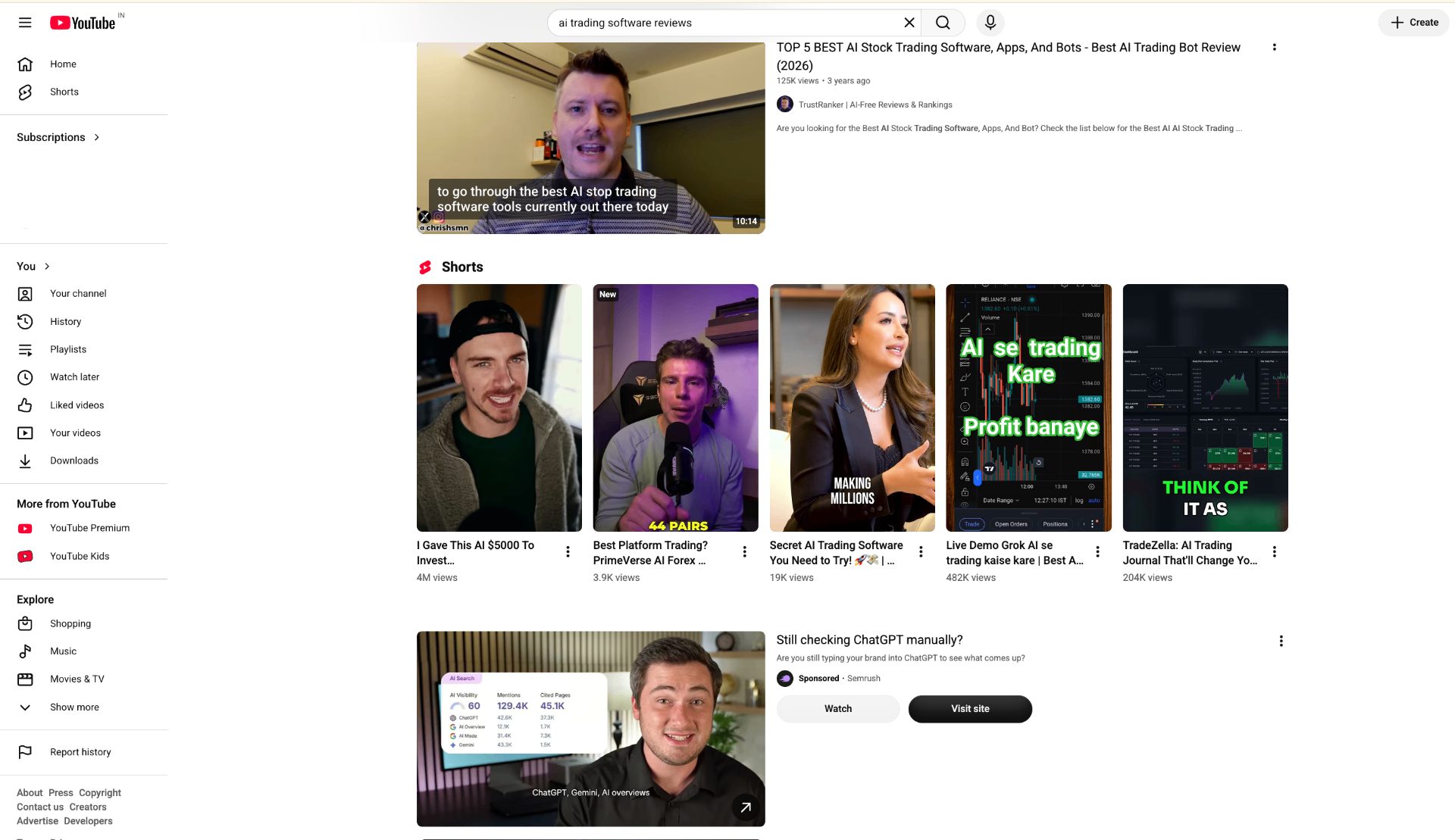
For example, searches such as "best AI coding tools," "best SaaS tools for startups," "AI tools for marketers," and "productivity software review" can uncover creators who already understand the audience.
YouTube Shorts should also be checked. A creator does not need a large YouTube audience if the objective is UGC production rather than distribution. What matters is whether the creator can explain a problem quickly, demonstrate software on screen, create a clear opening, and turn a complicated workflow into a short explanation.
A smaller creator with strong software communication skills can therefore be worth contacting even when their subscriber count is modest.
Reddit can be useful when the budget is limited because creator communities allow brands to find people who are actively looking for UGC opportunities.
Start with communities such as r/UGCcreators, r/UGCForBrands, r/ugc, and r/SaaS. Search inside them for terms such as UGC, UGC creator, content creator, creator for hire, TikTok creator, Instagram creator, SaaS content, and UGC opportunity.
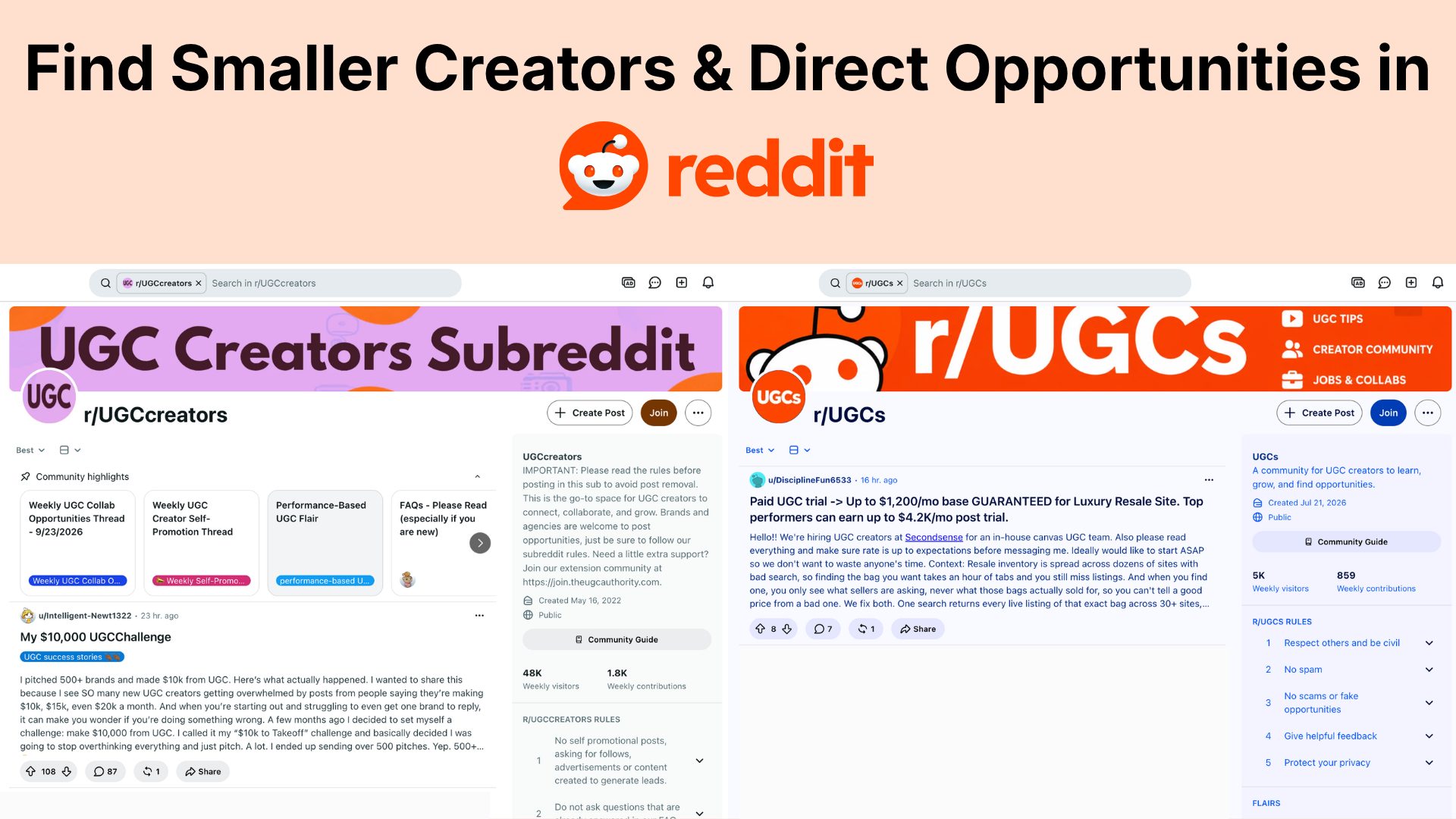
Google can also be used to narrow Reddit searches with queries such as site:reddit.com/r/UGCcreators SaaS UGC or site:reddit.com/r/UGCForBrands UGC creator.
The opportunity should be specific. Instead of simply asking for UGC creators, explain the product, required format, number of videos, approximate length, and what the creator needs to provide. This gives potential creators enough information to decide whether the project fits them.
There is also an important distinction between creating content for a company and creating content while publishing it on the creator's own account. A SaaS company should clarify which service it needs because content production and creator distribution are different requirements. This distinction also appears in the SaaS discussion referenced above.
Always check the rules of each subreddit before posting an opportunity.
When manually searching hundreds of profiles becomes time-consuming, a creator-discovery tool can speed up the process by combining creator databases, search, and filters in one place.
Modash helps discover creators across Instagram, TikTok, and YouTube. You can search by niche, hashtags, content, performance, and other creator attributes, making it easier to build a relevant shortlist.
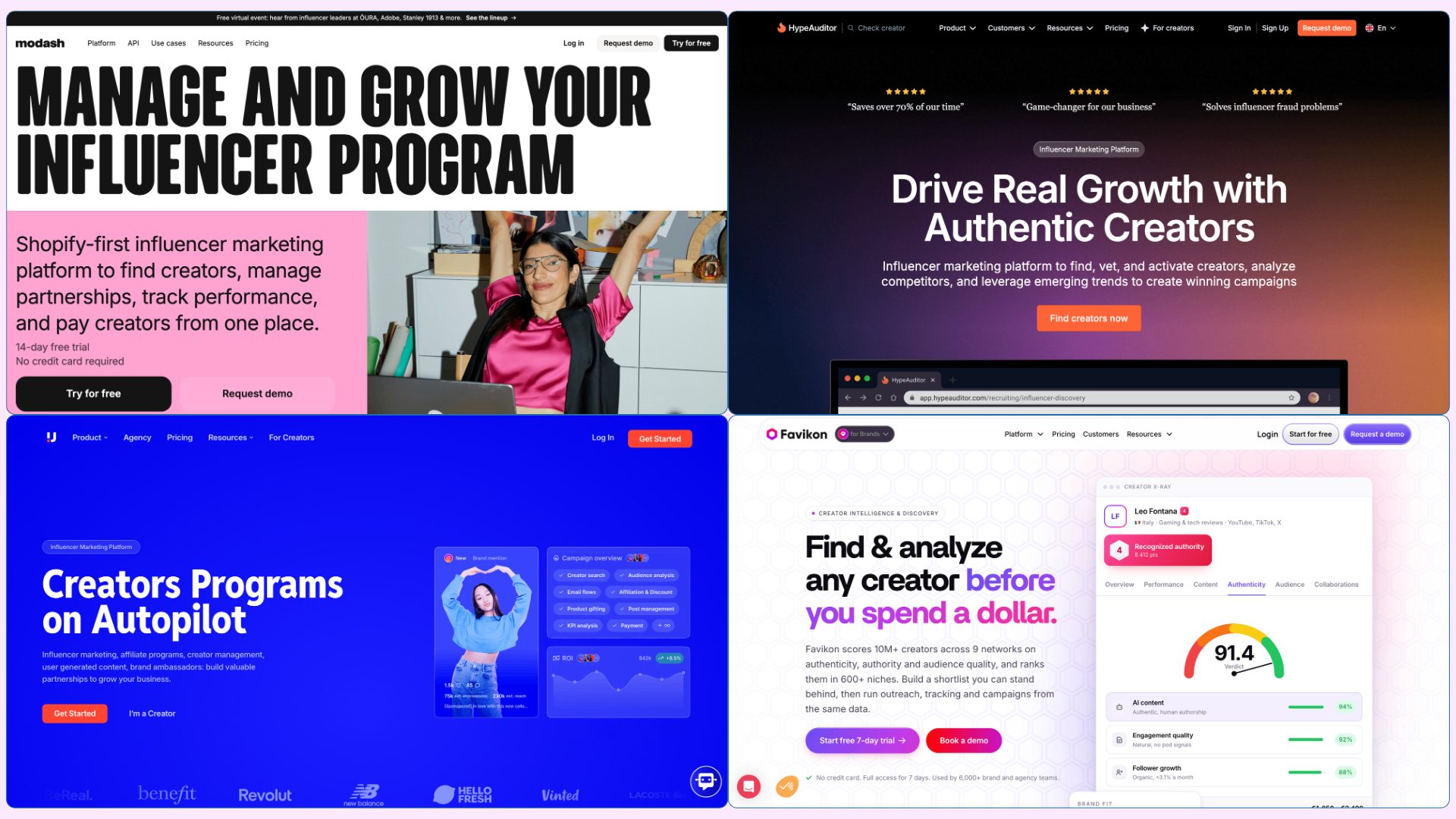
For example, instead of opening hundreds of profiles after searching #SaaSCreator and #AICreator, a team can describe the requirement as:
Find creators who make short videos explaining AI and SaaS tools, regularly post short-form content, and use talking-head videos with screen demonstrations.
Other useful alternatives include HypeAuditor for creator analytics and audience insights, Favikon for broader creator discovery, Heepsy for straightforward creator searches, and Upfluence for discovery combined with creator management.
For a small campaign, manual research may be enough. These tools become more useful when finding and evaluating creators repeatedly or at larger scale.
Dedicated UGC platforms can reduce the work involved in finding creators, sending briefs, collecting submissions, managing revisions, and handling rights.
Useful platforms include Billo, JoinBrands, Insense, and Collabstr. Current UGC platform comparisons describe these services as different types of creator marketplaces and production workflows, so the right choice depends on the content format, creator selection process, budget, and campaign requirements.
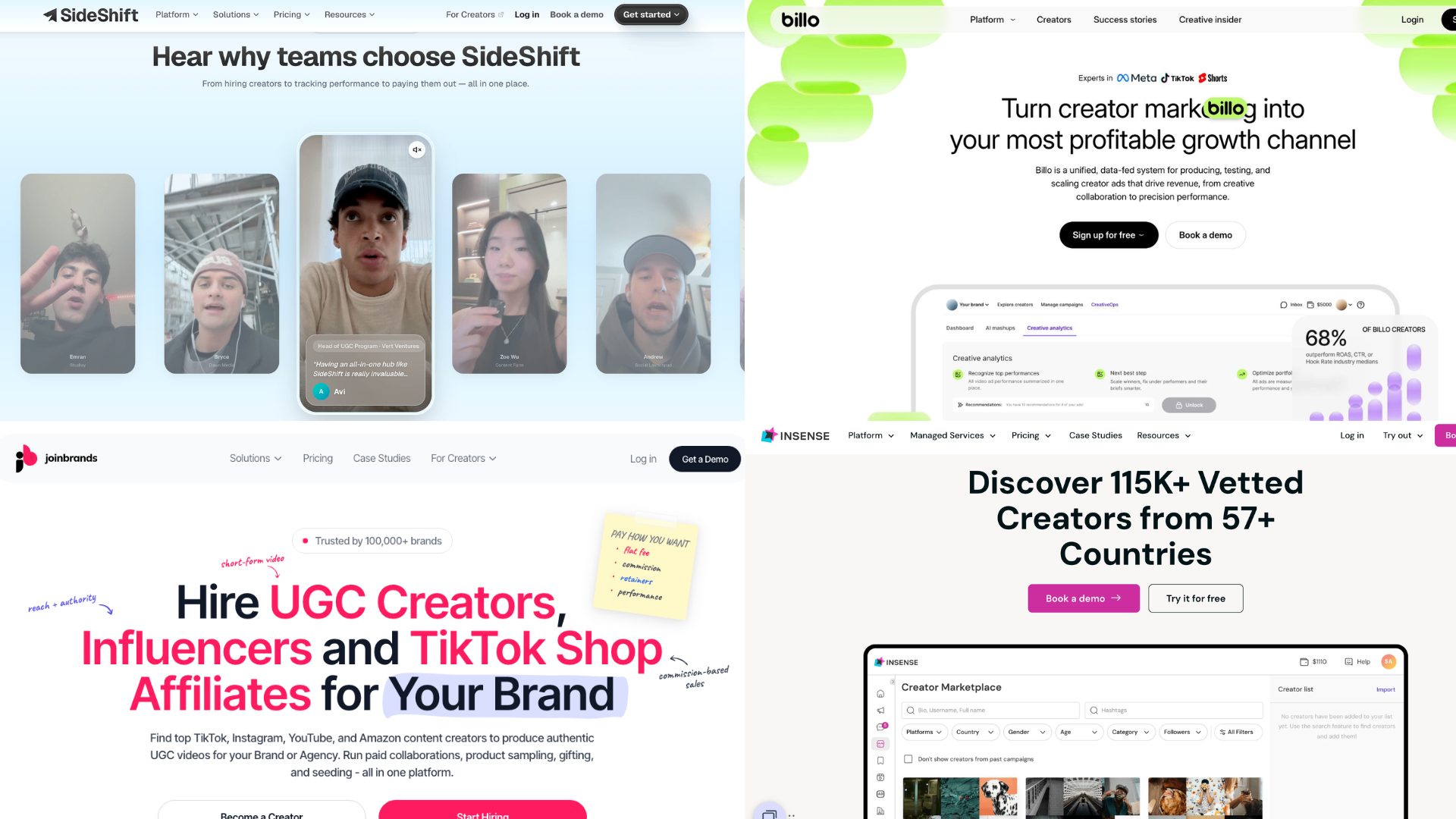
For a low-budget SaaS campaign, the useful question is not which platform has the largest creator pool. The better question is which platform lets the company order the exact type of content required at an acceptable price and turnaround.
A useful brief could specify one 30-second SaaS demonstration with a talking-head introduction, screen recording, two alternative hooks, one revision, and the required commercial usage rights. Comparing offers against the same brief makes creator and platform costs much easier to understand.
Freelancing marketplaces can be practical when the main requirement is finding a creator at a specific project price.
On Fiverr, searches such as UGC video, UGC creator, TikTok UGC, SaaS UGC, software UGC, and AI UGC can produce a large number of portfolios to compare. The important factors are recent video samples, delivery time, revisions, commercial rights, raw footage, and previous SaaS or technology work.
The cheapest gig should not automatically be selected. A creator who costs slightly more but delivers usable footage with fewer revisions can result in a lower overall production cost.
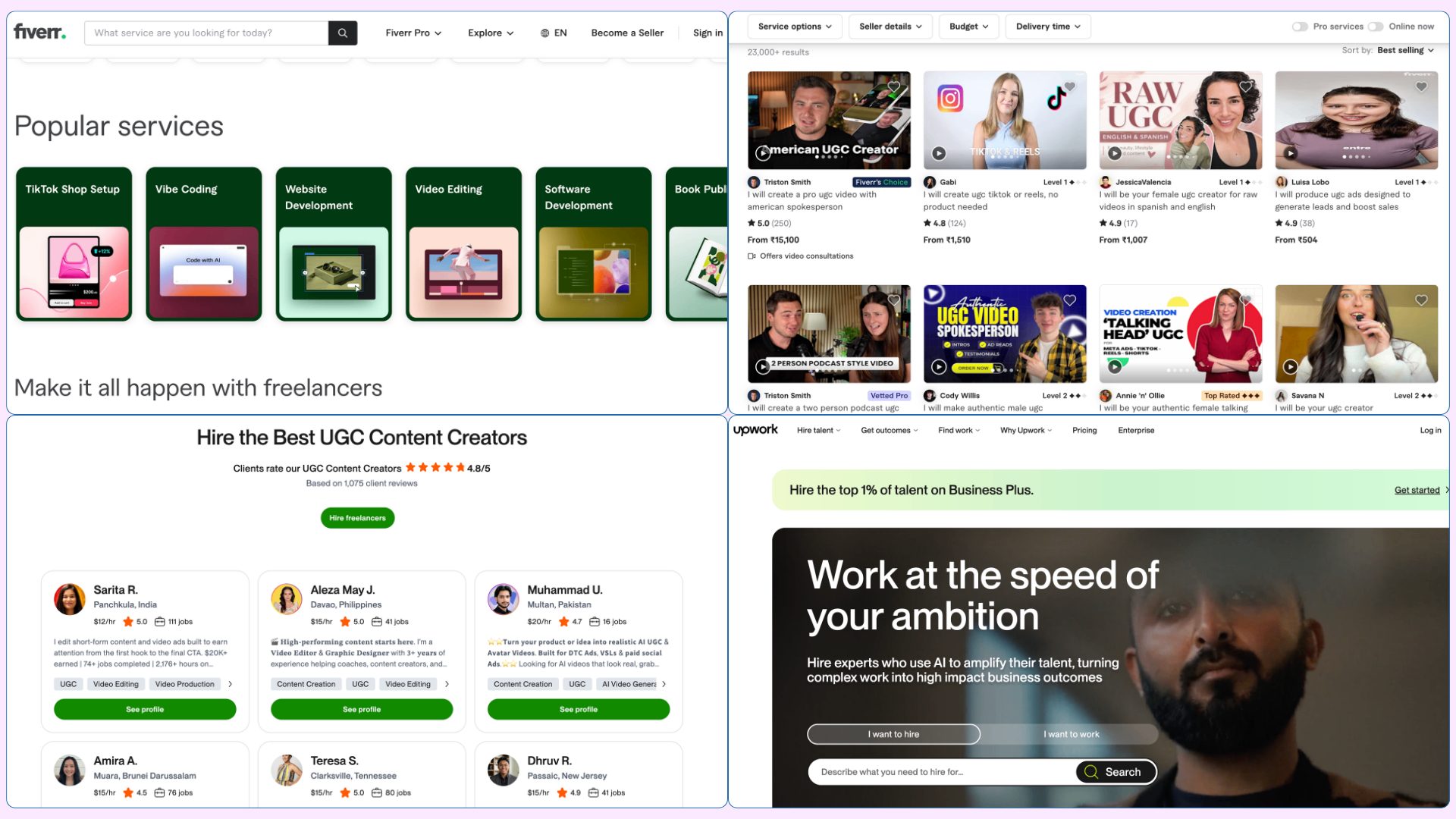
Upwork works differently because companies can publish a project and ask creators to apply. A useful brief can request three relevant samples, pricing for two or three videos, turnaround time, revisions, usage rights, and previous SaaS experience. This creates a direct comparison between applicants without requiring hours of individual searching.
A low-budget UGC strategy should begin with a test rather than a large order.
Instead of purchasing 20 videos from one creator, start with three to five creators and give each a small assignment. Different creators can test different formats, such as talking head with screen recording, voiceover with product demonstration, or a problem-first introduction.
The objective is to find out who understands the product quickly, who creates a useful opening, who requires fewer revisions, who delivers on time, and who can produce consistently at a price that works for future campaigns.
Motion also recommends starting with a small group of creators so different creative approaches can be tested before scaling.
Creators need enough information to understand the product, but a full script can make the finished video sound like a company advertisement.
The brief should explain the product, target audience, customer problem, key feature, suggested hook, demonstration, video length, CTA, deliverables, revisions, and usage requirements.
For example, the brief could say that SaaS founders spend hours researching competitors, the opening should highlight that problem, the creator should demonstrate how the product collects and organizes competitor information, and the CTA should direct viewers to try the product.
The creator can then adapt the wording to their normal speaking style. This usually gives the company more usable creative variations than asking every creator to read exactly the same script.
Two creators can quote similar prices while offering very different rights.
Before production starts, confirm whether raw footage is included, how many revisions are included, whether the company can publish the video on TikTok, Instagram, YouTube, and its website, whether paid advertising is allowed, how long the usage lasts, and whether the company can edit the footage into shorter versions.
Also clarify whether the creator is only producing the content or is expected to publish it on their own account.
These details should be agreed upon before production rather than after the video has already been delivered.
Each creator should have a separate tracking method whenever possible.
For example, a SaaS company can use a creator-specific UTM URL such as product.com/?utm_source=tiktok&utm_medium=ugc&utm_campaign=creator01.
The important measurements are not limited to views. Track profile visits, link clicks, signups, activated users, paid conversions, and customer acquisition cost.
A creator can generate a large number of views without bringing many relevant visitors. Another creator may receive fewer views but generate more qualified signups. For SaaS, those downstream actions provide more useful information about whether the content should be repeated.
When a UGC concept performs well, do not immediately move to an entirely new idea.
Break the concept into its basic structure: Hook → Problem → Demo → Proof → CTA.
Then change one element at a time. The same problem can be tested with a different creator. The same creator can test another hook. The same demonstration can target another use case. The same concept can also be shortened for another platform.
A single useful concept can therefore become several versions for TikTok, Instagram Reels, YouTube Shorts, LinkedIn, a SaaS website, and paid advertising.
This is where UGC starts becoming a content system rather than a one-time video purchase.
Every creator worth contacting again should be saved.
A simple spreadsheet can contain the creator's platform, niche, price, turnaround time, usage rights, preferred format, contact method, and campaign results. Creators who were good but were not selected should also remain in the database.
After two or three campaigns, this database can become more useful than starting a new creator search from zero. It also makes it easier to identify which creators are reliable, which formats they are good at, and what each creator typically charges.
On day one, search TikTok, Instagram, YouTube, Reddit, Fiverr, and UGC platforms and collect around 30 potential creators.
On day two, review recent videos and remove creators whose content does not fit the SaaS category, whose delivery style does not match the product, or whose pricing does not fit the campaign.
On day three, contact 15 to 20 shortlisted creators with the same basic requirements so the responses can be compared.
On day four, compare portfolios, prices, turnaround times, revisions, and usage rights.
On day five, select three to five creators and send the brief.
On days six and seven, review the first submissions and identify which creators should receive another assignment.
A UGC marketplace can reduce the manual recruitment work when speed matters. Current platform comparisons show that some UGC services advertise turnaround measured in a few days, although actual delivery depends on creator availability, the brief, and revision requirements.
The important distinction is the bottleneck. Modash and similar discovery tools are mainly useful when the problem is finding and filtering creators. HypeAuditor can make more sense when creator or audience analysis is important. Favikon can be useful for multi-channel and professional creator discovery, while Upfluence is more relevant when discovery needs to connect with broader creator relationship and affiliate workflows.
Dedicated UGC platforms such as Billo, JoinBrands, Insense, and Collabstr are more directly focused on commissioning creator content. Current UGC platform comparisons group these services around different production and marketplace models, so the decision should be based on the actual workflow rather than the number of creators advertised by each platform.
The complete process is:
Search → Filter → Contact → Test → Measure → Reorder
Start with TikTok, Instagram, YouTube, Reddit, UGC marketplaces, Fiverr, and Upwork. Use a discovery tool when manual research becomes the bottleneck.
Filter creators based on SaaS experience, recent content, hooks, delivery, price, turnaround, and usage rights. Contact multiple creators instead of waiting for one person to respond.
Test three to five creators with small orders. Measure signups, activated users, paid conversions, and customer acquisition cost rather than views alone.
Then reorder from creators who consistently produce usable content at a cost the SaaS can afford. Over time, the creator database becomes an asset that reduces both search time and production risk.
The objective is not to find the cheapest creator. It is to find a creator who can repeatedly produce usable SaaS videos within the required timeframe and at a cost the business can support.
A small SaaS team can start UGC without a large influencer budget. The practical approach is to combine manual discovery on TikTok, Instagram, YouTube, and Reddit with marketplaces such as Fiverr and dedicated UGC platforms.
When manual search becomes too slow, creator-discovery tools such as Modash, HypeAuditor, Favikon, Heepsy, and Upfluence can reduce different parts of the research and management workload. The tool does not replace reviewing the creator's actual videos. A shortlist still needs to be checked for SaaS understanding, communication style, turnaround, pricing, and usage rights.
Start with three to five creators, keep the first order small, measure the resulting traffic and customers, and save useful creators in a database. Over time, the combination of creator data, tested hooks, repeat creators, and performance results becomes a content production system that can keep producing SaaS marketing videos without restarting the search every campaign.
