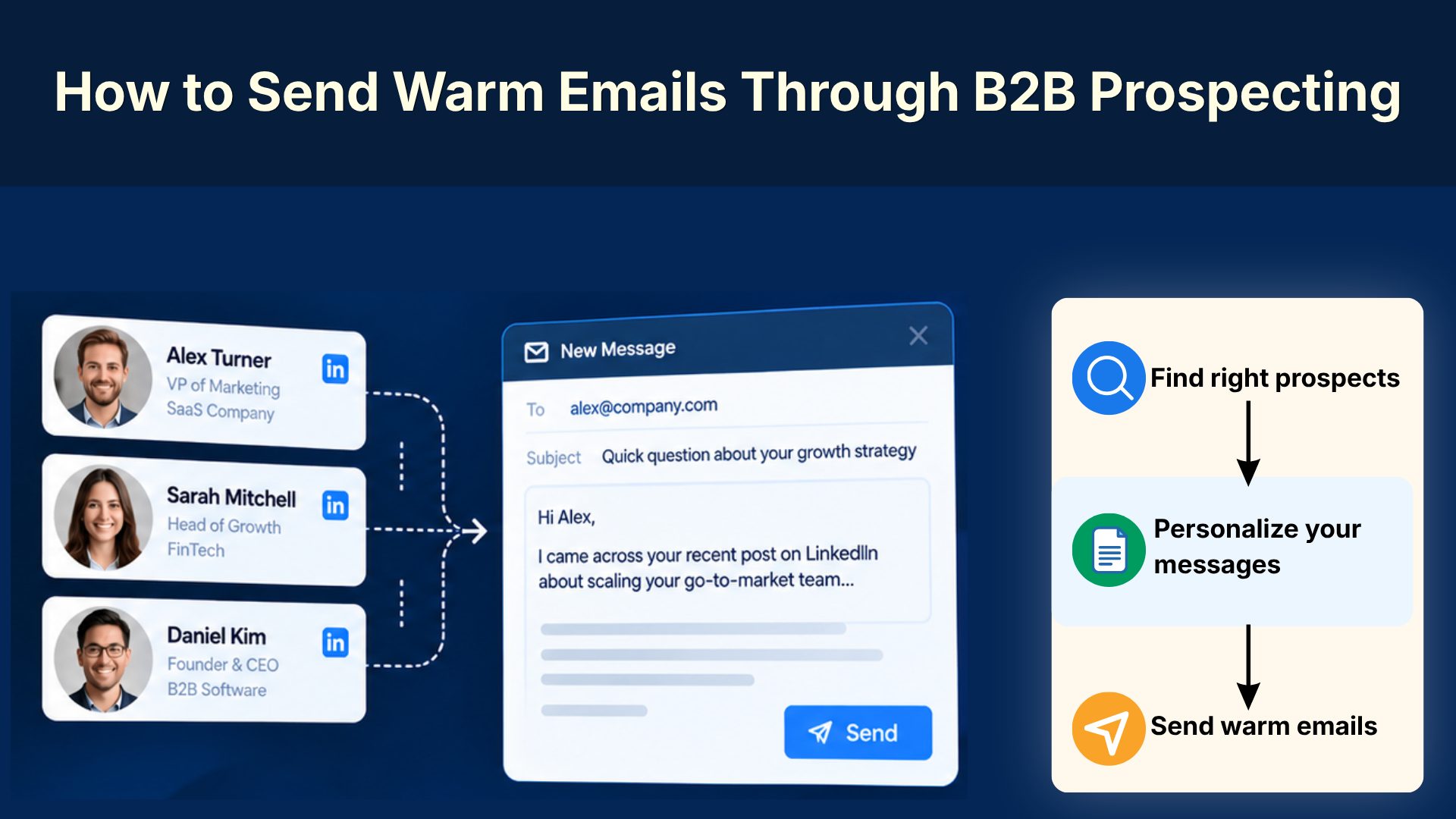
Cold email works better when a prospect feels like a relevant business conversation, not another message sent from a database. The difference starts before the email is written: identifying the right accounts, finding the right contact, and understanding what is happening in the business right now.
A practical B2B outreach workflow combines account research, contact enrichment, business signals, personalized messaging, useful follow-ups, and CRM tracking. The goal is not simply to send more emails, but to make every outreach step more relevant and intentional.
AI can make much of this process faster, from finding prospects and detecting signals to researching accounts and drafting messages. But AI works best as part of a structured sales workflow, where human judgment still determines who to contact, why to reach out, and what is worth saying.
Quick Summary
- Define the ICP, buyer role, problem, and buying signals before prospecting.
- Use tools such as Apollo or HubSpot to find and organize prospects.
- Use Clay for enrichment, account research, buying signals, and AI-powered personalization.
- Verify prospect information before adding contacts to an outreach sequence.
- Make the email relevant to a real company event, problem, or business situation.
- Keep the first email short and focused on one problem.
- Use tools such as Instantly or Apollo to manage sequences and follow-ups.
- Use AI to research accounts, summarize signals, create first drafts, classify replies, and update CRM data.
- Review AI-generated emails before sending.
- Measure positive replies, qualified meetings, opportunities, and revenue, not just email opens.
- Start with a small campaign, identify what works, and then increase volume.
Do not begin with thousands of emails. Start by defining exactly who should receive the message.
For example, B2B SaaS companies with 20–200 employees that are hiring salespeople and expanding outbound sales could be a specific ICP.
The more specific the ICP, the easier it becomes to find relevant prospects and explain why the product matters.
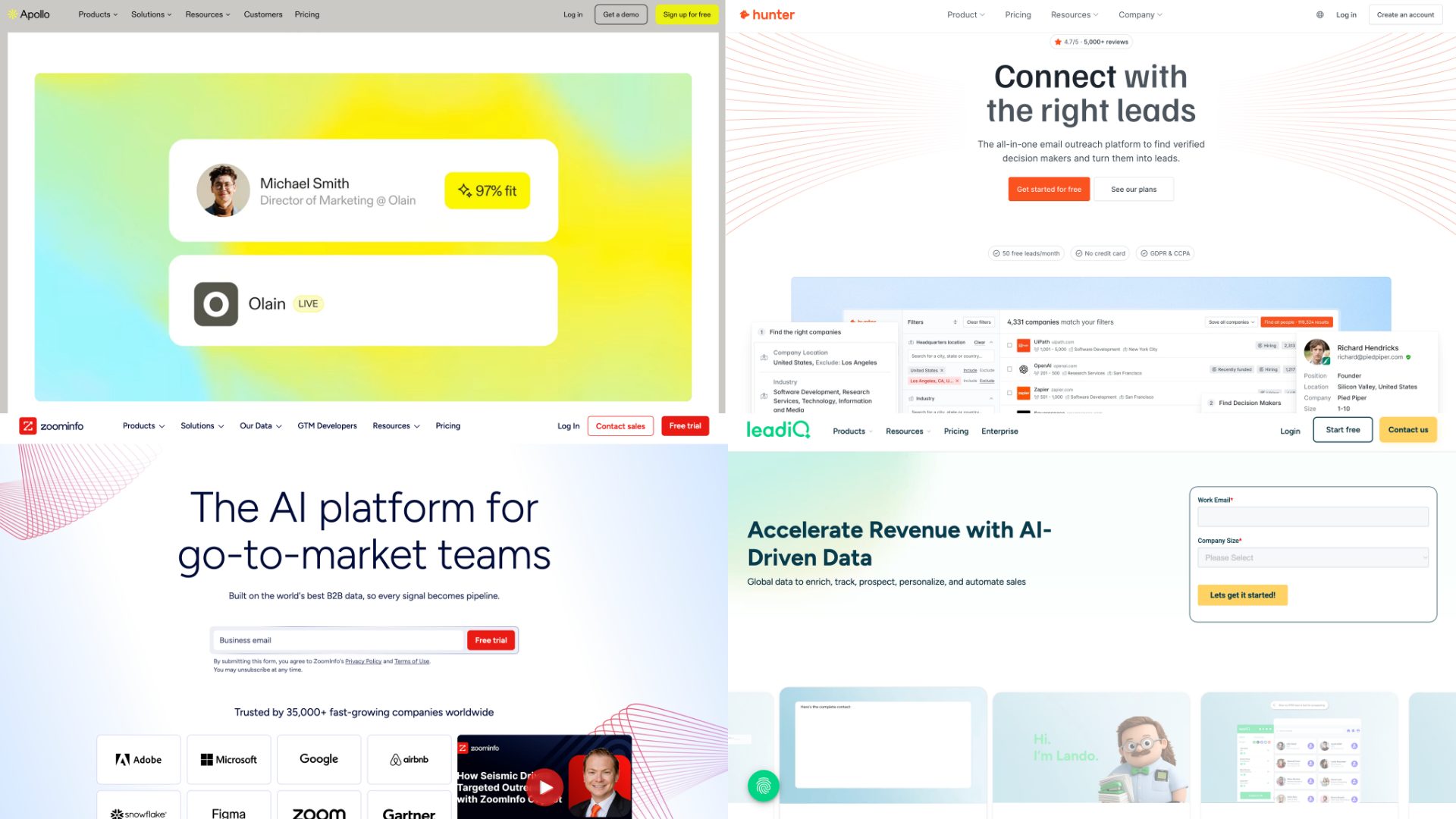
Apollo can build prospect lists using company size, industry, job title, seniority, technology, and other filters. Its AI workflows can also identify prospects matching an ICP and add them to lists or sequences.
Mark Hughes, Co-Founder of Solidroad, used a focused ICP as part of the company's outbound strategy. Solidroad later reported $1M ARR from its outbound motion, with around 500,000 emails generating 5,000 replies, 250 meetings, and 40 customers.
The key is simple: better targeting creates a better prospecting list.
The strongest cold emails usually have a reason behind them.
Look for signals such as hiring, funding, expansion, product launches, technology changes, leadership changes, or problems visible on the company's website.
Generic:
We help SaaS companies generate more qualified leads.
Signal-based:
Saw the team is hiring several SDRs while expanding outbound. That usually means more time spent building lists and researching accounts.
The second email gives the prospect a reason to understand why they were contacted.
This is where AI can help. Clay can combine company and contact data with signals such as hiring, funding, and website activity to support personalized outreach.
Huntr used a similarly focused approach by targeting career services teams at coding bootcamps. Apollo reports that its targeted outreach achieved around a 20% reply rate, with the company also reporting 2x revenue growth in 10 months.
The right company is not enough. The email needs to reach someone connected to the problem.
For a prospecting product, that could be a VP of Sales, Head of Sales, RevOps leader, SDR manager, or founder.
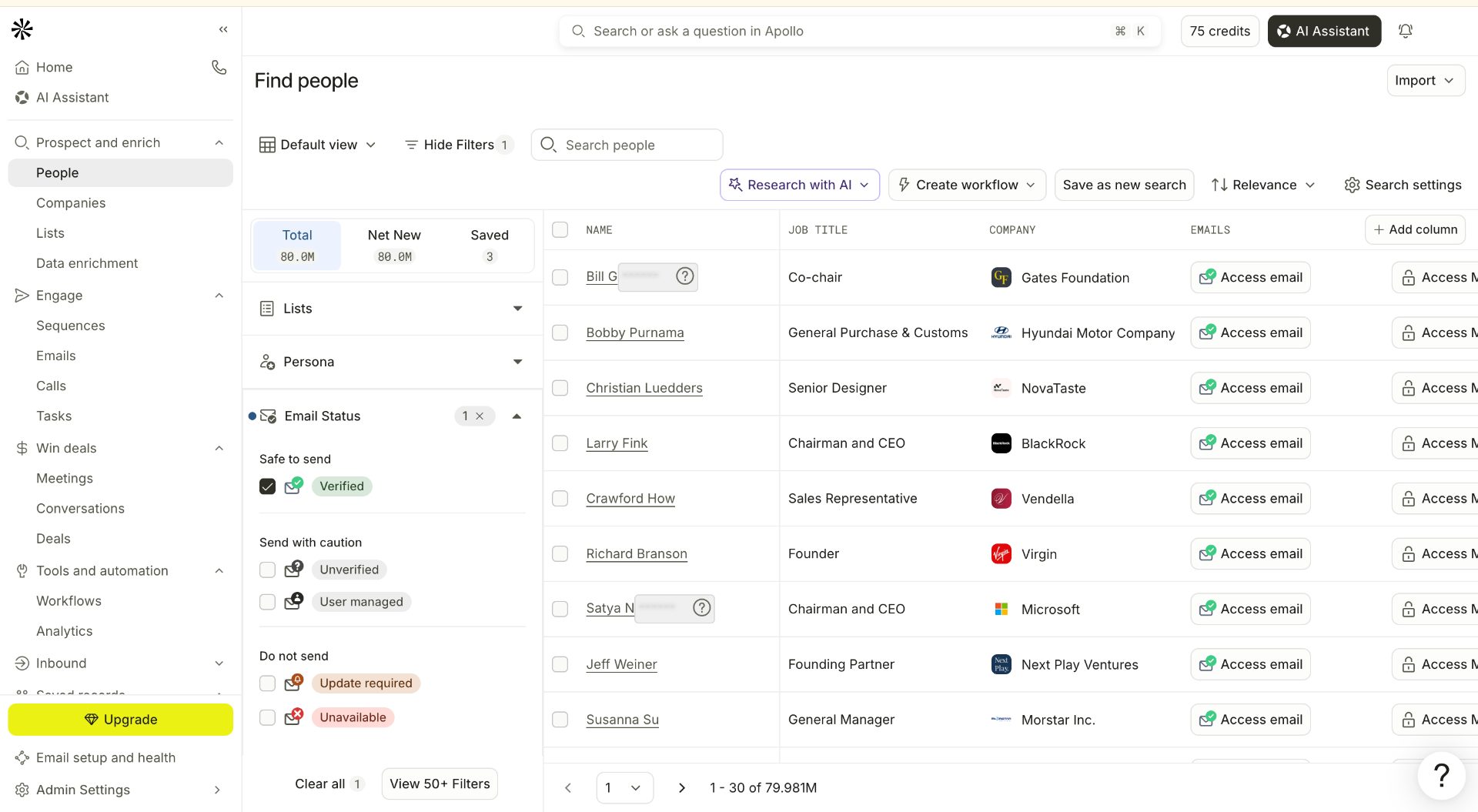
Apollo can find contacts by role and seniority, while Clay can enrich them with additional company and professional information.
For larger accounts, identify multiple stakeholders instead of depending on one contact.
Solidroad's outbound strategy also focused on reaching specific decision-makers connected to the problem, rather than contacting companies without identifying the relevant buyer.
The goal is not simply finding a contact. It is finding the person connected to the problem.
Create a simple prospect record:
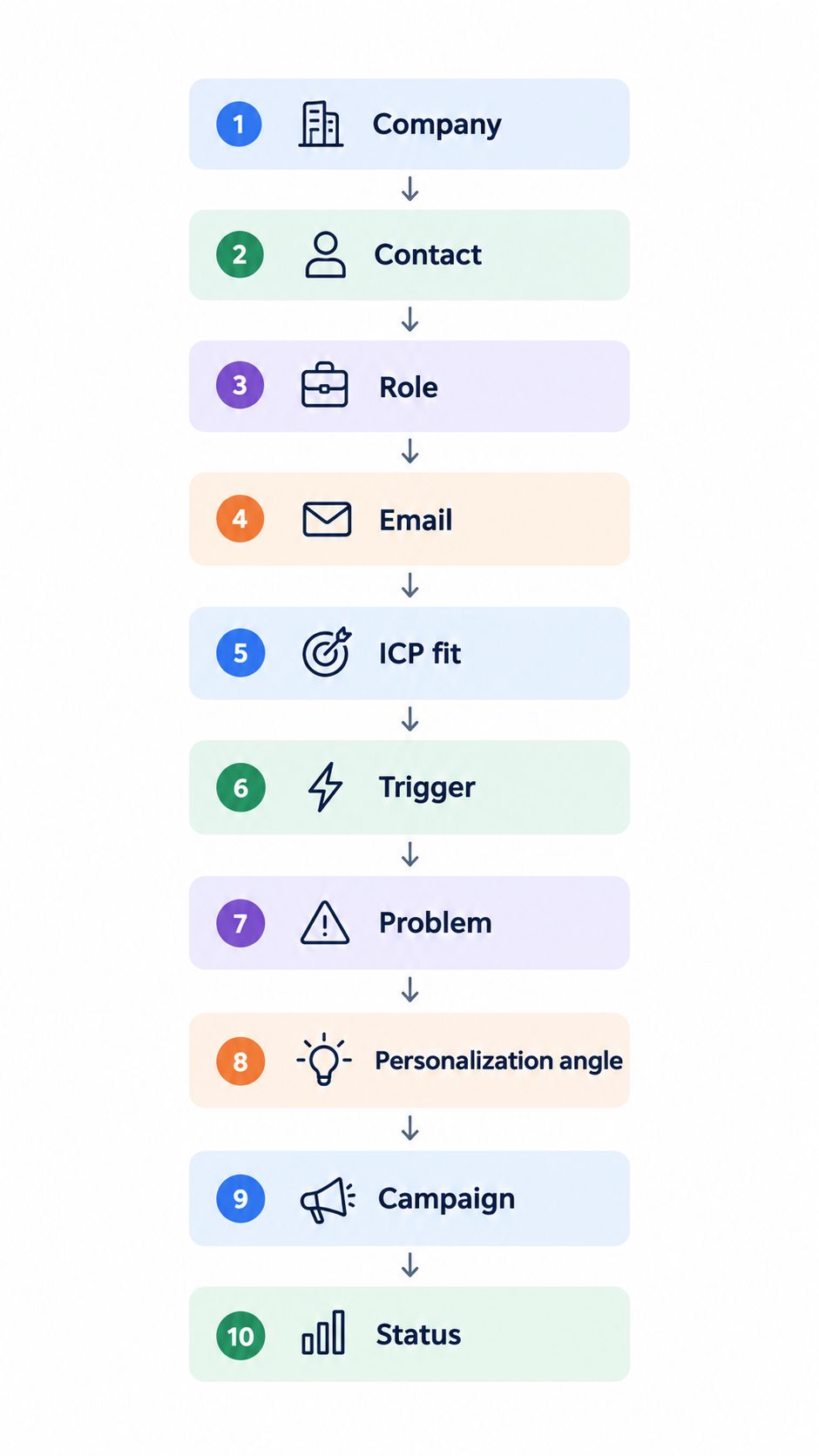
This gives AI and sales teams structured information to work with.
Avoid relying on unverified data. An incorrect job title, outdated company detail, or false trigger can make a good email look careless.
Apollo provides prospecting, enrichment, sequencing, and workflow capabilities. Clay can also enrich records using multiple data sources and AI research.
Claire Hardesty, founding GTM engineer at Pump.co, helped build an outbound infrastructure capable of handling more than 130,000 emails in its first month. Smartlead reports nearly $200,000 in attributed pipeline revenue during that period.
At this scale, clean data and organized campaign workflows become essential.
AI can reduce the time spent manually researching every account.
For each prospect, ask:
What does the company sell? Who is the likely buyer? What has changed recently? What problem might that create? Why could the product be relevant now?
Clay can combine enrichment, AI research, and account signals into prospect information.
HubSpot also uses AI and company signals to support prospect identification and personalized outreach.
The important part is to give AI real data. Asking AI to simply “personalize this email” without account context usually produces generic copy.
Huntr's results also show the value of researching a specific audience before scaling. Its targeted campaigns reportedly reached a 20% cold outreach reply rate.
A useful first email does not need to explain the entire product.
A simple structure is:
Relevant observation → Problem → Product → Simple question
For example:
Hi [name],
Noticed the team is hiring several SDRs as outbound expands.
That usually means more time spent finding accounts and researching contacts.
[Product] helps automate that research and enrichment.
Is improving this workflow currently a priority?
The objective is not to close the deal in the first email. It is to determine whether the problem is relevant enough to start a conversation.
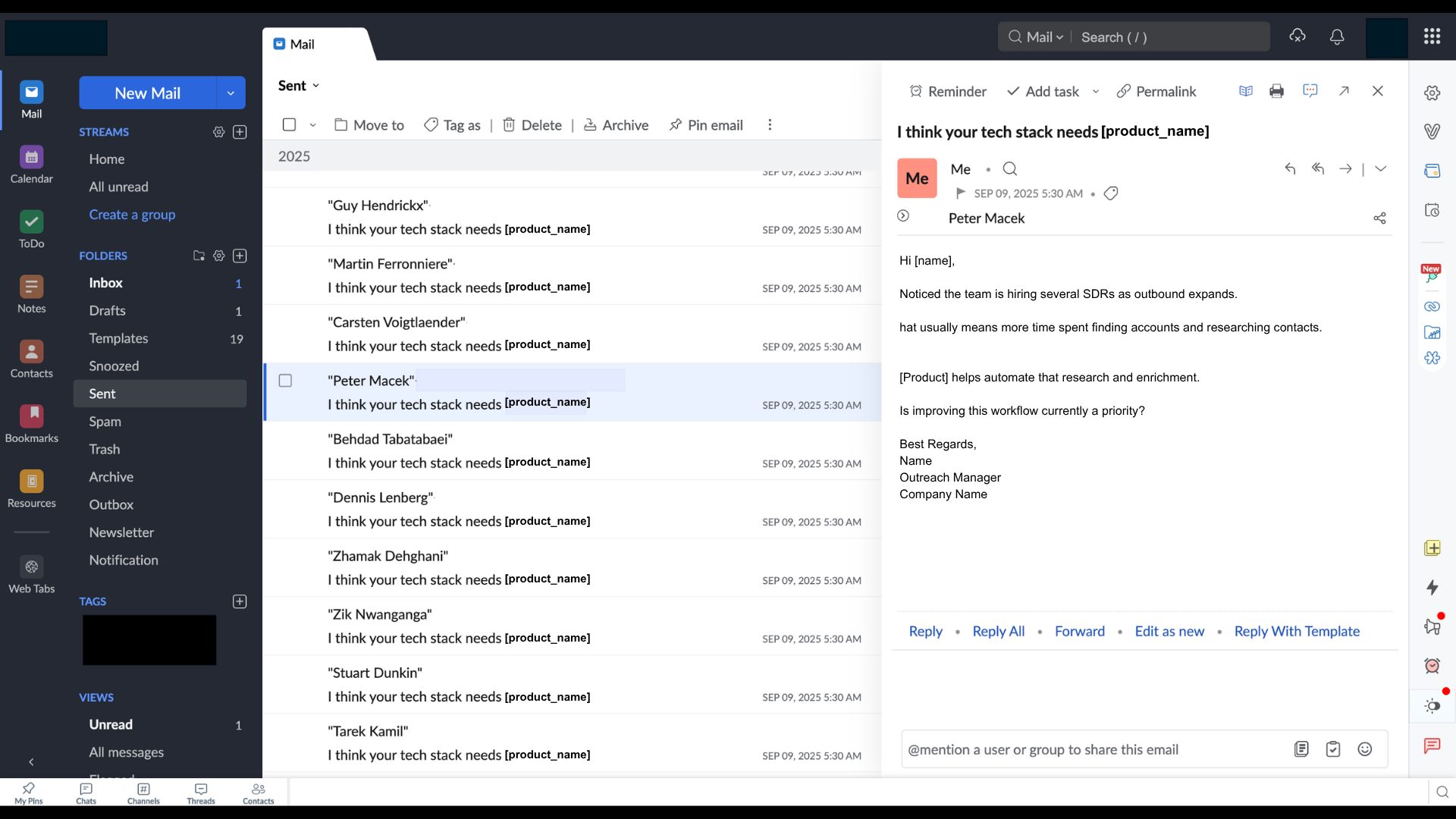
Apollo recommends connecting something relevant about the recipient with a problem the product can address and a clear next step.
Myles Kreiner, Founder & CEO of Epiphany Scales, used targeted cold email, list building, and message testing. A BEC Growth case study reports $35,000+ in new revenue within two months and 4+ booked meetings per day.
Adding a first name is not personalization.
Useful personalization explains why the prospect is relevant.
For example:
Noticed your team recently opened six SDR positions.
is more useful than:
Loved the work you're doing at ABC.
The first connects to a business situation. The second could be sent to almost anyone.
AI can create the first draft, but a person should verify the claim before sending. Apollo also recommends reviewing AI-generated messages for accuracy, relevance, tone, and context.
Huntr used A/B testing to refine messaging for specific audiences, with its targeted outreach reportedly reaching a 20% reply rate. Personalization should therefore change the reason and message, not just the recipient's name.
Many prospects will not reply to the first email.
The solution is not to send the same message repeatedly.
A practical sequence could be:
Day 1: Relevant trigger + problem
Day 3: Problem-focused follow-up
Day 6: Relevant result or use case
Day 10: Different angle
Day 14: Close-the-loop message
Each follow-up should give the prospect a different reason to respond.
Apollo supports sequences and AI-assisted campaign creation, while Instantly focuses on cold-email campaigns and sequencing.
Epiphany's reported campaign continuously tested and removed underperforming copy while refining lists and sequences. The case study reports 4+ booked meetings per day at its peak. Follow-ups should therefore be treated as an optimization process, not repetition.
Suppose there are 500 prospects.
Instead of manually researching every company, create structured fields:
Company signal: Hiring 8 SDRs Role: VP Sales Problem: Scaling outbound research Product capability: Automated lead enrichment Personalization: Based on current hiring activity
AI can turn these fields into short, relevant emails while keeping the campaign consistent.
Clay supports this workflow through enrichment, AI research, signals, and personalized messaging.
The goal is not 500 completely different emails. It is 500 relevant emails based on reliable prospect information.
At Pump.co, Claire Hardesty helped build a much larger outbound system that reportedly sent 130,000+ emails in its first month and generated nearly $200,000 in attributed pipeline revenue.
Personalization at scale requires both good data and good infrastructure.
Cold email brings prospects to the website. The next opportunity is to engage them while they are actively researching the product.
A Drift campaign can show targeted messages based on the visitor, page, or campaign context.
For example:
Looking for a faster way to build your prospecting workflow? See how the process works or chat with a sales specialist.
Drift's Playbooks can engage website visitors, qualify leads, and route conversations to sales representatives.
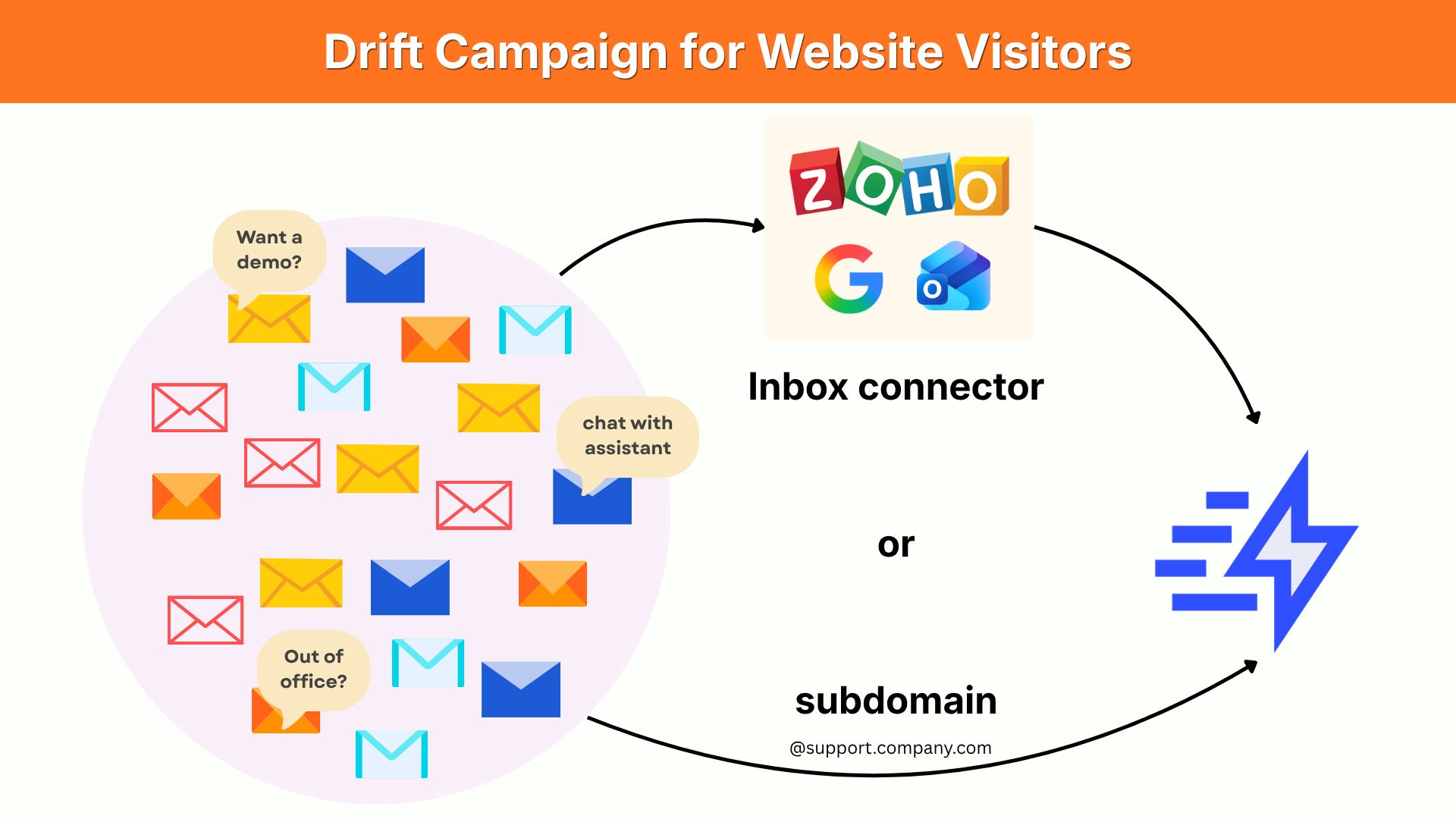
A simple workflow is:
Cold Email → Website Visit → Drift Campaign → Qualification → Sales Conversation → CRM
Drift can also trigger specific Playbooks from links or buttons, allowing an email campaign to continue naturally into a website conversation.
The key is consistency. If the email discusses outbound prospecting, the website campaign should continue that same conversation instead of showing a generic message.
AI is useful for repetitive research and preparation.
It can:
Find prospects → Enrich data → Research accounts → Identify signals → Draft emails → Summarize replies → Categorize objections → Update records
Humans should handle:
Offer positioning → Final review → Important replies → Objections → Pricing → Negotiations → Sales calls
This keeps the workflow fast while reducing the risk of incorrect AI-generated information reaching prospects.
HubSpot recommends using AI to reduce manual prospecting and research while allowing sales teams to focus on higher-value activities.
Solidroad's reported outbound funnel shows why automation is only one part of the process: 500,000 emails generated 5,000 replies, 250 meetings, and 40 customers. The sales conversations still had to be handled by people.
Cold email should not end when someone replies.
A real B2B workflow should move prospects through:
Target Account → Researched → Contacted → Replied → Qualified → Meeting → Opportunity → Customer
A CRM such as HubSpot can store account history, contact information, email activity, deal stages, notes, and next actions.
Apollo can also connect prospecting and outbound activity with CRM workflows.
Solidroad's reported funnel shows why tracking the complete journey matters:
500,000 emails → 5,000 replies → 250 meetings → 40 customers → $1M ARR
These figures come from the company's reported outbound results and illustrate why email volume alone is not the final metric.
Every positive response should have a clear next step.
A campaign should answer practical questions:
Which ICP segment replied? Which job title responded? Which trigger produced conversations? Which message generated qualified replies? Which campaign produced opportunities?
Track:
Positive reply rate → Qualified replies → Meetings → Opportunities → Customers → Revenue
If a campaign generates opens but no qualified conversations, simply increasing volume will not fix the problem.
Huntr, for example, used reply rates, interested responses, and revenue growth to evaluate its outbound campaigns rather than focusing only on email opens.
This creates a more useful feedback loop:
Prospect → Research → Email → Reply → Analysis → Better targeting → Better email
That is where AI becomes useful beyond simply writing copy.
A small team does not need ten different platforms.
A practical setup could look like this:
Apollo: Find contacts, companies, and buying signals. Clay: Enrich prospects, research accounts, identify signals, and generate personalized data. ChatGPT: Analyze research, improve messaging, classify replies, and create campaign variations. Instantly: Run cold-email campaigns and follow-ups. HubSpot: Manage contacts, conversations, deals, and pipeline stages.
Larger teams can connect these systems instead of moving CSV files manually. Apollo supports workflow integrations, while Clay can push enriched prospects into sequencing systems such as Apollo and Instantly.
The Pump.co example shows how these tools can become a connected outbound infrastructure, with reported use of Clay and large-scale email infrastructure to support its campaigns.
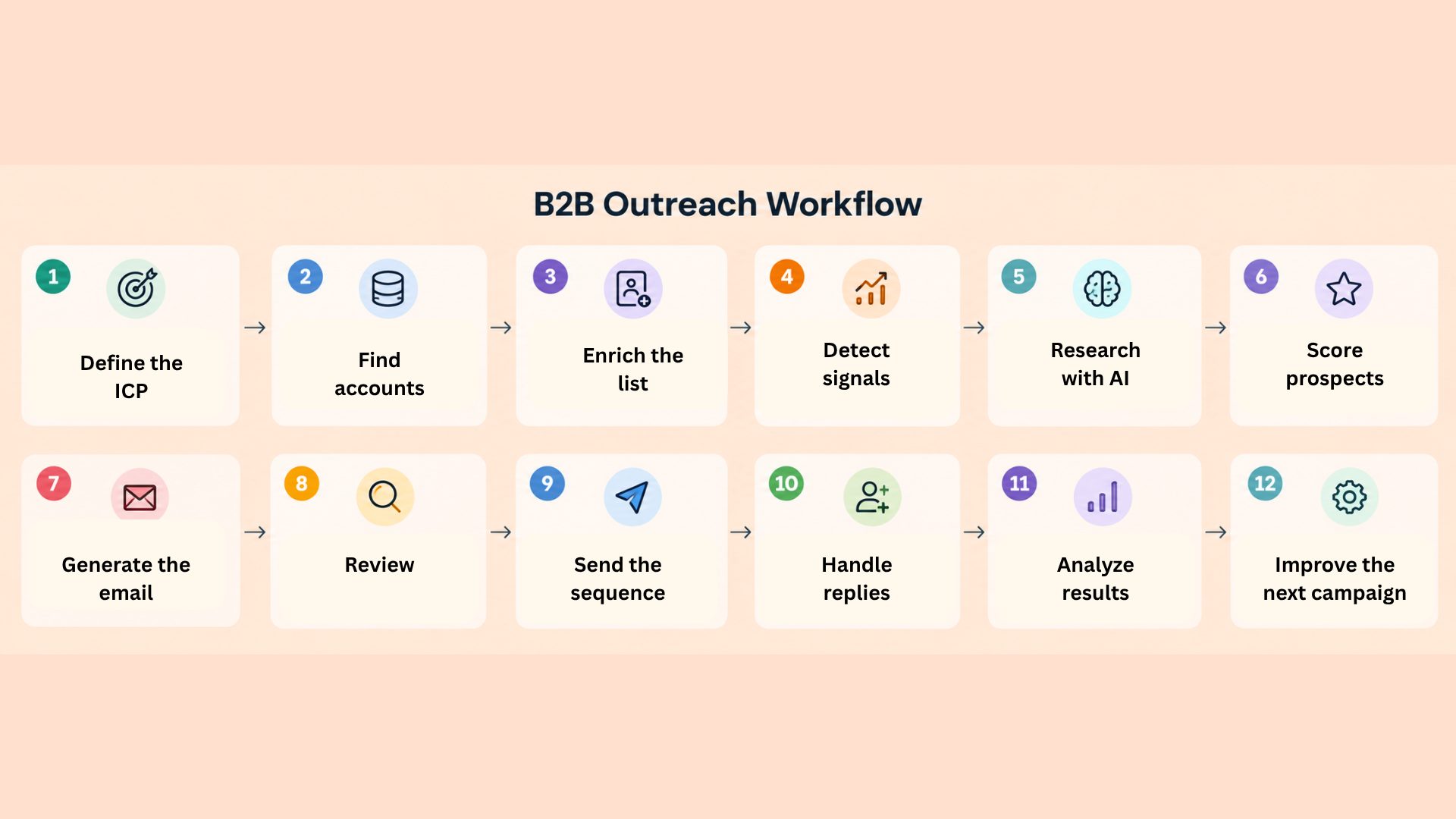
A practical B2B outreach campaign can run like this:
1. Define the ICP Choose the company type, buyer, problem, and buying signals.
2. Find accounts Use Apollo or another prospecting database.
3. Enrich the list Add verified contact information and company details.
4. Detect signals Use Clay or Apollo to identify hiring, funding, product, technology, or other relevant changes.
5. Research with AI Create a short account brief for every qualified prospect.
6. Score prospects Prioritize prospects with strong ICP fit and a current business reason.
7. Generate the email Use AI to draft a short message based on the research.
8. Review Check every important claim manually.
9. Send the sequence Use Apollo, Instantly, or the existing sales engagement system.
10. Handle replies Move interested prospects into the CRM and continue the conversation manually.
11. Analyze results Compare positive replies, meetings, opportunities, and revenue.
12. Improve the next campaign Use the results and AI analysis to change targeting, triggers, offers, and messaging.
A warm cold email is created before the email is sent. The prospect needs to be a good fit, there needs to be a credible reason for contacting them, and the message needs to connect that reason to a problem the business may actually have.
AI makes this process faster by handling research, enrichment, signal detection, personalization drafts, reply analysis, and repetitive CRM work. Tools such as Apollo, Clay, ChatGPT, Instantly, and HubSpot can turn those individual tasks into a connected workflow.
The objective is not to send more emails simply because automation makes it possible. The objective is to identify better prospects, understand them faster, send more relevant emails, and turn responses into qualified pipeline.
