A developer deploying a new SaaS product in 2026 may write fewer traditional workflows and more instructions for autonomous systems.
A simple API call that once required a dashboard, multiple user actions, and manual approval steps may now trigger an AI agent that analyzes data, makes decisions within defined rules, and completes tasks automatically.
This shift is changing how SaaS products are built, priced, secured, and adopted.
For years, SaaS growth followed a predictable pattern: build a web application, add collaboration features, improve user experience, and compete on functionality. In 2026, the competition is moving toward intelligence, specialization, and infrastructure efficiency.
Companies are asking different questions:
This article explores the SaaS trends that will shape 2026, why they matter, where they have limitations, and what founders and developers should consider when building the next generation of software products.
Summary
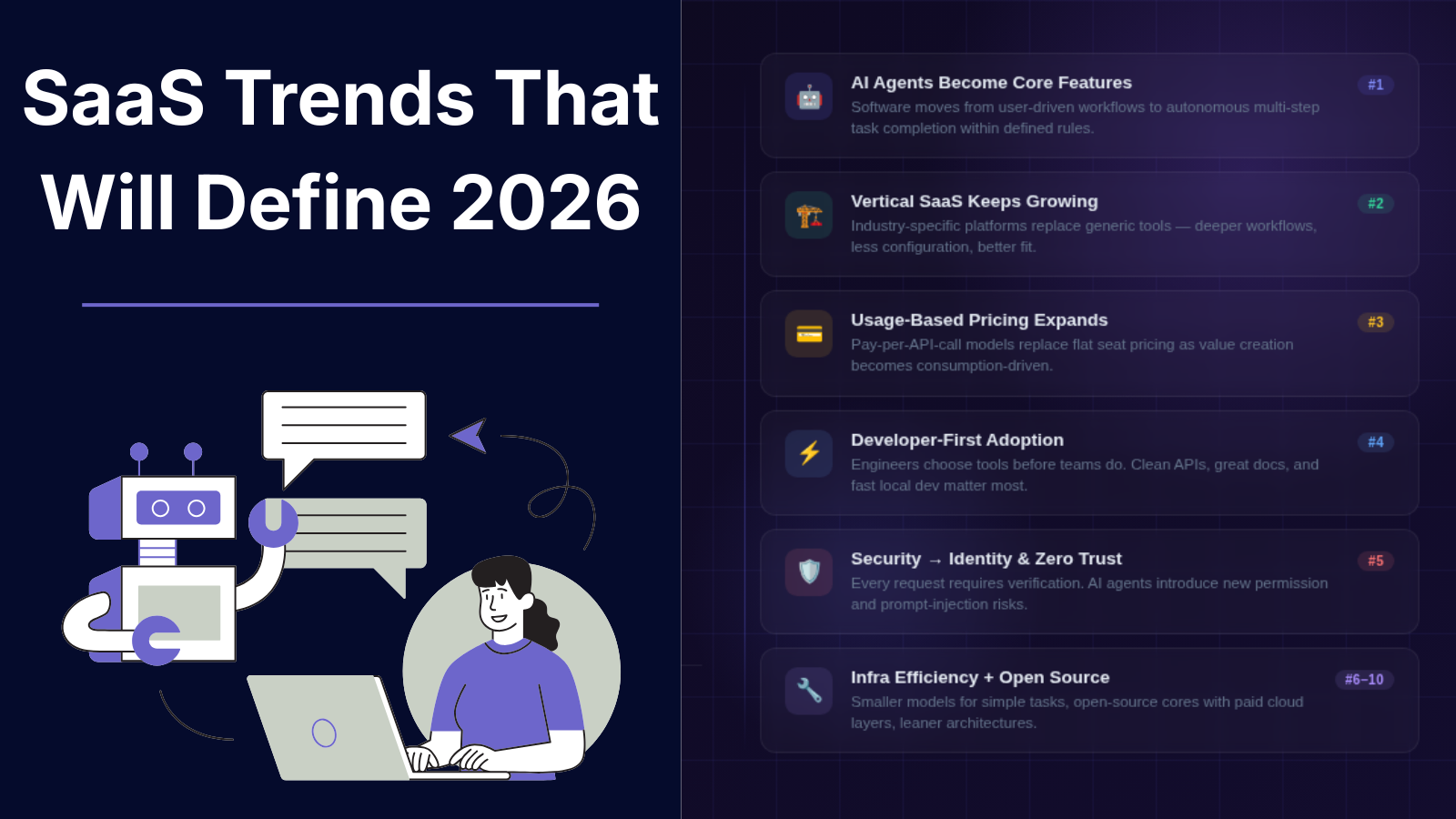
SaaS in 2026 is shifting from traditional software tools toward intelligent systems powered by AI agents, automation, and specialized workflows.
AI agents are changing how users interact with SaaS products by enabling software to analyze information, make decisions within defined limits, and complete multi-step tasks.
Vertical SaaS is growing as companies look for industry-specific solutions designed around real workflows instead of generic platforms.
Usage-based pricing models are becoming more common, especially for AI products, APIs, and infrastructure tools.
Developer-first SaaS platforms are gaining adoption through APIs, SDKs, documentation, and integration-focused workflows.
Security, identity management, and permission control are becoming essential as SaaS applications become more connected.
Open-source SaaS models are creating new opportunities through community-driven development combined with hosted services.
AI coding tools are changing software development workflows by helping developers write, test, document, and maintain applications.
SaaS companies are focusing on infrastructure efficiency as AI workloads increase cloud and computing costs.
The future of SaaS will be shaped by specialized solutions, reliable technology, intelligent automation, and user trust.
The biggest SaaS shift in 2026 is moving from AI assistants to AI agents.
Traditional SaaS applications usually follow a user-driven model:
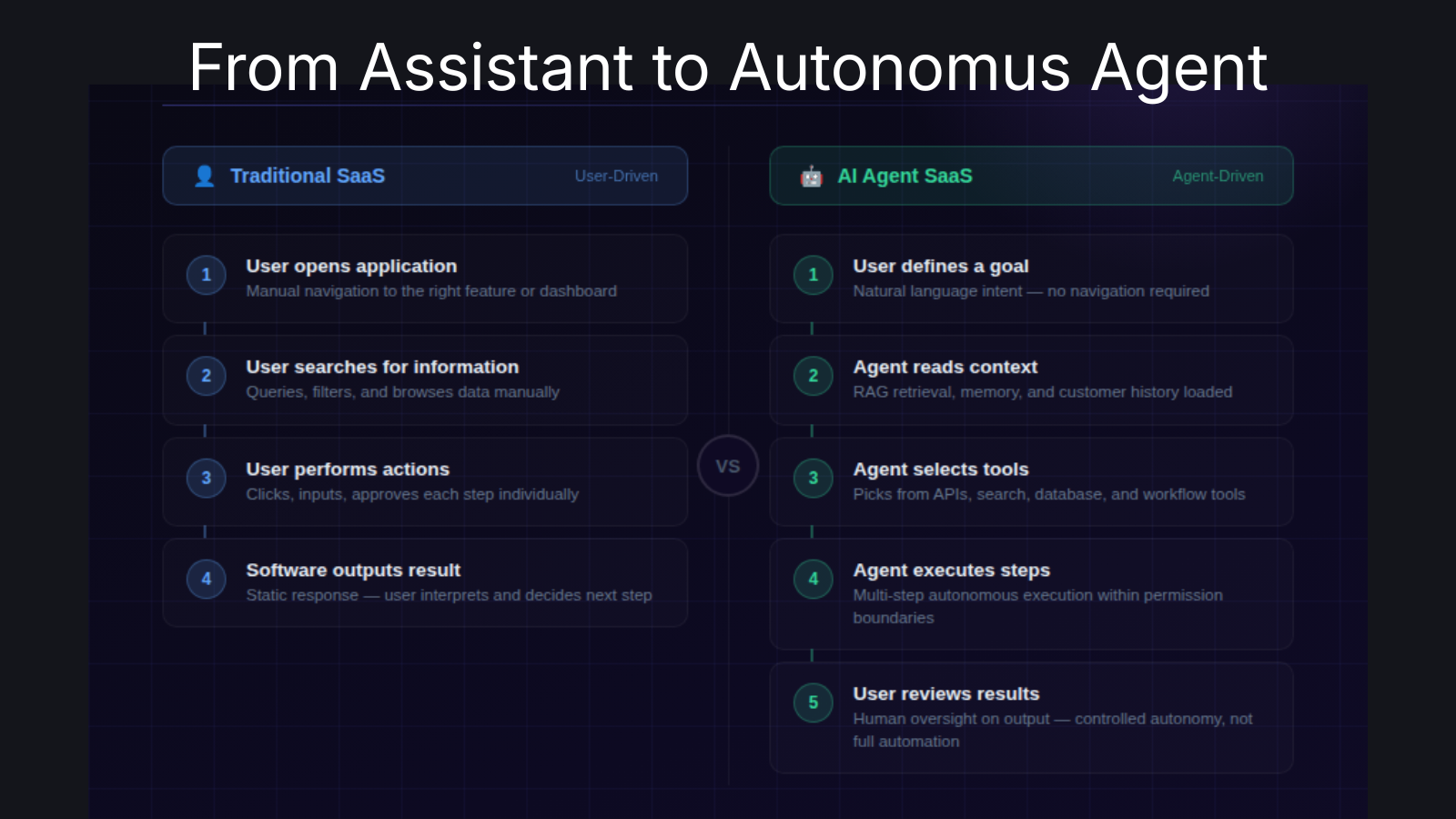
AI agent-based systems introduce a different workflow:
For example, a customer support SaaS platform could move beyond suggesting replies. An AI agent could:
The technical foundation behind these systems includes:
Popular AI development frameworks include:
However, AI agents are not replacing traditional SaaS architecture.
They introduce new engineering challenges:
A useful AI agent system needs clear boundaries.
A finance application should not allow an AI agent to approve unlimited transactions. A development platform should not allow an agent to deploy production code without review.
The future of SaaS is likely not fully autonomous software. It is software with controlled autonomy.
Generic SaaS platforms solved broad business problems. The next wave focuses on specific industries.
Vertical SaaS means software designed for a particular industry or workflow.
Examples include:
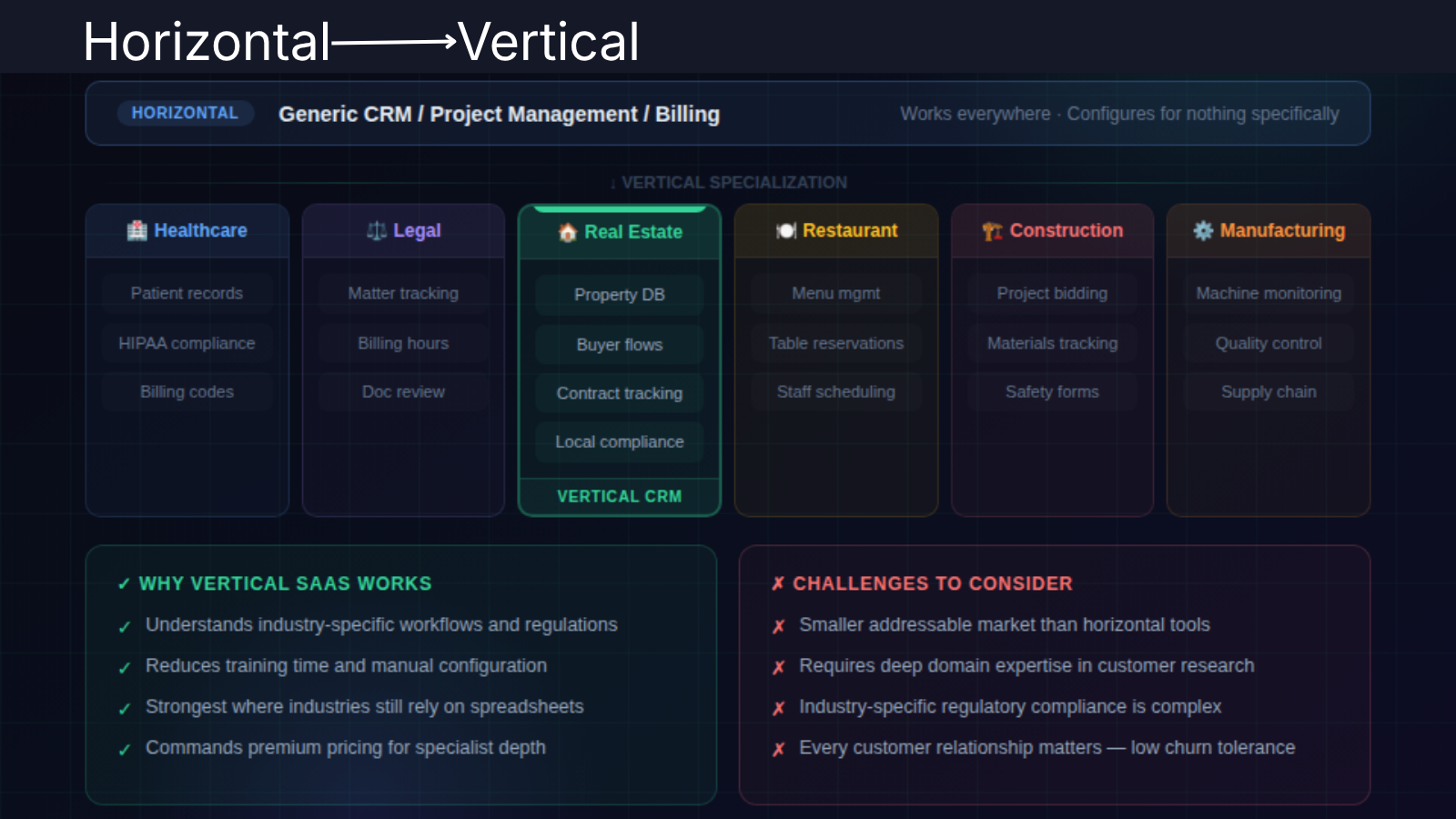
A horizontal CRM platform may provide customer management features for everyone.
A vertical CRM for real estate companies can include:
The advantage is deeper understanding of industry-specific problems.
Businesses often do not need more features. They need software that understands their process.
A specialized SaaS product can reduce:
Vertical SaaS has challenges:
The opportunity is strongest where industries still depend heavily on spreadsheets, emails, and manual processes.
The traditional SaaS pricing model is simple:
$20/user/month
This worked well when the value was connected to employees accessing software.
However, modern SaaS products often create value through usage.
Examples:
Usage-based pricing allows customers to pay according to consumption.
Examples:
Companies such as Stripe and cloud providers have popularized consumption-based models.
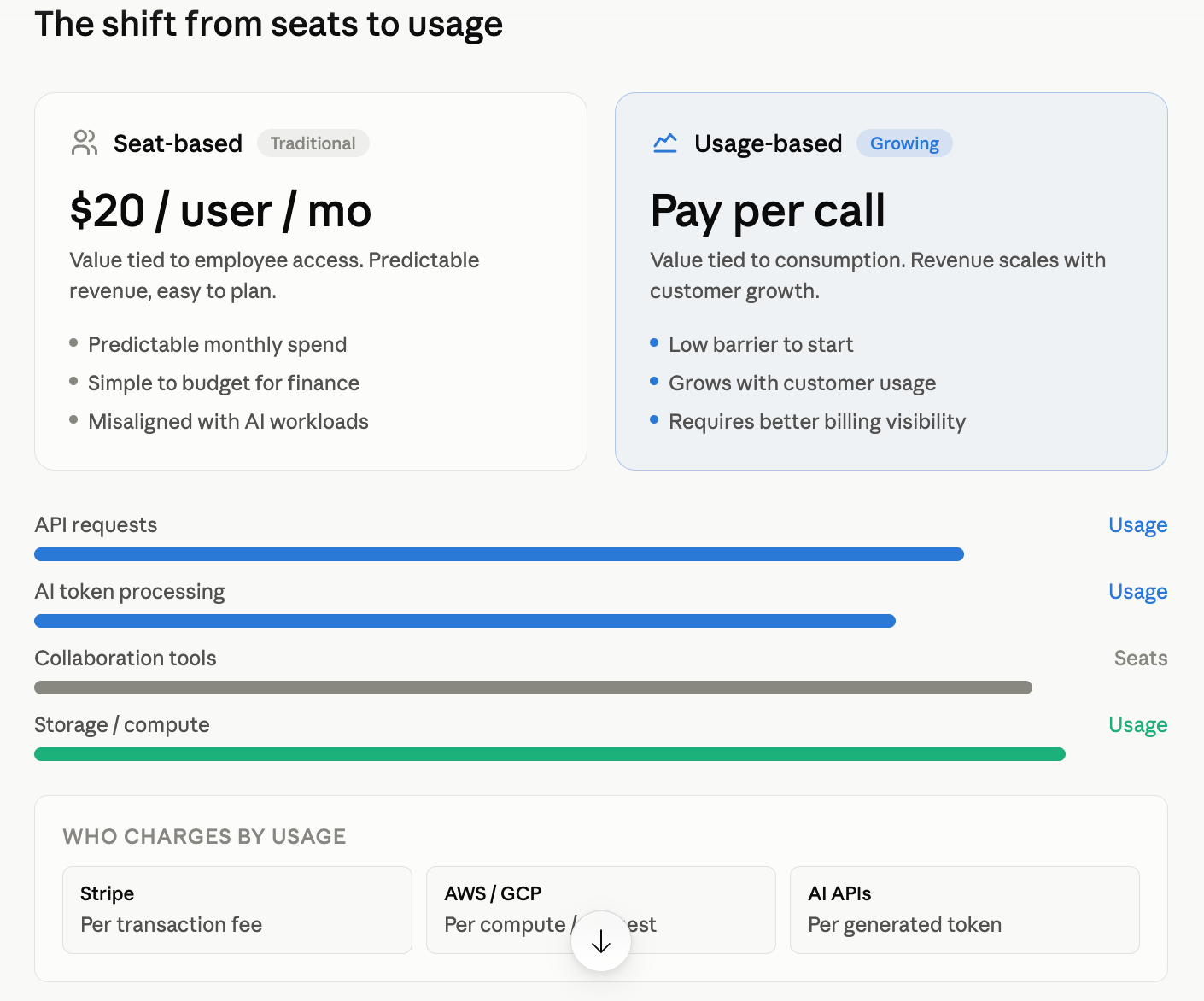
For customers:
For SaaS companies:
Usage-based pricing creates uncertainty.
Customers may ask:
Successful SaaS companies will need better billing visibility and spending controls.
Developers are becoming a primary SaaS buyer.
Many modern tools are adopted because engineers can integrate them quickly.
Developer-first products usually provide:
A developer evaluating a platform often checks:
before requesting a sales demo.
Important factors include:
Developer-focused SaaS categories include:
The challenge is balancing developer adoption with business requirements.
Developers may choose a tool, but companies usually need:
As SaaS applications become more connected, security becomes more complex.
A modern company may use dozens or hundreds of SaaS applications.
Common risks include:
Security priorities in 2026 will focus heavily on:
Companies need better control over:
Zero Trust assumes that access should always be verified.
Instead of:
"User is inside company network, therefore trusted"
The model becomes:
"Every request requires verification."
AI-powered SaaS introduces additional concerns:
Security will become a product requirement, not an optional feature.
The SaaS market has thousands of applications solving similar problems.
In 2026, smaller focused products may compete effectively by solving narrow problems better.
Examples:
Instead of:
"All-in-one business platform"
A company may build:
"Invoice automation for independent medical clinics"
Instead of:
"Marketing automation"
A company may build:
"SEO reporting automation for agencies"
This approach reduces complexity.
A smaller product can:
However, niche products need strong positioning.
A narrow market means every customer relationship matters.
AI tools are changing how software teams build products.
Developers increasingly use AI for:
Examples include coding assistants and AI development environments.
However, AI-generated code still requires review.
Common issues include:
A practical development workflow remains:
AI can reduce repetitive work, but engineering judgment remains necessary.
Companies often use too many disconnected tools.
A typical organization may have separate systems for:
This creates problems:
Future SaaS products will focus more on interoperability.
Important technologies include:
Products that integrate well with existing workflows have an advantage over isolated tools.
Open source software and SaaS are becoming closer.
A common model:
Benefits:
Challenges:
This model works especially well for developer tools and infrastructure software.
AI workloads increase infrastructure costs.
SaaS companies need to optimize:
Not every task requires the largest AI model.
A practical architecture may combine:
Efficiency will become an engineering advantage.
Founders building SaaS products should focus on:
A clear problem for a specific audience is often stronger than a broad product idea.
APIs and data portability should be considered from the beginning.
Adding a chatbot is rarely enough.
Consider where AI can reduce real operational work.
Security, transparency, and reliability will influence adoption.
SaaS in 2026 will be defined less by the number of features a product offers and more by how effectively it solves specific problems.
AI agents will change workflows. Vertical SaaS will create deeper industry solutions. Usage-based pricing will reshape how customers pay. Developer-first platforms will influence software adoption. Security and infrastructure efficiency will become central engineering concerns.
The strongest SaaS products will likely combine three things:
The future of SaaS is not simply more software. It is software that understands context, connects systems, and helps people complete meaningful work.
Useful technical references: