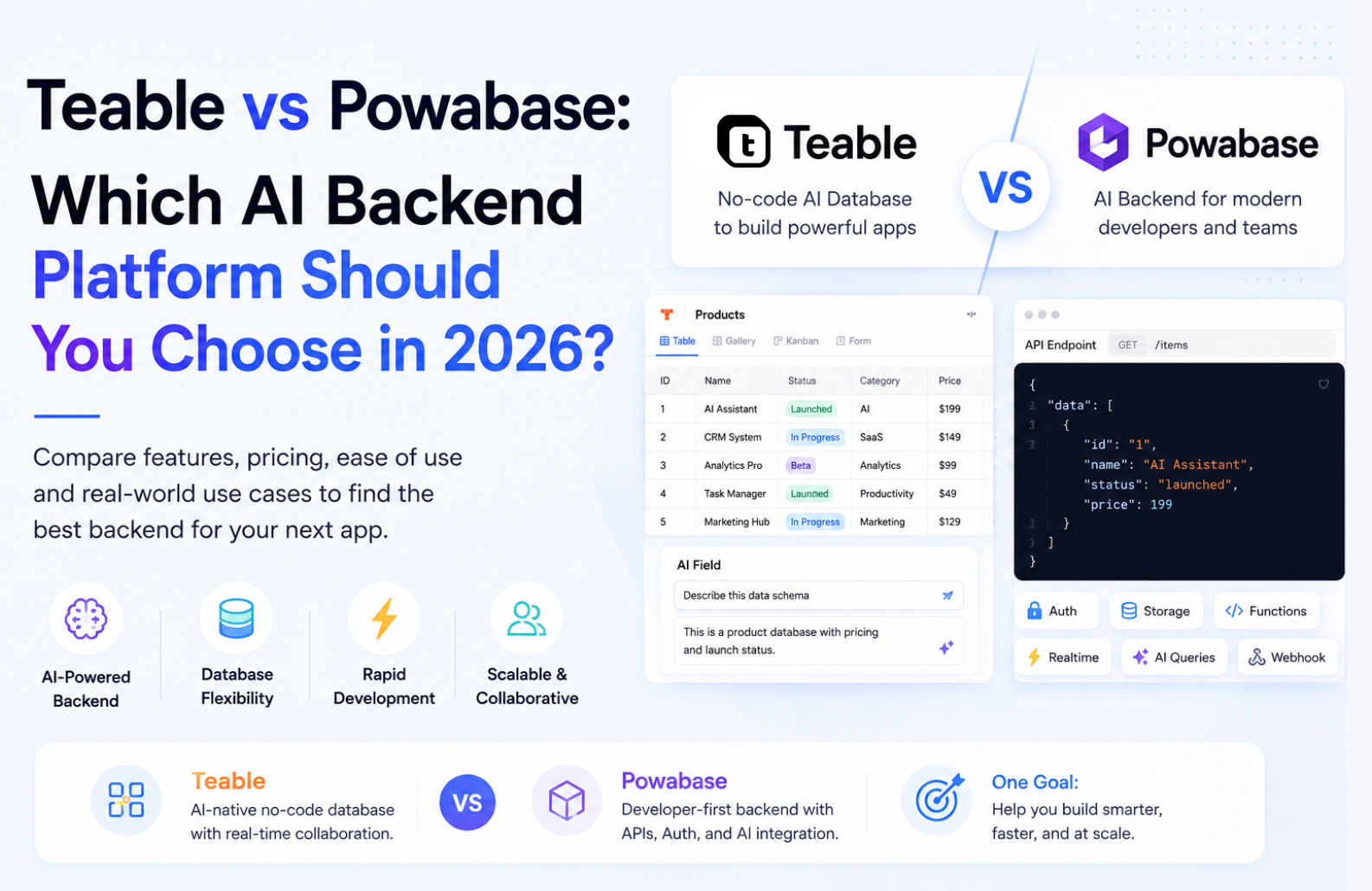
Choosing the right backend has become much more important than simply picking a database. Modern applications increasingly rely on AI workflows, automation, vector search, authentication, APIs, and collaborative data management. Instead of assembling multiple services, many developers now prefer platforms that combine these capabilities into a single workspace.
Two platforms attracting attention in this space are Teable and Powabase. Although both simplify backend development, they take very different approaches.
Teable focuses on spreadsheet-style databases with AI-assisted workflows and collaboration, making it attractive for internal tools, CRM systems, project management, and operational applications.
Powabase, on the other hand, is designed as an AI-native backend platform that combines PostgreSQL, vector databases, authentication, storage, AI agents, workflows, and RAG infrastructure for developers building modern AI applications.
So which one is the better choice?
The answer depends entirely on what you're building.
In this detailed comparison, we'll examine their architecture, AI capabilities, automation features, integrations, pricing, developer experience, scalability, and ideal use cases to help you choose the right platform.
Teable is an open-source, spreadsheet-inspired database platform that combines the familiarity of spreadsheets with the power of relational databases.
Instead of writing SQL queries or managing database schemas manually, users can create structured databases using an intuitive interface similar to Airtable. Developers gain API access, while non-technical teams can manage data visually.
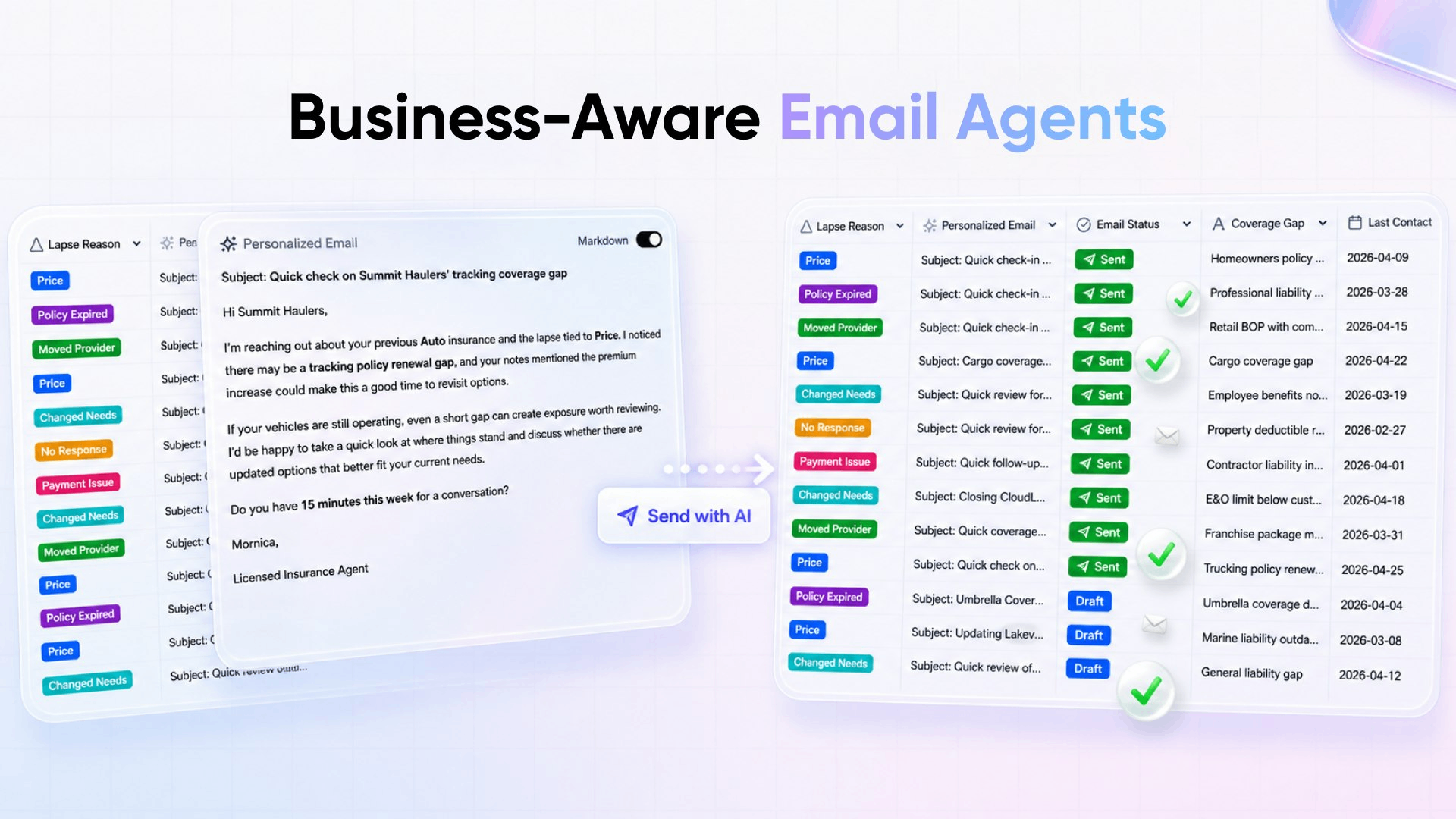
Recent updates have expanded Teable beyond database management. The platform now includes AI-powered workflows, automation capabilities, AI assistants, email automation, and app-building features, making it suitable for operational teams as well as developers.
Unlike traditional databases that primarily target engineers, Teable is designed for collaboration across product managers, marketers, operations teams, and developers.
Powabase is an AI-native backend platform designed specifically for developers building intelligent applications.
Rather than focusing only on data storage, Powabase combines PostgreSQL, authentication, object storage, AI workflows, vector search, retrieval-augmented generation (RAG), AI agents, serverless functions, and automation into a unified backend.
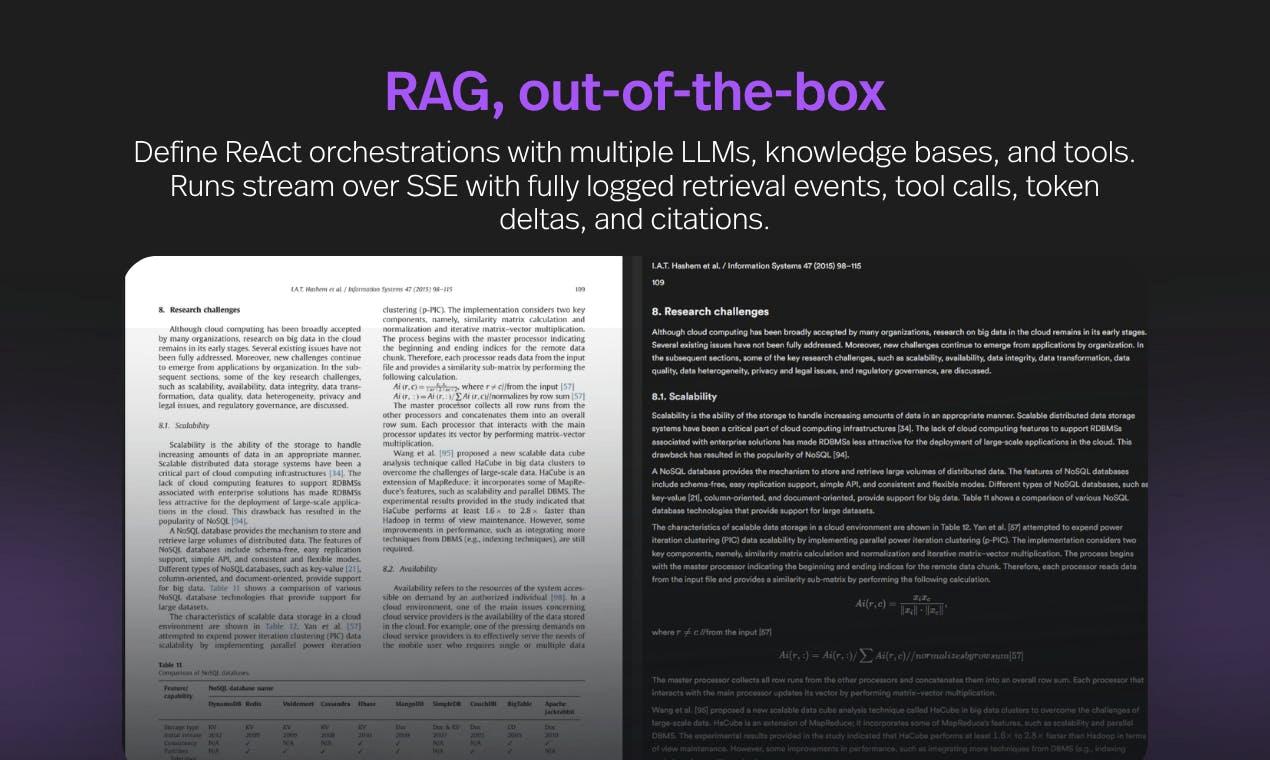
Its goal is to remove the complexity of integrating multiple infrastructure providers when developing AI applications.
Instead of connecting Postgres, a vector database, authentication, cloud storage, embeddings, workflow engines, and AI orchestration separately, Powabase provides them through one platform.
This makes it particularly attractive for startups building AI products quickly.
At first glance, Teable and Powabase appear to compete in the same category. Both help developers manage data, automate workflows, and build applications faster. However, after spending time with each platform, it becomes clear that they are designed with very different goals in mind.
Teable is built around the idea that managing structured data should feel as intuitive as working with a spreadsheet. It combines the familiarity of Airtable-like interfaces with relational databases, making it easy for both technical and non-technical teams to collaborate on the same data. AI features are woven into the experience to automate repetitive work, generate content, and simplify business operations.
Powabase approaches the problem from the opposite direction. Rather than starting with a collaborative database, it provides the building blocks required to develop AI-native applications. PostgreSQL, authentication, object storage, vector search, AI agents, workflows, and APIs are brought together into a single backend platform, reducing the need to stitch together multiple services.
The distinction becomes more obvious when comparing how each platform handles everyday development tasks.
Teable's biggest strength is its interface. Tables resemble familiar spreadsheets, making it approachable even for users who have never written a SQL query. Relationships between tables, views, filters, and permissions can all be managed visually, allowing product managers, marketers, operations teams, and developers to work from the same workspace.
Powabase is less concerned with visual data management. Instead, it focuses on giving developers a production-ready backend powered by PostgreSQL. Developers interact with databases, APIs, authentication, storage, and AI infrastructure rather than spreadsheet-style views. For engineering teams, this provides far greater flexibility, while business users may find it less approachable.
Both platforms incorporate AI, but they do so in different ways.
Within Teable, AI is designed to improve productivity. Users can summarise records, generate text, categorise information, automate repetitive tasks, and build AI-assisted workflows directly inside their databases. These capabilities enhance existing business processes without requiring complex setup.
Powabase treats AI as a core part of the backend itself. Instead of simply adding AI features to a database, it provides infrastructure for building AI-powered products. Developers can create retrieval pipelines, deploy AI agents, manage embeddings, integrate large language models, and orchestrate intelligent workflows from a unified platform. This makes it better suited to applications where AI is central to the product rather than an additional feature.
Automation is another area where the two platforms take noticeably different approaches.
Teable focuses on business process automation. Database events can trigger actions, send notifications, update records, or execute AI-powered tasks. These workflows help teams eliminate manual work while keeping operations organised.
Powabase extends automation beyond database events. Developers can orchestrate serverless functions, AI agents, API integrations, authentication events, and backend services within the same workflow. This allows applications to support far more complex logic, especially when multiple AI models or external systems need to work together.
For organisations where multiple departments work with the same data, collaboration is one of Teable's strongest advantages. Team members can edit records simultaneously, create filtered views, manage permissions, and organise shared workspaces without depending entirely on engineering teams.
Powabase supports collaboration from a developer's perspective, but its primary focus remains backend infrastructure rather than collaborative data management. Teams building software products will appreciate its engineering workflow, while cross-functional business teams may prefer the simplicity of Teable.
Developers using Teable benefit from REST APIs, automation tools, integrations, and an intuitive database interface. The platform reduces the amount of code required to build internal applications while still allowing custom integrations when needed.
Powabase offers a more traditional developer experience centred around backend services. PostgreSQL, authentication, storage, AI APIs, vector search, serverless functions, and workflow orchestration are all available from a single platform. This makes it particularly appealing for teams building production-grade SaaS products or AI applications that require complete control over their backend architecture.
Rather than asking which platform is objectively better, the more useful question is what kind of application you're building.
If your project revolves around structured business data, collaborative workspaces, CRM systems, project management, inventory tracking, or internal tools, Teable offers an experience that balances usability with powerful automation. Teams across different departments can contribute without needing deep technical knowledge.
If you're developing AI assistants, retrieval-augmented generation (RAG) systems, autonomous agents, or scalable SaaS platforms that require authentication, vector search, object storage, and AI workflows, Powabase provides a backend architecture that's purpose-built for those requirements.
Although both platforms simplify modern application development, they solve different problems. Teable helps organisations manage and collaborate on data more effectively, while Powabase provides the infrastructure needed to build the next generation of AI-powered software.
Both platforms offer free entry points, allowing developers to experiment before committing to paid plans.
For the latest pricing, it's always best to check the official websites, as plans may change over time.
Teable and Powabase solve different problems despite both being modern backend platforms.
If your priority is collaborative data management, operational workflows, internal tools, or replacing spreadsheets with structured databases, Teableoffers one of the most approachable solutions available today. Its spreadsheet-inspired interface lowers the barrier for non-technical users while still providing developers with APIs and automation capabilities.
Powabase takes a fundamentally different approach. Rather than acting as a collaborative database, it serves as a complete AI-native backend for building intelligent applications. PostgreSQL, vector search, authentication, storage, workflows, and AI infrastructure come together in a single platform, reducing the need to stitch together multiple backend services.
Ultimately, the better platform depends on your project requirements, rather than on any one being universally superior.
Choose Teable if your team values collaboration, spreadsheet-style databases, and AI-assisted business workflows.
Choose Powabase if you're building AI products, autonomous agents, RAG applications, or production-ready SaaS platforms that require a scalable backend with native AI capabilities.
As AI applications continue to evolve in 2026, both platforms represent compelling options for different audiences. The right choice comes down to whether you need a collaborative operational workspace or a fully integrated AI backend.
