AI agents have become much better at reasoning, planning, and using external tools. Yet one challenge continues to limit many deployments: memory.
Without persistent memory, an AI agent treats every conversation like a fresh start. User preferences disappear, previous tasks are forgotten, and long-running workflows lose valuable context. Whether you're building a customer support assistant, a coding copilot, or an autonomous research agent, memory has become one of the most important components of the AI stack.
Modern AI memory frameworks solve this problem by storing relevant conversations, extracting facts, building knowledge graphs, ranking important information, and retrieving only the context an agent needs at the right moment. Instead of relying solely on an LLM's context window, these tools enable long-term personalization, better decision-making, and more efficient multi-step reasoning.
This guide compares the best AI memory tools for AI agents in 2026, covering their strengths, ideal use cases, pricing, and how they differ from one another.
Choosing the right AI memory framework depends on the type of agent you're building. Some platforms focus on developer APIs, while others specialize in knowledge graphs, semantic retrieval, or personalized memory.
Other excellent AI memory tools include Graphiti, MemoryOS, and LlamaIndex Memory. Each approaches long-term memory differently, making them suitable for different AI architectures and workloads.
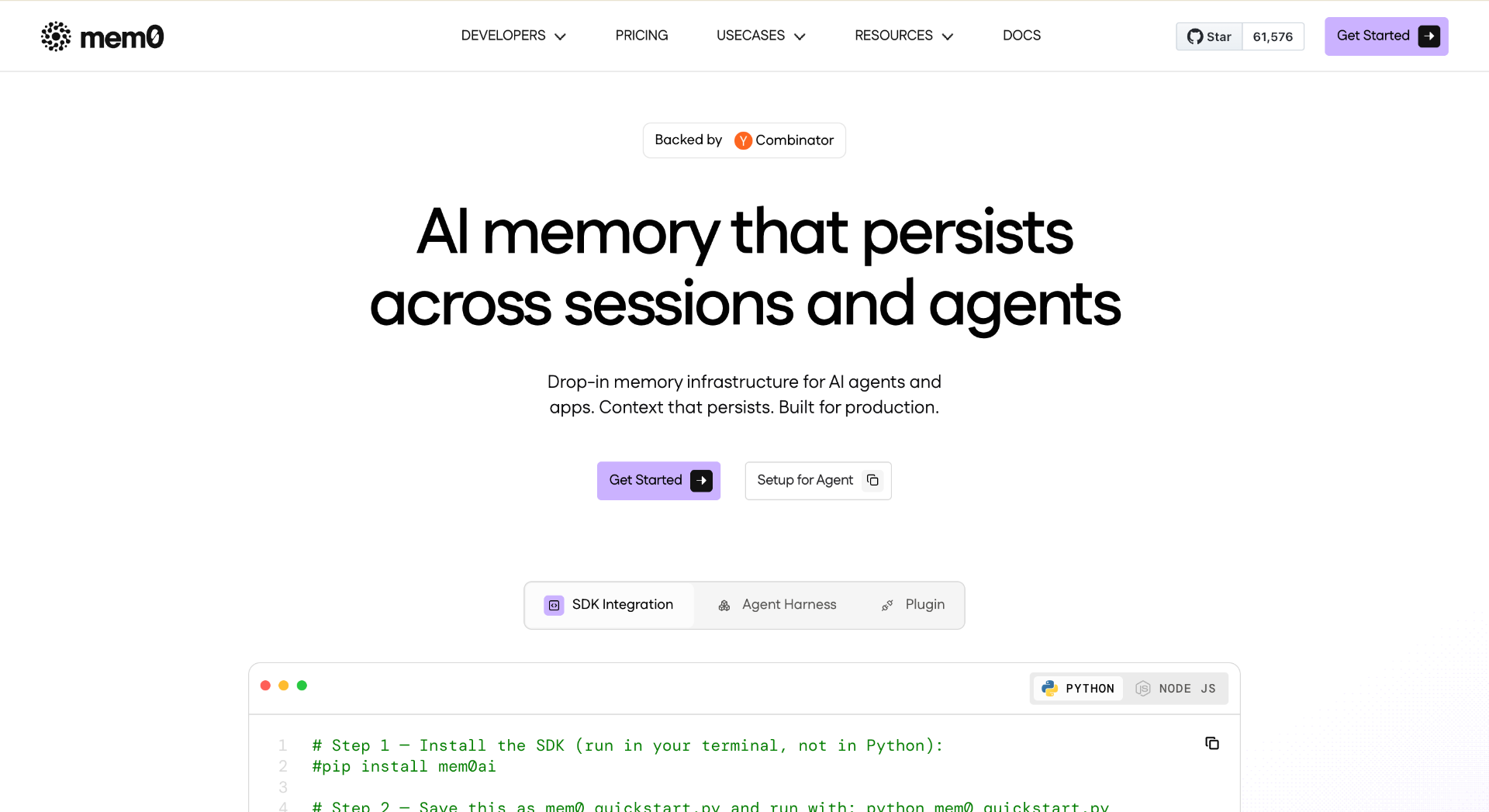
Mem0 has quickly become one of the most widely adopted memory layers for AI agents. Instead of storing entire conversations, it identifies meaningful facts, user preferences, and long-term context, allowing AI applications to retrieve only the information that remains relevant over time. This approach helps reduce token usage while improving response quality.
Developers can integrate Mem0 with popular frameworks such as LangChain, LlamaIndex, OpenAI Agents SDK, and CrewAI, making it suitable for chatbots, coding assistants, customer support agents, and enterprise AI applications. Its API-first design also simplifies deployment in production environments.
Mem0 combines semantic memory, intelligent retrieval, user profiling, and scalable APIs into a lightweight memory layer for AI agents. It supports cloud deployment and integrates with leading AI frameworks, though some enterprise features are available only on paid plans. A generous free tier is available for developers, with premium plans designed for production workloads.
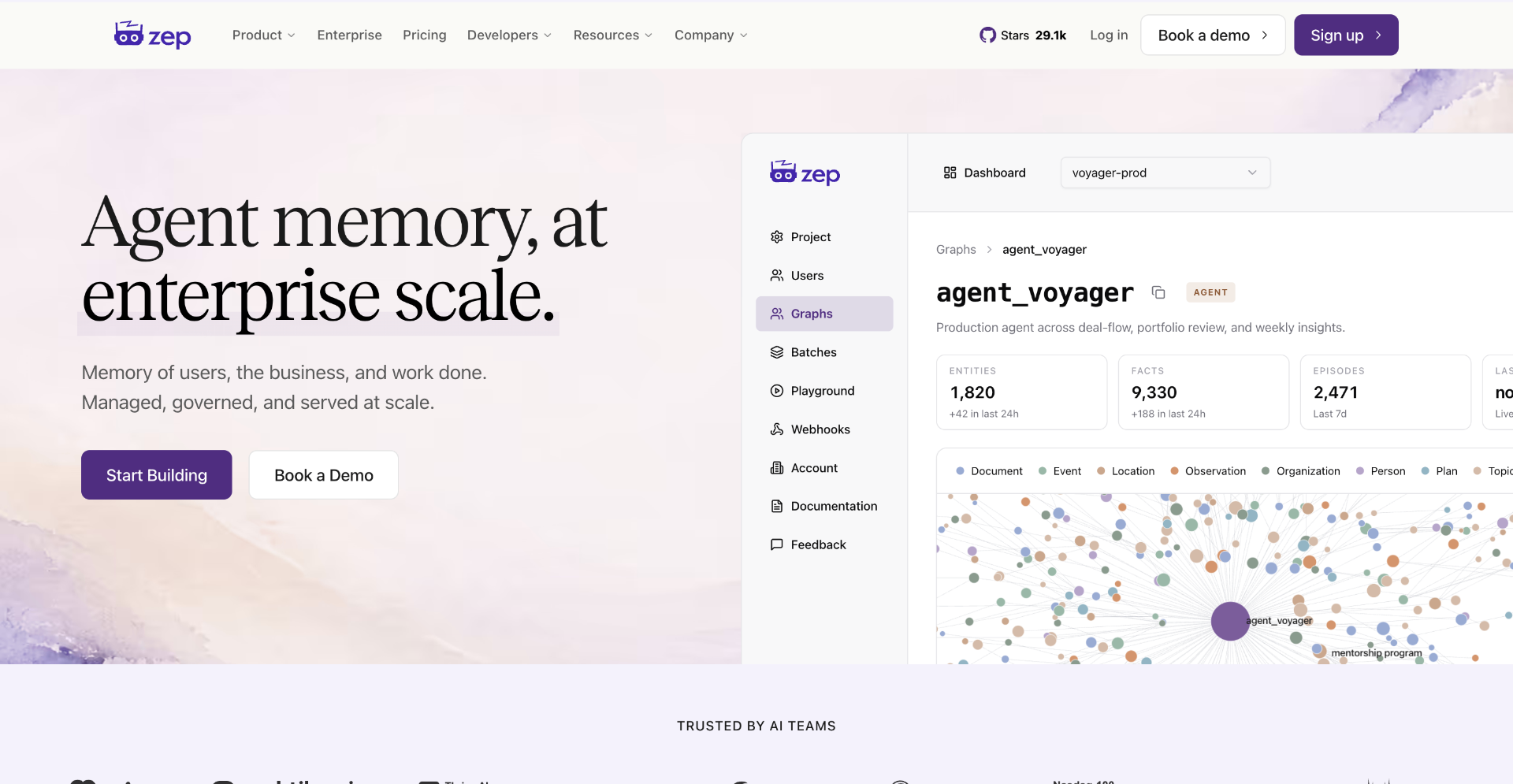
Zep is a memory platform built specifically for conversational AI applications. It automatically stores chat history, extracts important facts, and retrieves relevant context whenever an AI agent needs it. Rather than sending entire conversation histories to an LLM, Zep focuses on retrieving only the most useful information.
Its support for semantic search, embeddings, and memory management makes it a popular choice for developers building customer support assistants, AI copilots, and research agents. Zep also integrates easily with LangChain and other modern AI frameworks.
Zep excels at long-term conversational memory by combining semantic search, fact extraction, and efficient context retrieval. It works well for production chat applications while remaining simple to integrate through its API. A free developer tier is available alongside paid plans for larger deployments.
Letta, formerly known as MemGPT, is an open-source framework designed for AI agents that require persistent memory and autonomous reasoning. Instead of relying solely on an LLM's context window, Letta organizes memory into different layers, allowing agents to remember previous conversations, plans, and important information across long-running interactions.
The framework is widely used by researchers and developers building advanced autonomous agents. Its architecture enables AI systems to make informed decisions based on past experiences while remaining transparent and developer-friendly.
Letta introduces a structured approach to AI memory by separating working memory from long-term storage, enabling agents to manage context more efficiently. Being open source makes it highly flexible, although deploying and configuring it requires more technical expertise than managed platforms. The core framework is free to use.
LangMem is an open-source memory framework developed for the LangChain ecosystem. It helps developers add persistent memory to AI applications without building custom storage and retrieval systems from scratch. The framework supports storing user preferences, conversation history, and application-specific knowledge for future interactions.
Because it integrates closely with LangGraph and LangChain, LangMem is particularly useful for developers creating agentic workflows, customer assistants, and multi-step AI applications that require long-term context.
LangMem provides a flexible memory architecture for LangChain-based applications while remaining lightweight and fully open source. It integrates naturally with existing LangGraph workflows, although it is primarily intended for developers already using the LangChain ecosystem. The framework is free to use.
Supermemory is an AI-powered personal memory platform that helps users and AI agents capture, organize, and retrieve information from across the web. Instead of bookmarking pages or relying on chat history, it creates a searchable knowledge base that can be queried using natural language. This allows AI assistants to access previously saved information and deliver more relevant responses.
The platform is well-suited for researchers, founders, developers, and knowledge workers who frequently collect information from multiple sources. With browser integrations and AI-powered search, Supermemory makes it easier to build a long-term knowledge repository that remains accessible across projects.
Supermemory combines AI-powered search, semantic memory, and knowledge organization into an intuitive platform for personal and professional use. Its browser-first experience makes capturing information simple, although it is designed primarily for knowledge management rather than complex autonomous agent workflows. A free plan is available, with paid plans unlocking additional storage and advanced features.
LlamaIndex Memory extends the LlamaIndex framework with persistent memory capabilities for retrieval-augmented generation (RAG) and AI agents. Developers can store conversation history, user preferences, and application-specific context, then retrieve only the most relevant information during future interactions. This helps AI applications maintain continuity without exceeding an LLM's context window.
Because it integrates directly with the broader LlamaIndex ecosystem, the framework is a strong choice for developers already building document-aware chatbots, enterprise search solutions, and autonomous AI agents. Its flexibility also makes it suitable for custom memory architectures and production deployments.
LlamaIndex Memory integrates naturally with RAG pipelines, vector databases, and modern LLM frameworks, making it a practical solution for developers building production AI applications. It offers significant flexibility through its open-source architecture, although configuring advanced memory pipelines requires technical expertise. The framework is free and open source.
Cognee is an open-source AI memory framework that organizes information into structured knowledge graphs rather than relying solely on vector embeddings. By converting conversations, documents, and external data into interconnected entities and relationships, Cognee helps AI agents retrieve richer and more meaningful context during long-running tasks.
The framework is particularly well suited for developers building research assistants, enterprise knowledge systems, and autonomous agents that need to reason across large collections of information. Its modular architecture also allows it to integrate with popular LLMs, vector databases, and graph databases.
Cognee stands out for combining knowledge graphs with semantic retrieval, giving AI agents a deeper understanding of relationships between people, documents, and events. It is fully open source and highly customizable, although setting up graph-based memory requires more technical effort than managed cloud services. The framework is free to use.
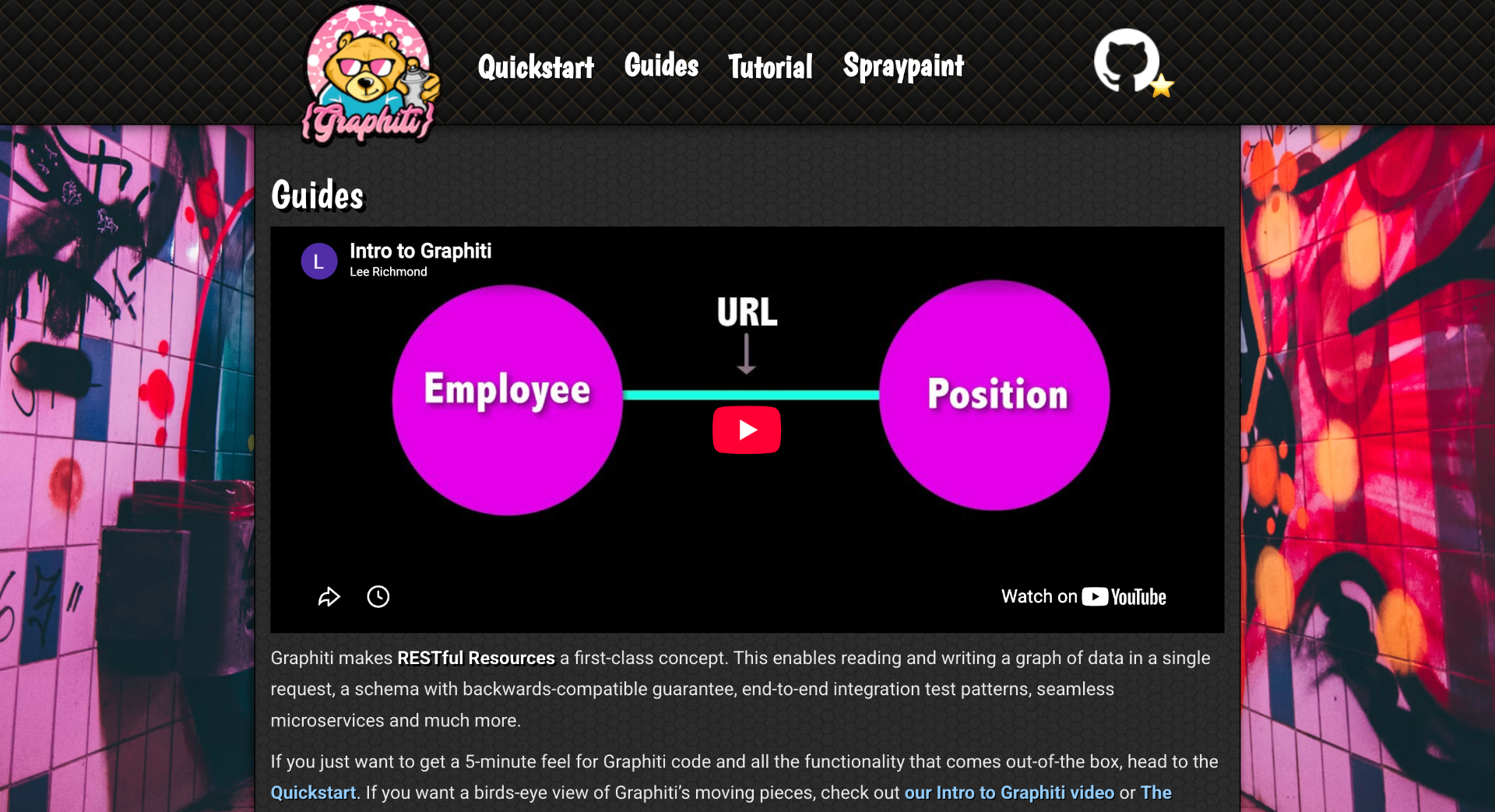
Graphiti is an open-source memory framework that focuses on building dynamic knowledge graphs for AI agents. Instead of storing isolated facts, it continuously updates relationships between entities as new information becomes available, allowing agents to maintain an evolving understanding of users, projects, and conversations.
This makes Graphiti particularly useful for long-term AI assistants, enterprise copilots, and research applications where information changes over time. Developers can integrate it into existing agent workflows to improve context retrieval and reasoning without rebuilding their AI stack.
Graphiti specializes in temporal knowledge graphs that continuously evolve as new information is added, helping AI agents maintain accurate long-term context. Its open-source architecture provides excellent flexibility for developers, though deployment requires familiarity with graph-based data models. The framework is free to use.
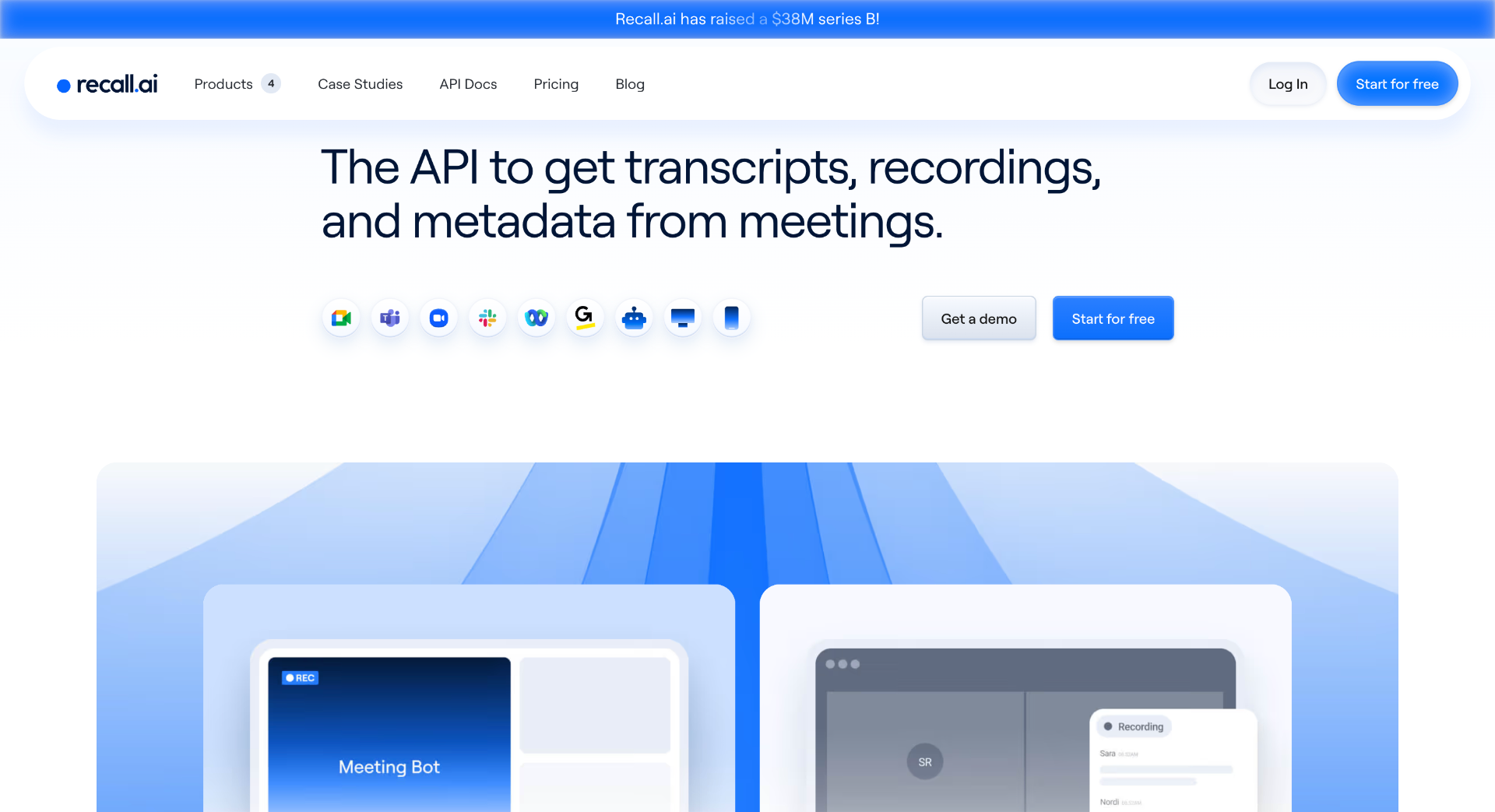
Recall.ai is best known for its meeting bot infrastructure, but its AI memory capabilities have become increasingly valuable for autonomous agents that need persistent knowledge from meetings, calls, transcripts, and conversations. Instead of treating meetings as isolated events, Recall.ai enables AI agents to store, search, and retrieve structured knowledge across previous discussions.
The platform is particularly useful for AI assistants that participate in meetings, sales copilots, and enterprise knowledge systems. By converting conversations into searchable memory, it allows agents to answer follow-up questions and maintain long-term context without requiring users to repeat information.
Recall.ai specializes in transforming meeting transcripts into persistent AI memory that agents can search and reason over. Its APIs simplify integration with conferencing platforms and enterprise workflows, making it ideal for meeting assistants and knowledge management applications. Pricing depends on API usage, and developers can start with a free tier before moving to paid plans.
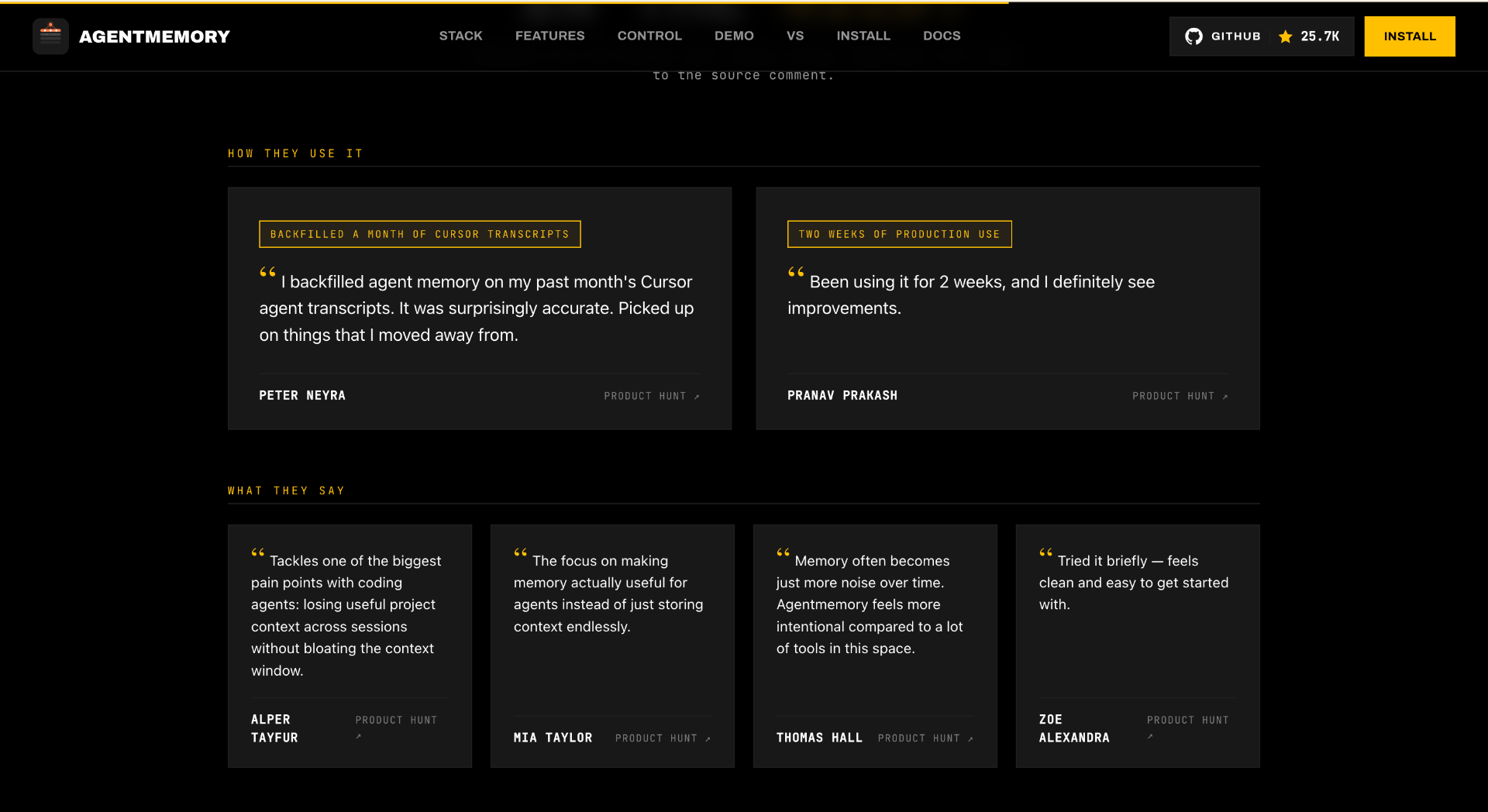
AgentMemory is an open-source memory runtime designed for AI coding agents. Instead of requiring developers to manually save project notes or maintain memory files, it automatically captures prompts, tool calls, code changes, and development sessions. The platform then consolidates this information into searchable memories that can be recalled across future sessions.
It supports popular AI coding assistants including Claude Code, Codex CLI, Cursor, Gemini CLI, OpenCode, and any client compatible with the Model Context Protocol (MCP). By combining lexical, semantic, and knowledge graph retrieval, AgentMemory helps coding agents retain project context without repeatedly consuming large context windows.
AgentMemory combines automatic session capture, hybrid retrieval, knowledge graph indexing, and native MCP support into a single local memory runtime. It is fully open source and can run without external databases, making it attractive for developers building coding agents, although its primary focus is software engineering workflows rather than general AI assistants. The project is free under an open source license, with optional hosted services available for teams.
The best AI memory tool depends on the type of agent you're building, your deployment environment, and how much long-term context your application needs to retain. Some frameworks focus on conversational memory, while others specialize in knowledge graphs, coding workflows, or production-ready APIs.
If you're building personal assistants, AI side projects, or prototypes, Mem0 and Zep are excellent starting points. Both are easy to integrate, offer free plans, and provide persistent memory without requiring complex infrastructure.
Startups building AI-powered products should consider Mem0, LangMem, and AgentMemory. These tools provide flexible APIs and open-source options that make it easier to build scalable AI applications while keeping infrastructure costs under control.
Developers looking for maximum flexibility should explore Letta, Cognee, Graphiti, LlamaIndex Memory, and AgentMemory. Their open-source architecture allows complete control over memory storage, retrieval strategies, and agent behavior.
For AI coding assistants built with tools like Claude Code, Cursor, Codex CLI, or Gemini CLI, AgentMemory is the strongest choice. It automatically captures coding sessions, stores project context, and helps agents recall previous work without repeatedly consuming large context windows.
Applications that analyze documents, perform research, or reason over interconnected information will benefit from Cognee and Graphiti. Their knowledge graph-based approach enables AI agents to understand relationships between entities rather than simply retrieving similar text.
Organizations deploying customer support agents, meeting assistants, or enterprise copilots should evaluate Mem0 and Recall.ai. Mem0 offers a scalable memory layer for production AI applications, while Recall.ai excels at capturing and retrieving knowledge from meetings, calls, and conversations across enterprise workflows.
As AI agents become more autonomous, memory is evolving from an optional feature into a core component of modern AI systems. Whether an agent is helping customers, assisting developers, or conducting research, the ability to remember previous interactions and retrieve relevant context has a direct impact on accuracy, personalization, and overall user experience.
There is no single memory framework that fits every use case. Mem0 is an excellent choice for production-ready AI applications, while Zep focuses on conversational memory. Developers building custom agent architectures may prefer Letta, Cognee, or Graphiti.
Most of these tools provide free plans, open-source editions, or developer-friendly pricing, making it possible to experiment before choosing a long-term solution. The best approach is to evaluate how each framework stores, retrieves, and manages memory with your own AI workflows rather than focusing solely on the number of supported features.
| RAG Applications |
| Context & memory management |
| Free & Open Source |
| ✓ |
| Self-hosted |
