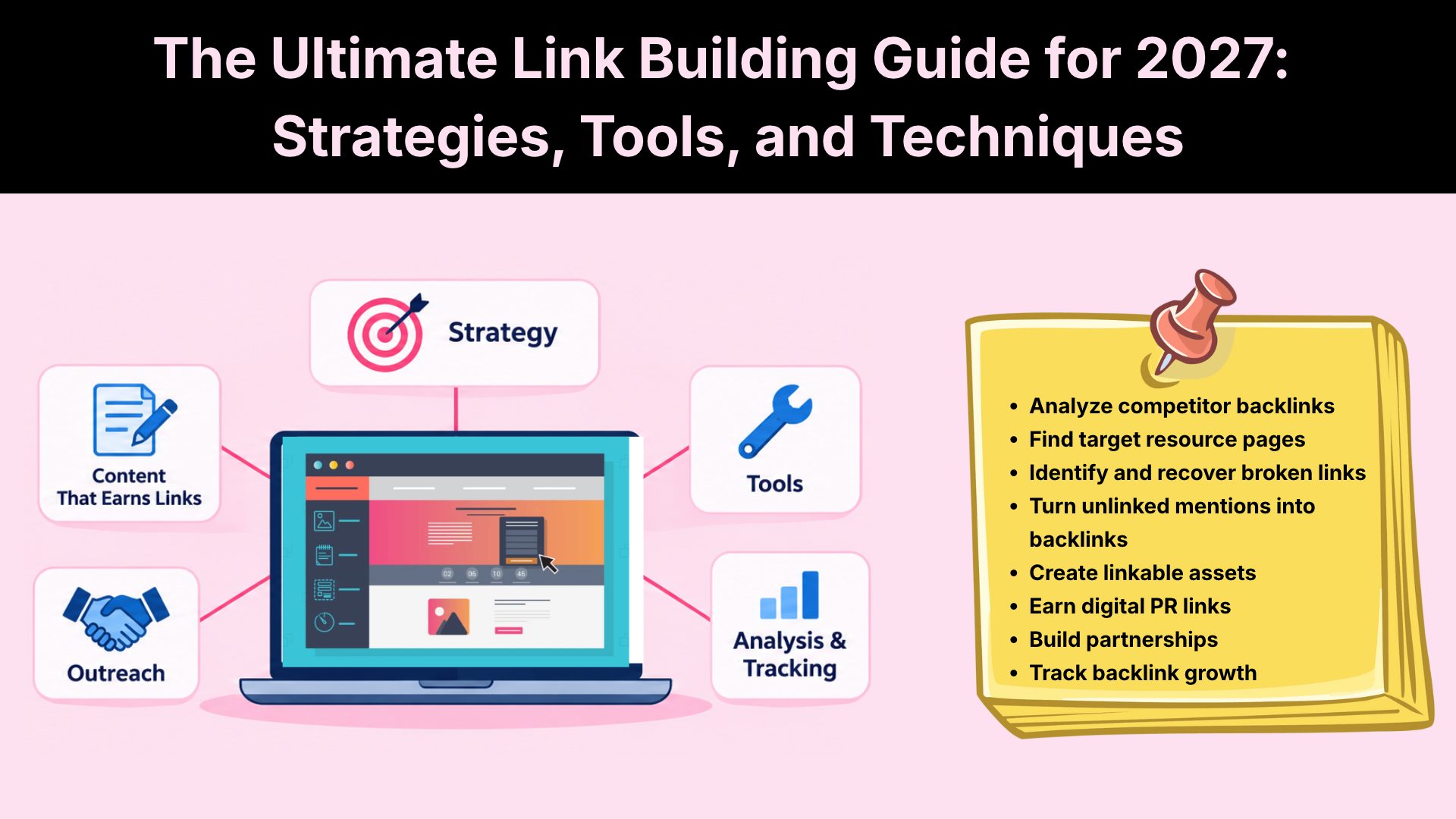
Link building is an important part of SEO, but getting backlinks from as many websites as possible is not a sustainable strategy. For startups, SaaS companies, and growing businesses, the real challenge is earning links from websites that are relevant to their industry and provide value to their target audience.
A successful link building strategy should focus on two outcomes: improving backlink authority and establishing brand recognition across the web. Backlinks from relevant publications, industry resources, and trusted websites can help search engines discover your content. Meanwhile, original research, expert contributions, partnerships, and digital PR help establish your business as a recognizable name in its category.
In 2027, businesses should move beyond basic backlink acquisition and build a strategy around useful resources, industry relationships, editorial coverage, and consistent online visibility.
This guide covers practical link building techniques, recommended SEO tools, and an actionable execution plan for founders, business owners, SaaS companies, and developers.
Quick Summary:
- Analyze competitor backlinks: Find websites linking to competitors and identify opportunities to earn similar links.
- Create linkable assets: Publish original research, free tools, calculators, templates, and industry reports.
- Use digital PR: Share research, expert insights, and newsworthy stories with journalists and publications.
- Find resource pages: Get your website included in relevant industry resource collections.
- Recover broken backlinks: Identify broken competitor links and suggest relevant replacement resources.
- Reclaim unlinked mentions: Turn existing brand mentions into relevant website links.
- Publish guest articles: Contribute original and useful content to established industry publications.
- Build business partnerships: Get listed on integration pages, partner directories, and customer case studies.
- Contribute to developer communities: Publish open-source projects, technical guides, and documentation.
- Monitor backlink performance: Track referring domains, lost links, referral traffic, and qualified leads.
Link building can be approached through two complementary methods: backlink acquisition and brand authority building.
Backlink acquisition focuses on getting relevant websites to link to your pages. Competitor backlink research, resource page outreach, broken link building, directory submissions, and unlinked mention recovery are common examples.
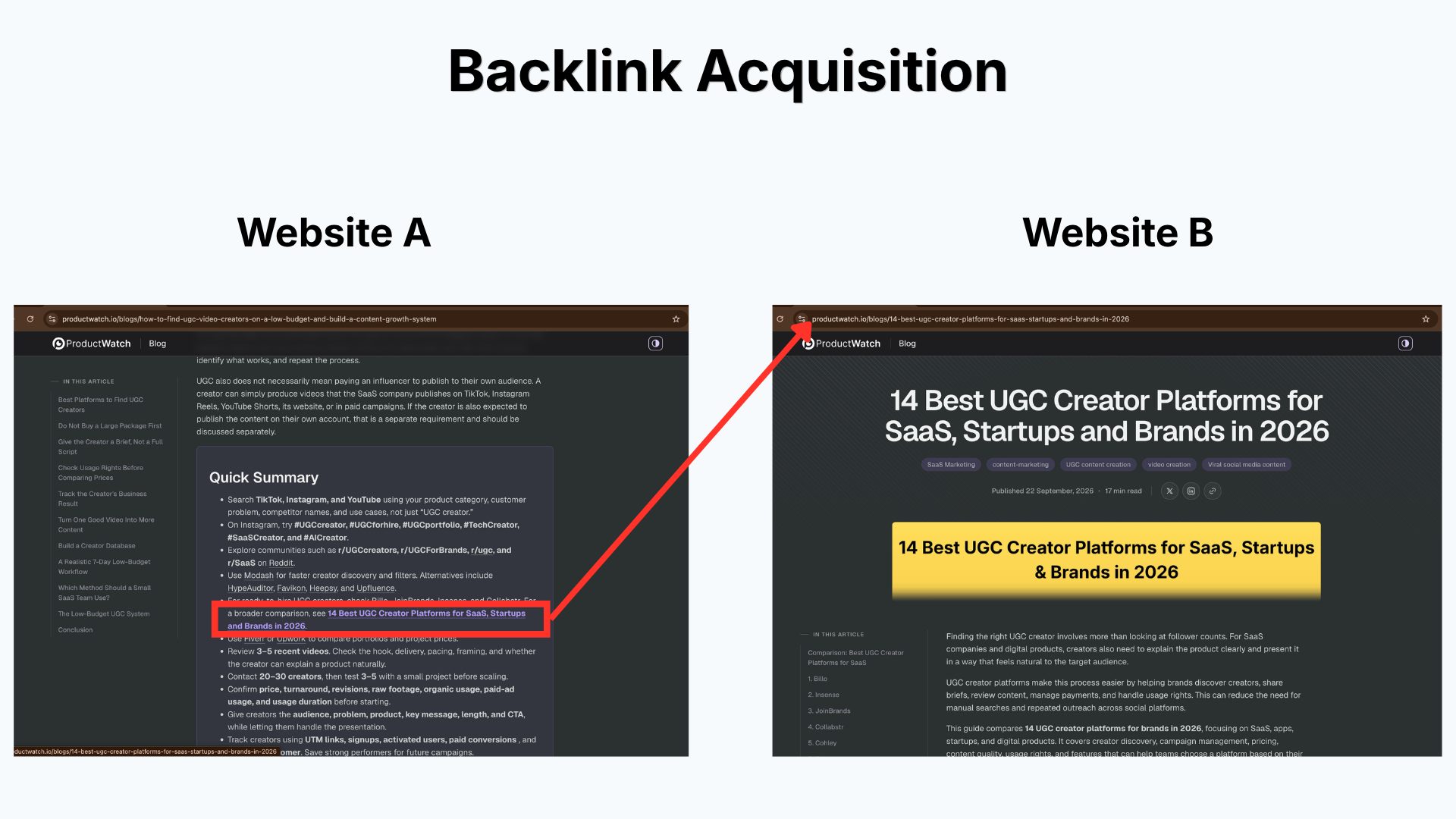
These techniques are particularly useful for new websites that need to establish an initial backlink profile.
Brand authority building focuses on getting your company recognized within its industry. Digital PR, original research, expert contributions, technical resources, and business partnerships help establish these connections.
For example, a cybersecurity startup publishing original research about phishing attacks could earn references from security publications, technology journalists, and industry experts.
Both approaches should work together. Startups can begin with accessible backlink opportunities and gradually invest more in research, editorial coverage, and industry relationships as their businesses grow.
Competitor backlink research is one of the most practical ways to discover link opportunities.
Start by identifying three to five businesses targeting similar customers or offering related products. Examine their referring domains, backlinks, anchor text, and most-linked pages using tools such as Ahrefs or Moz.
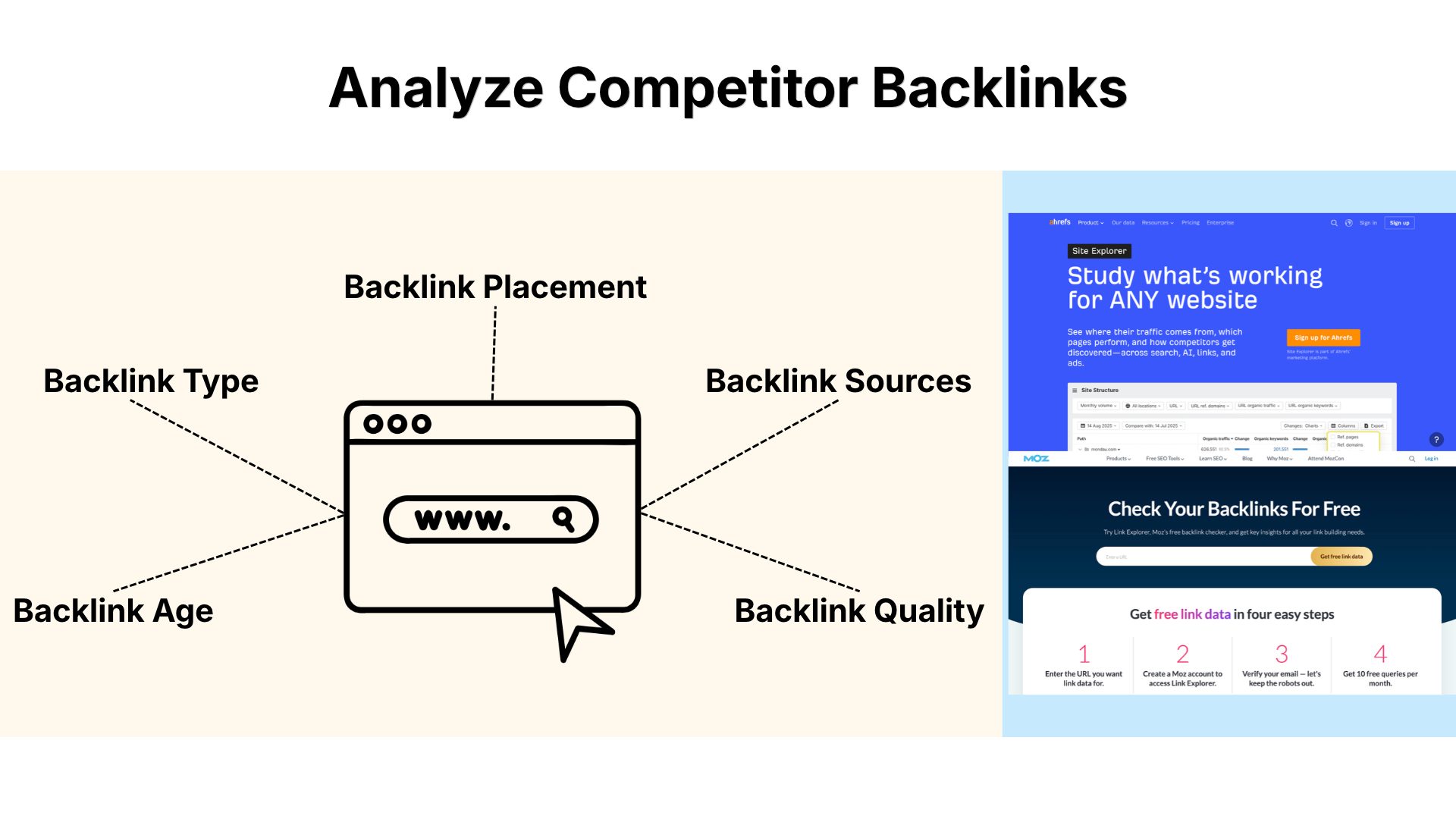
Pay particular attention to blog articles, research reports, comparison pages, free tools, and technical resources that attract links from multiple websites.
The goal is not to copy every competitor backlink. Instead, identify websites that publish relevant content and understand what makes those pages worth referencing.
Follow this process:
Resource page link building involves getting your website included in curated collections of useful industry resources.
For example, a website publishing startup resources might recommend analytics platforms, marketing tools, business software, and developer utilities. A SaaS company offering a relevant product can contact the publisher and suggest inclusion.
Google search operators make these opportunities easier to find.
Before contacting a website, check whether the page is maintained, contains relevant recommendations, and links to genuinely useful resources.
Send a personalized email explaining what your product does, who benefits from it, and why it belongs on that particular page.
Broken link building involves finding links that lead to unavailable pages and offering a relevant working resource as a replacement.
Start by examining competitor pages with existing backlinks. Identify pages returning 404 errors, then check whether other websites still link to them.
If your website has a resource covering the same subject, contact the publisher and suggest it as a replacement.
A practical workflow:
Prioritize recently maintained articles because their publishers are more likely to update outdated references.
Not every backlink opportunity requires finding a new website. Some already exist because another publisher has mentioned your company or previously linked to your website.
Lost backlink recovery: Websites sometimes remove links after updating articles, changing URLs, or deleting content. Monitor your backlink profile and contact publishers when a valuable link disappears. If the destination URL changed, provide the correct replacement.
Unlinked brand mentions: A publication might mention your company or product without linking to your website. Contact the publisher and request a link to the relevant product page or resource if it would help readers. Google Alerts can be used for monitoring brand mentions.
For example, an article discussing emerging AI tools might mention your product by name. A link to the official product page would help readers explore it.
A linkable asset is a useful resource that other websites have a reason to reference. Instead of asking publishers to link to a general homepage, create something that improves their own content.
Examples include:
For example, a SaaS company could survey 100 founders about their software spending, analyze the findings, and publish an original report with charts and downloadable data.
This creates a resource that startup publications, financial blogs, and industry newsletters can reference.
Small businesses do not need expensive research projects. They can start with a focused survey, a useful template, a free tool, or a technical guide.
The important requirement is originality. Repeating statistics already published across dozens of websites gives publishers little reason to reference your page.
Digital PR focuses on gaining online coverage through original research, interesting industry stories, expert insights, and newsworthy findings.
For startups, a useful research project can be more interesting to journalists than a standard product announcement.
Consider these campaign ideas:
Once the research is published, identify journalists and publications covering the subject. Prepare a short pitch containing the main finding, supporting data, and a link to the complete report.
Personalize each pitch according to the journalist's recent articles rather than sending generic press releases.
Useful platforms:
Guest blogging is useful when the article provides genuine value to another publication's audience.
A developer could explain how to solve a difficult API integration problem, while a SaaS founder could share practical customer acquisition experiments.
Find publications that cover your industry and accept external contributions. Review their editorial standards, existing articles, audience, and publishing history before pitching.
Useful searches include:
"write for us" SaaS"guest post guidelines" technology"contribute an article" startups"submit an article" developer"become a contributor" marketingFocus on original explanations, technical examples, and real business experiences. Include a contextual link only when it helps readers explore a related resource.
Do not publish lightly rewritten articles across multiple websites or use guest posting primarily to obtain keyword-rich backlinks.
Use BuzzStream to streamline link-building outreach and Hunter to find verified professional email addresses.
Existing business relationships can provide relevant backlink opportunities without relying entirely on cold outreach.
Technology providers, integration partners, agencies, resellers, customers, and industry organizations often maintain partner pages or resource directories.
Check whether your business partners publish:
For example, if your SaaS product integrates with another platform, ask whether your company can be included in its official integration directory.
You can also collaborate with customers on case studies that explain how they use your product and the results they achieved.
These partnerships should reflect genuine business relationships rather than artificial link exchanges.
Developer-focused startups can earn relevant backlinks by publishing useful technical resources.
Developers regularly search for API documentation, code examples, libraries, SDKs, integration guides, and solutions to engineering problems.
Practical opportunities include:
Community participation should focus on solving problems. Avoid inserting promotional links into unrelated discussions or automating comments.
Useful technical contributions can attract references from tutorials, documentation, repositories, and engineering publications.
External backlinks help other websites reference your content. Internal links help visitors and search engines discover related pages within your own website.
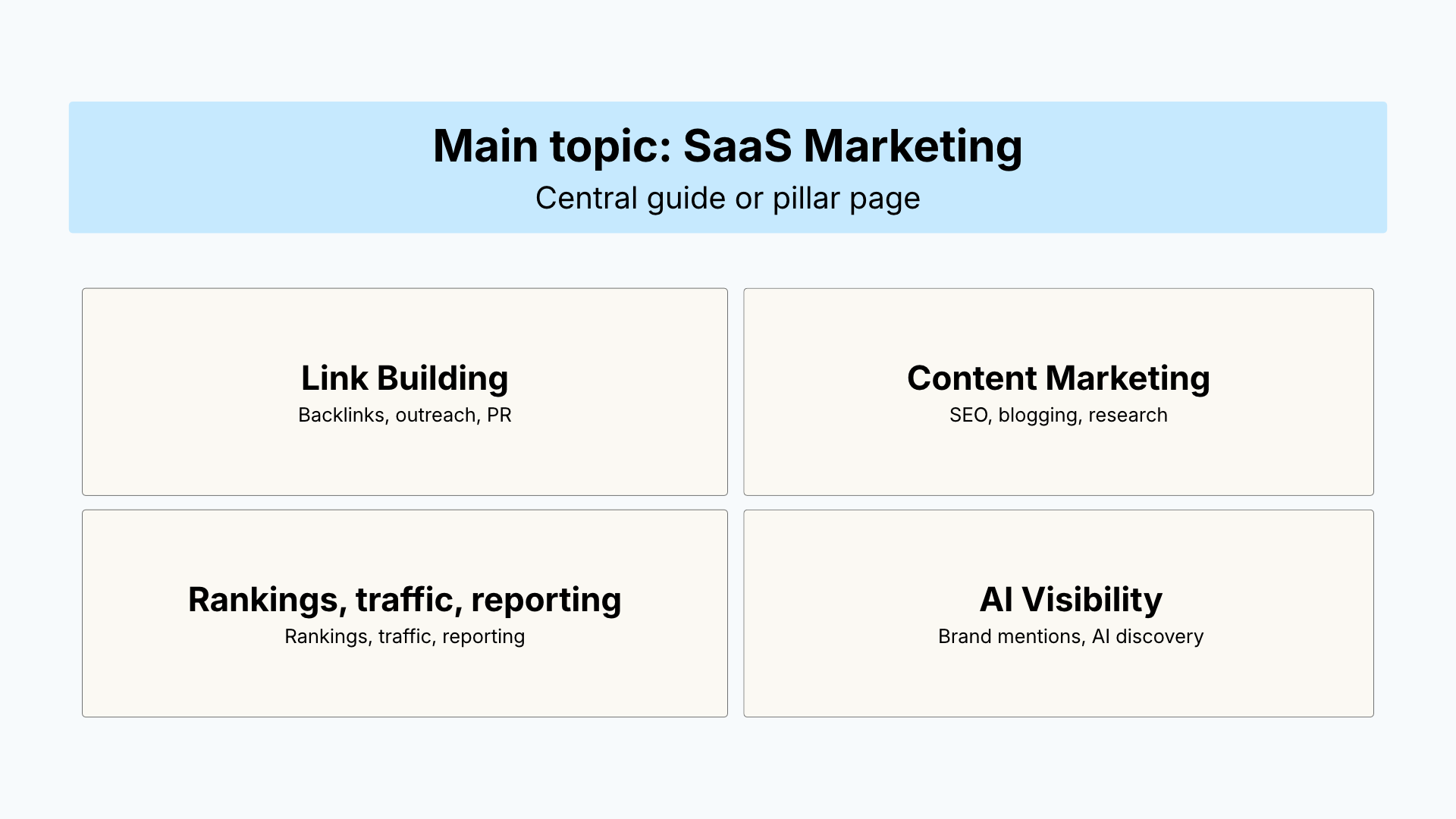
Organize content into topic clusters. For example, a SaaS marketing website can have a main guide supported by articles about link building, content marketing, SEO analytics, and AI visibility.
Link related pages naturally so that important product pages and resources are easy to discover.
Anchor text also matters because it describes the destination of a link.
Common anchor text types include:
Use descriptive anchor text that fits the surrounding sentence. Do not request the same exact-match keyword in every backlink.
Read Google's Link Best Practices for guidance on crawlable links and descriptive anchor text.
A website with a high Domain Rating or Domain Authority is not automatically a valuable backlink source. These are third-party metrics, not Google's ranking scores.
Evaluate the actual website and linking page before investing time or money.
Understand the difference between followed, nofollow, sponsored, and UGC links. Paid placements should be appropriately qualified using rel="sponsored" or an acceptable nofollow attribute.
A nofollow or sponsored link can still generate referral traffic and business exposure.
Avoid private blog networks, automated link schemes, excessive reciprocal exchanges, unrelated directory submissions, and paid followed links intended to manipulate search rankings.
Refer to Google's Spam Policies for the official guidelines.
Different tools support different parts of a link building campaign. These are useful options for startups and growing businesses.
A startup does not need every tool. A practical starting combination is Google Search Console, one backlink analysis platform, Hunter, and a spreadsheet or outreach management tool.
Add digital PR and data visualization platforms when you begin producing original research and industry reports.
A structured execution plan helps teams turn link building techniques into repeatable activities.
Consistency matters more than sending hundreds of emails in a short period. Focus on relevant opportunities and track every campaign.
A successful link-building campaign should be evaluated through SEO performance and business outcomes, not backlink counts alone.
Monitor these metrics:
Track every opportunity by campaign type, such as competitor research, guest contributions, digital PR, resource pages, and partnerships.
Review performance monthly and invest more time in activities that generate relevant traffic, qualified leads, and sustainable industry relationships.
Link building in 2027 should focus on earning relevant backlinks and establishing your business as a recognizable name in its industry.
Startups can begin with competitor research, resource pages, directories, broken link recovery, and targeted outreach. As the business grows, invest more in original research, digital PR, technical resources, expert contributions, and partnerships.
The strongest strategy is to publish resources people want to reference, build relationships with relevant publishers, and earn links that connect your business with the right audience.
A valuable backlink does more than point to your website. It helps the right people discover your business, understand what you offer, and trust your expertise.
