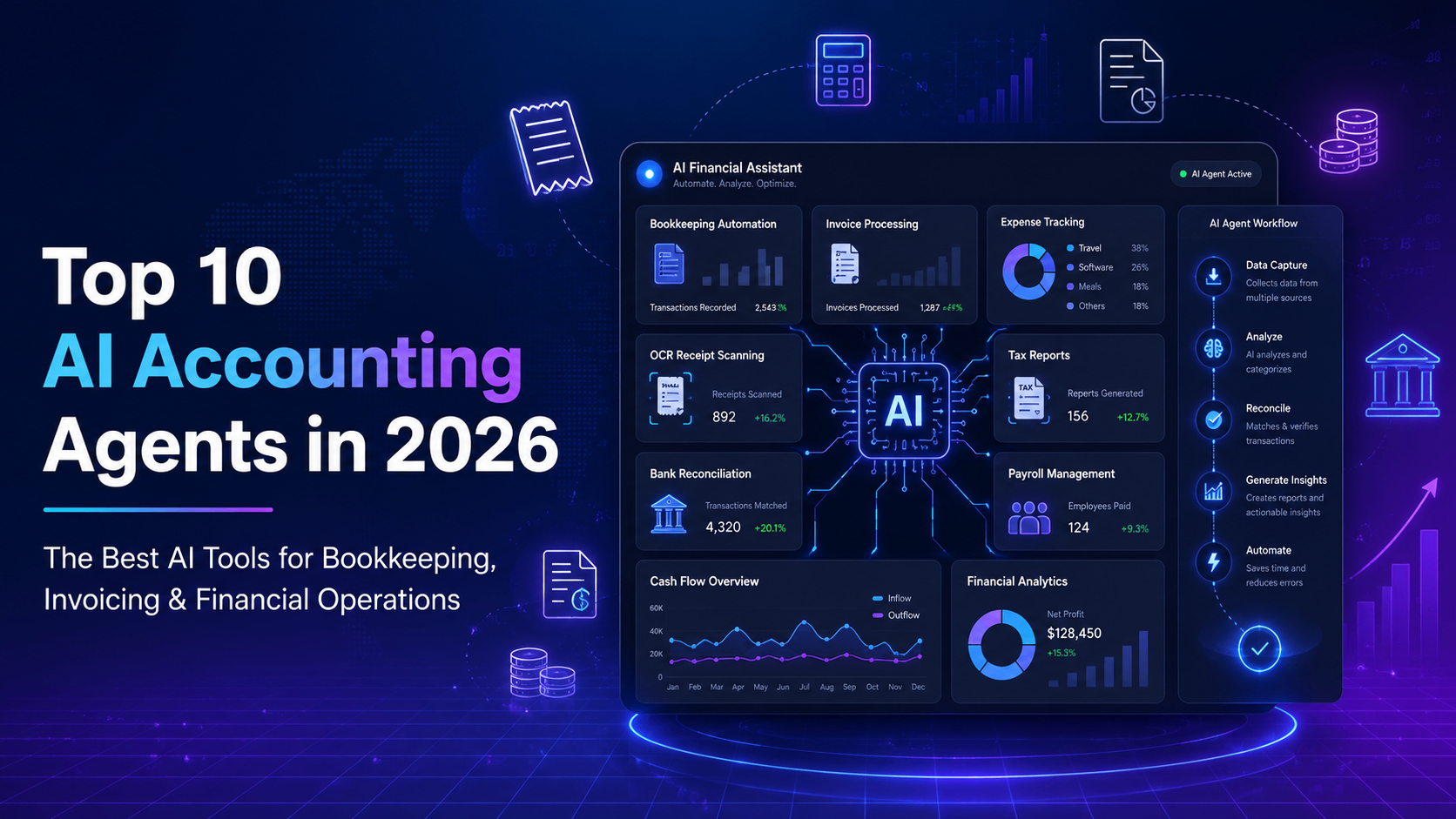
Accounting has always involved repetitive work. Bookkeeping, invoice processing, bank reconciliation, expense categorization, and month-end closing often consume hours that could be spent on financial planning and business growth. While cloud accounting software simplified record-keeping, finance teams still needed to review transactions, chase receipts, and manually reconcile accounts.
That is changing in 2026.
Modern AI accounting agents do far more than automate data entry. They continuously monitor financial activity, categorize transactions, process invoices, detect anomalies, reconcile bank accounts, generate reports, and even assist with cash flow forecasting. Some platforms function like an AI-powered bookkeeper, while others act as a finance copilot that helps startups close their books faster and with fewer errors.
Whether you're a solo founder managing company finances, a startup preparing for investor reporting, or an accounting firm serving multiple clients, AI can significantly reduce manual work while improving accuracy and financial visibility.
If you're looking for the best AI accounting software without reading the full guide, start with these top picks:
Also worth exploring: Digits, Botkeeper, FloQast, Blue Dot, Trullion, Datarails, Gridlex Sky, and Booke AI. Each excels in specific areas such as FP&A, tax automation, lease accounting, AI bookkeeping, and financial close management.

Most accounting software was designed before AI could understand financial context. As a result, many platforms still depend on manual bookkeeping, spreadsheet exports, and rigid rule-based automation.
Puzzle takes a different approach. It was built from the ground up as an AI-first accounting platform that automatically categorizes transactions, reconciles accounts, prepares financial statements, and keeps startup books continuously updated. Instead of waiting until month-end, founders can monitor cash flow, burn rate, runway, and revenue metrics in real time through a modern AI-powered interface. The platform integrates directly with Stripe, Mercury, Brex, Ramp, Gusto, and other modern finance tools, reducing the amount of manual bookkeeping required each month.
Puzzle is ideal for startups, SaaS companies, venture-backed businesses, and founders looking for an AI-native alternative to legacy accounting software. Its standout features include AI-powered transaction categorization with up to 98% automation, automated bank reconciliations, real-time financial reporting, revenue recognition, cash and accrual accounting, AI-generated financial insights, and integrations with modern banking, payroll, and payment platforms. Pricing starts at $25/month for the Starter plan, while the Core plan costs $60/month, Complete costs $100/month, and Scale starts at $300/month. Every paid plan includes a 14-day free trial, with higher tiers adding advanced AI bookkeeping, unlimited users, premium onboarding, and more automation capabilities.
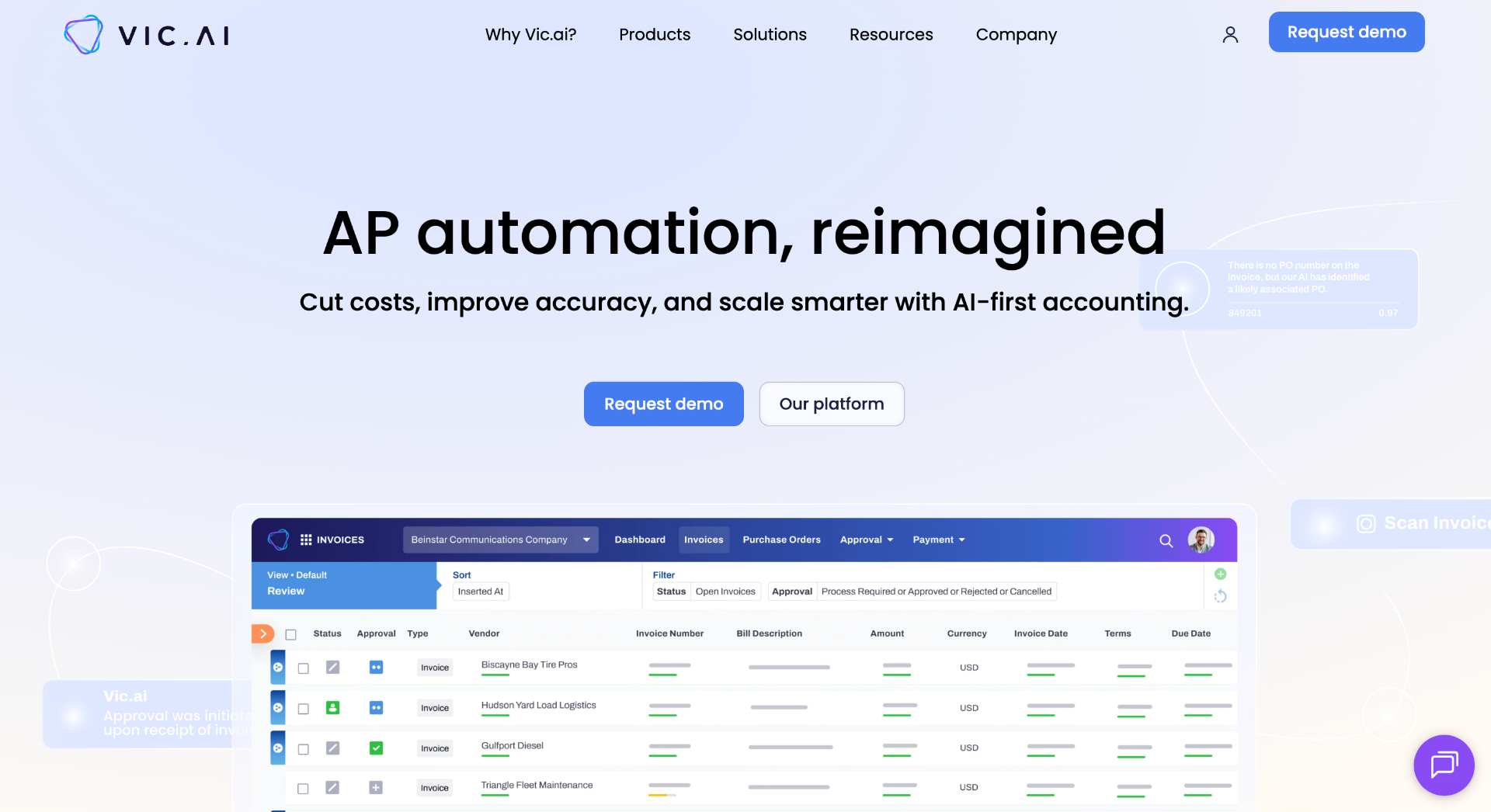
Processing thousands of invoices every month is one of the most repetitive and error-prone tasks in enterprise finance.
Vic.ai uses machine learning to automate invoice capture, coding, approval routing, and payment workflows. Unlike traditional AP software that relies heavily on static rules, Vic.ai learns from historical accounting data and continuously improves its predictions for general ledger coding and approval decisions. Finance teams gain visibility into invoice bottlenecks, vendor performance, and processing efficiency through built-in analytics dashboards.
Vic.ai is best suited for enterprise finance teams and high-volume accounts payable departments. Key capabilities include AI-driven invoice processing, predictive GL coding, automated approval workflows, duplicate invoice detection, payment optimization, and real-time AP analytics. Pricing is custom enterprise pricing, with costs based on invoice volume, integrations, and deployment requirements. The platform does not offer a free plan, but enterprise implementations typically include onboarding, training, and dedicated support.
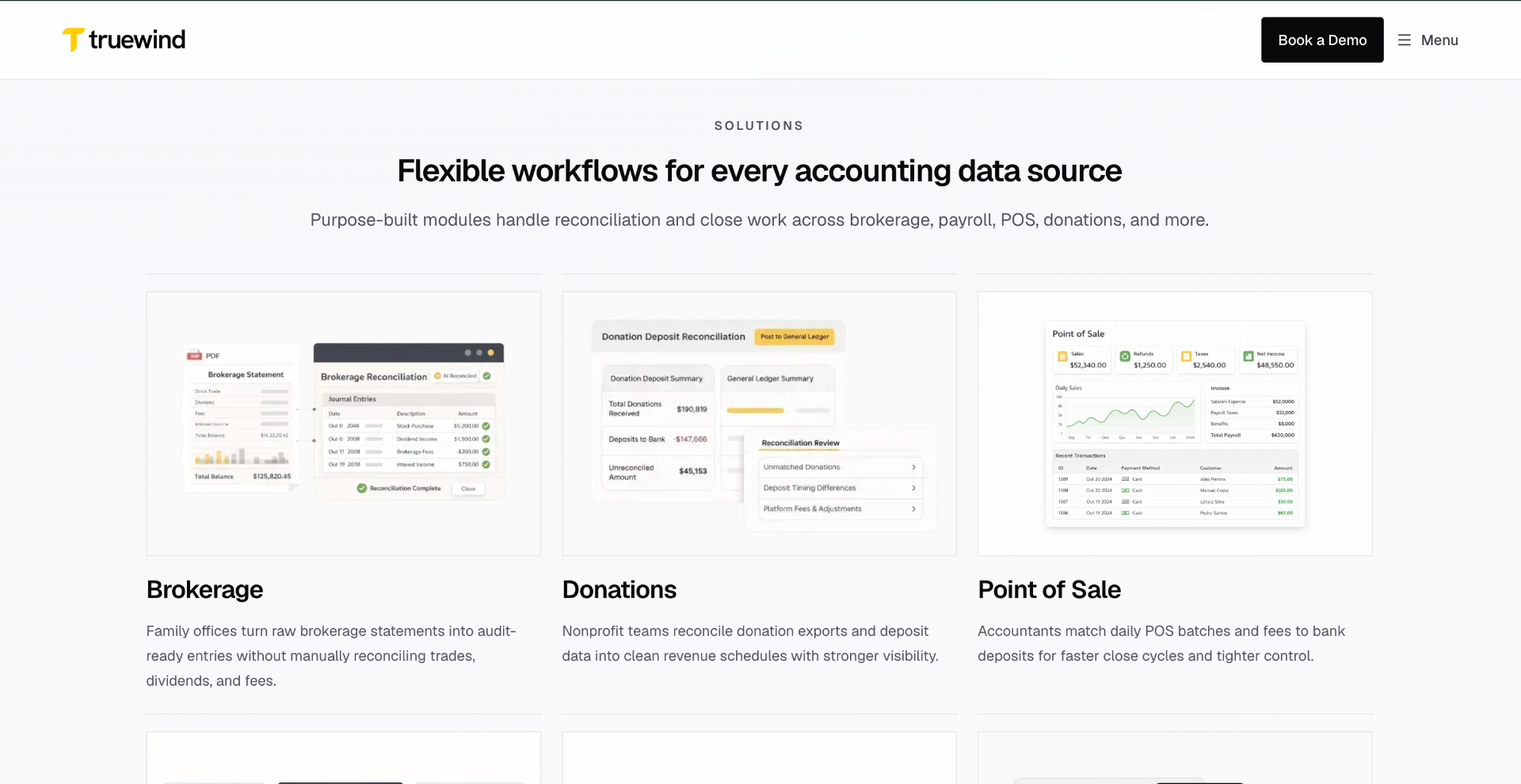
Startups often need the speed of automation without sacrificing accounting accuracy.
Truewind combines AI-powered bookkeeping with professional accountant review, allowing companies to automate transaction categorization, reconciliations, and month-end close while maintaining human oversight for critical financial decisions. The platform is designed specifically for venture-backed startups and integrates with QuickBooks, NetSuite, and other core finance systems.
Truewind is ideal for early-stage startups, venture-backed companies, and lean finance teams that want automated bookkeeping with expert review. Its core features include AI transaction categorization, automated reconciliations, month-end close automation, financial reporting, accrual accounting support, and dedicated accounting oversight. Pricing is customized based on company size and transaction volume, and the platform does not provide a public free plan. Most customers receive a tailored onboarding and accounting workflow setup.
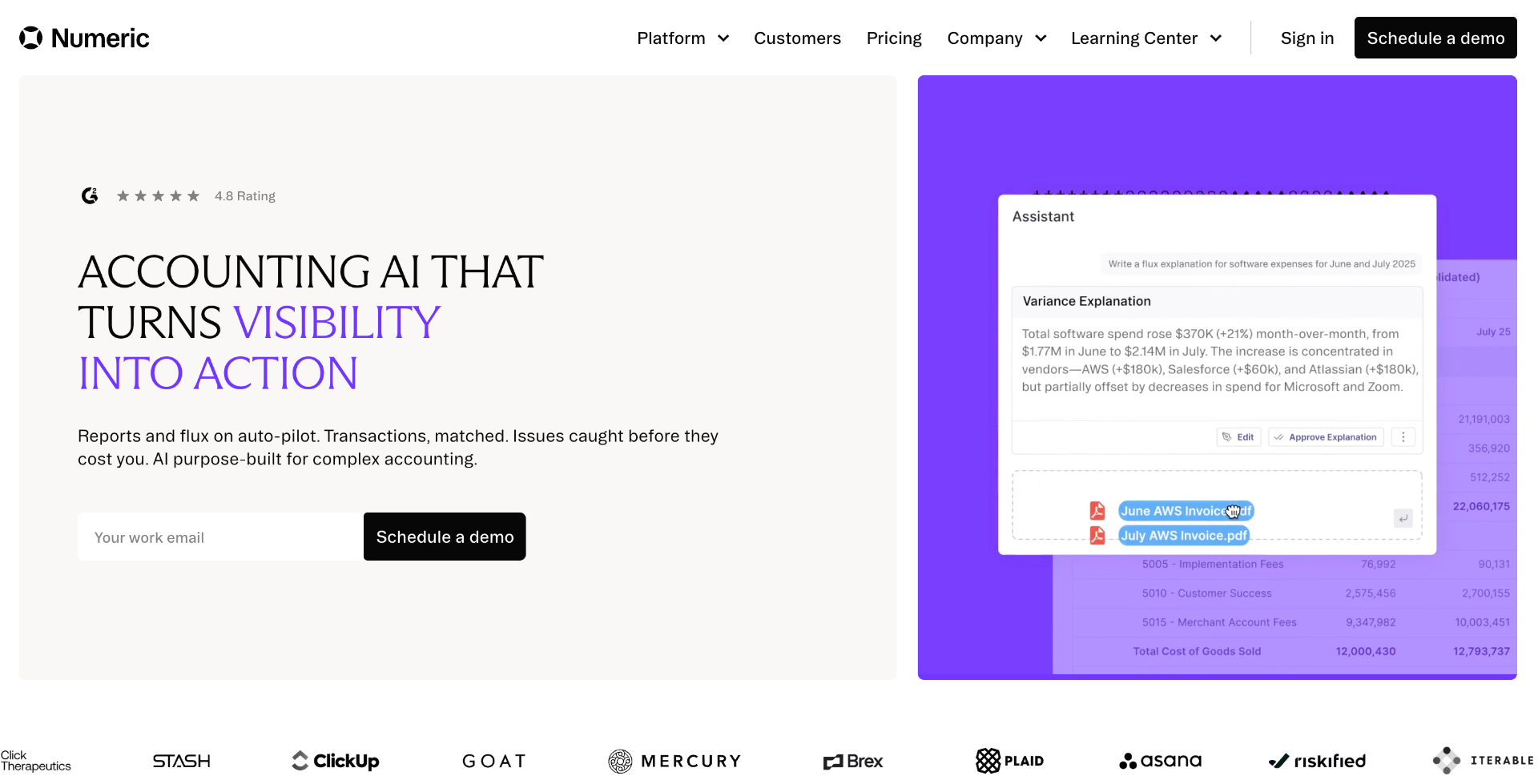
Closing the books can take weeks when teams are coordinating spreadsheets, reconciliations, approvals, and supporting documentation across multiple systems.
Numeric centralizes the entire close process and uses AI to monitor financial data, detect anomalies, track task completion, and surface issues before they delay reporting. The platform is particularly valuable for companies that need faster, more reliable monthly and quarterly closes.
Numeric is best for accounting teams, controllers, and finance departments managing complex close processes. Standout features include AI-powered anomaly detection, automated reconciliations, close task management, collaborative workflows, audit-ready documentation, and integrations with major ERP and accounting systems. Pricing is custom enterprise pricing, with no free plan publicly available. Implementations typically include workflow configuration and integration support.
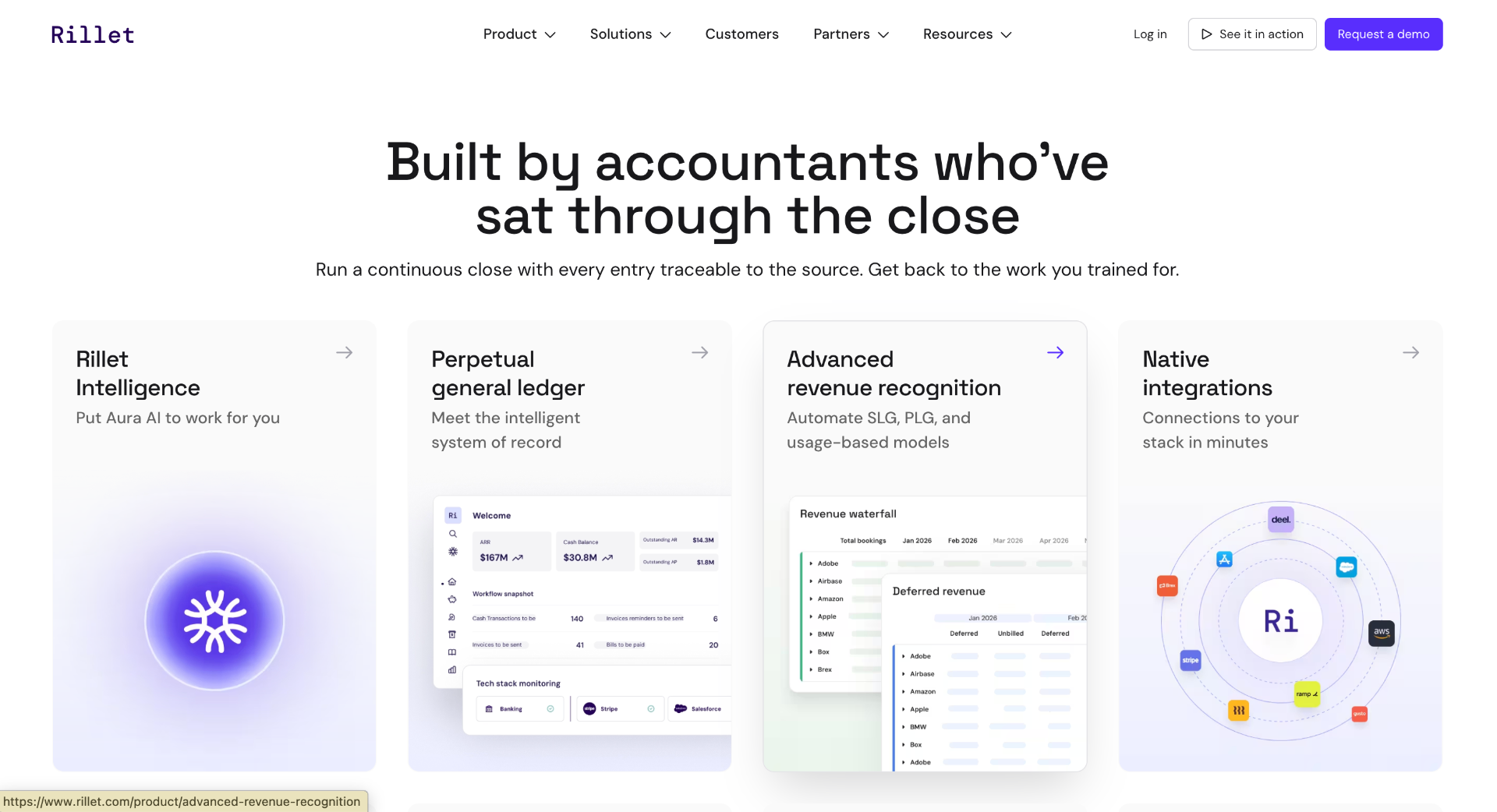
Subscription businesses face unique accounting challenges, from deferred revenue and contract modifications to usage-based billing and renewals.
Rillet automates revenue recognition and financial close workflows specifically for SaaS companies. By connecting directly to Stripe and other billing systems, Rillet continuously updates revenue schedules and produces accounting reports that align with ASC 606 and IFRS 15 requirements.
Rillet is ideal for SaaS companies and subscription-based businesses that need automated revenue accounting. Key features include automated revenue recognition, deferred revenue tracking, contract modification handling, financial close automation, SaaS metrics reporting, and direct integrations with Stripe and ERP systems. Pricing is customized for each company, and the platform does not offer a public free plan. Enterprise onboarding and revenue accounting configuration are included with implementation.
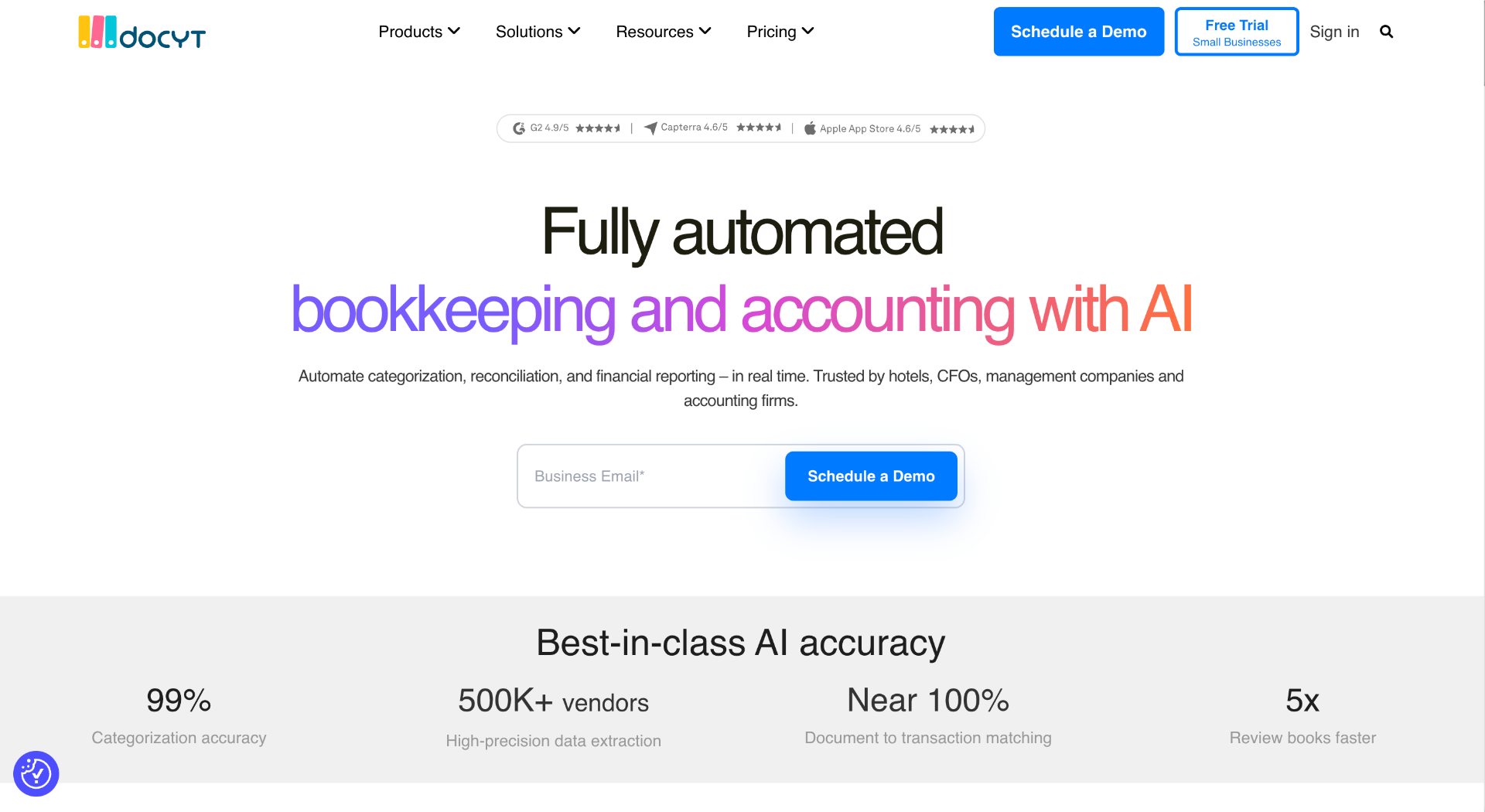
Restaurants, hotels, retail chains, and franchise businesses generate financial data from dozens or even hundreds of locations every day.
Docyt acts as an autonomous accounting platform that consolidates data from POS systems, bank accounts, payroll providers, and accounting software, then automates bookkeeping and reconciliation across all locations. This eliminates much of the manual consolidation work that multi-entity businesses typically perform.
Docyt is best for multi-location businesses, hospitality groups, retail chains, and franchise operators. Its key features include autonomous bookkeeping, multi-entity consolidation, automated reconciliations, POS integrations, real-time financial dashboards, and AI-driven anomaly detection. Pricing is custom-based on the number of locations and entities, with no public free plan available.
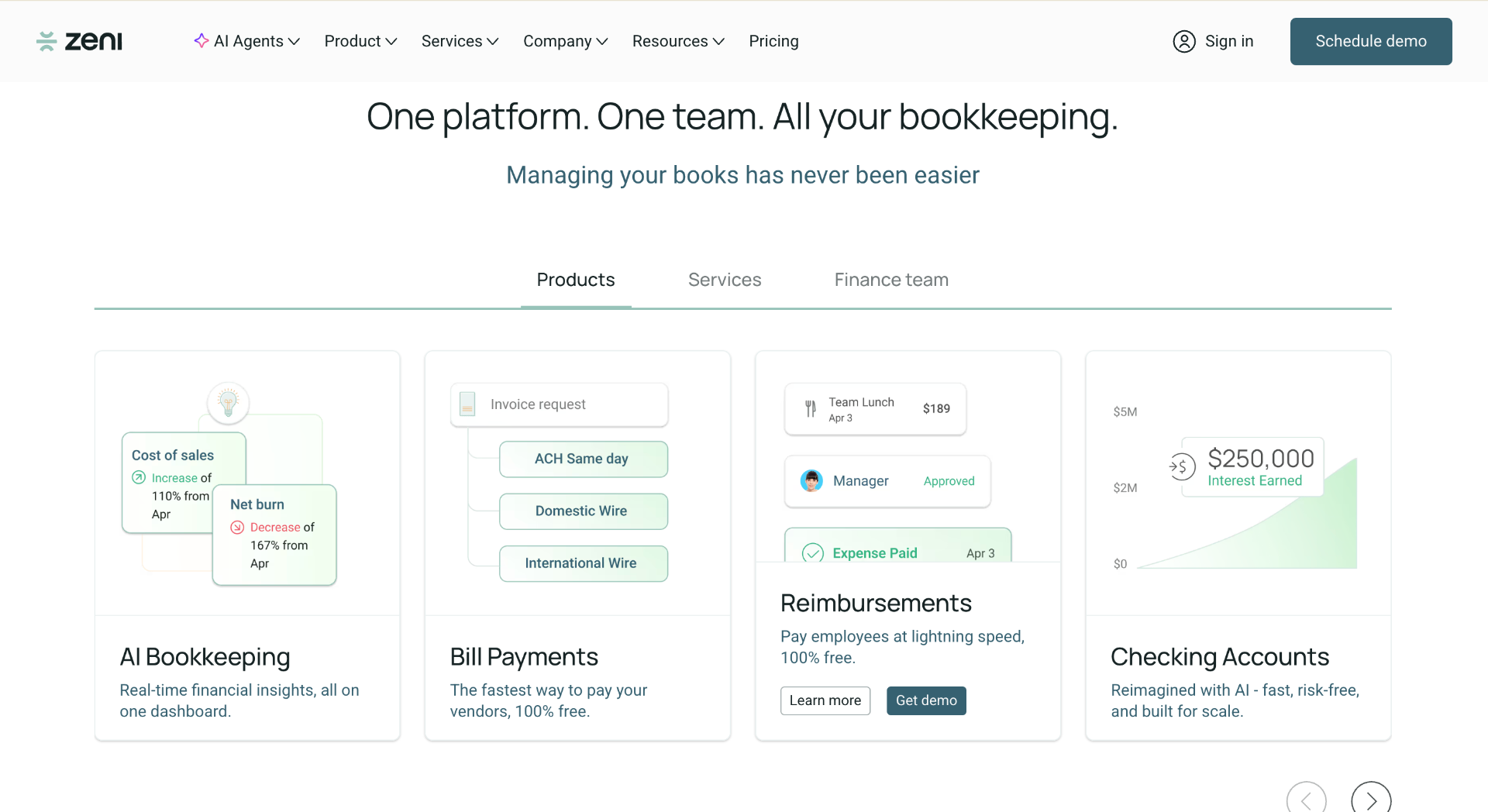
Many startups need more than bookkeeping. They need budgeting, forecasting, cash flow management, and strategic financial guidance.
Zeni combines AI automation with a dedicated finance team to deliver bookkeeping, bill pay, expense management, financial reporting, and CFO-level insights through a single platform. The AI handles routine accounting tasks, while human finance experts provide oversight and strategic support.
Zeni is ideal for fast-growing startups that want an outsourced AI-powered finance function. Standout features include automated bookkeeping, bill pay, expense management, cash flow forecasting, investor reporting, and access to finance professionals for strategic guidance. Pricing is customized based on company stage and transaction volume, and there is no free plan. Most engagements include onboarding, system integration, and ongoing finance support.
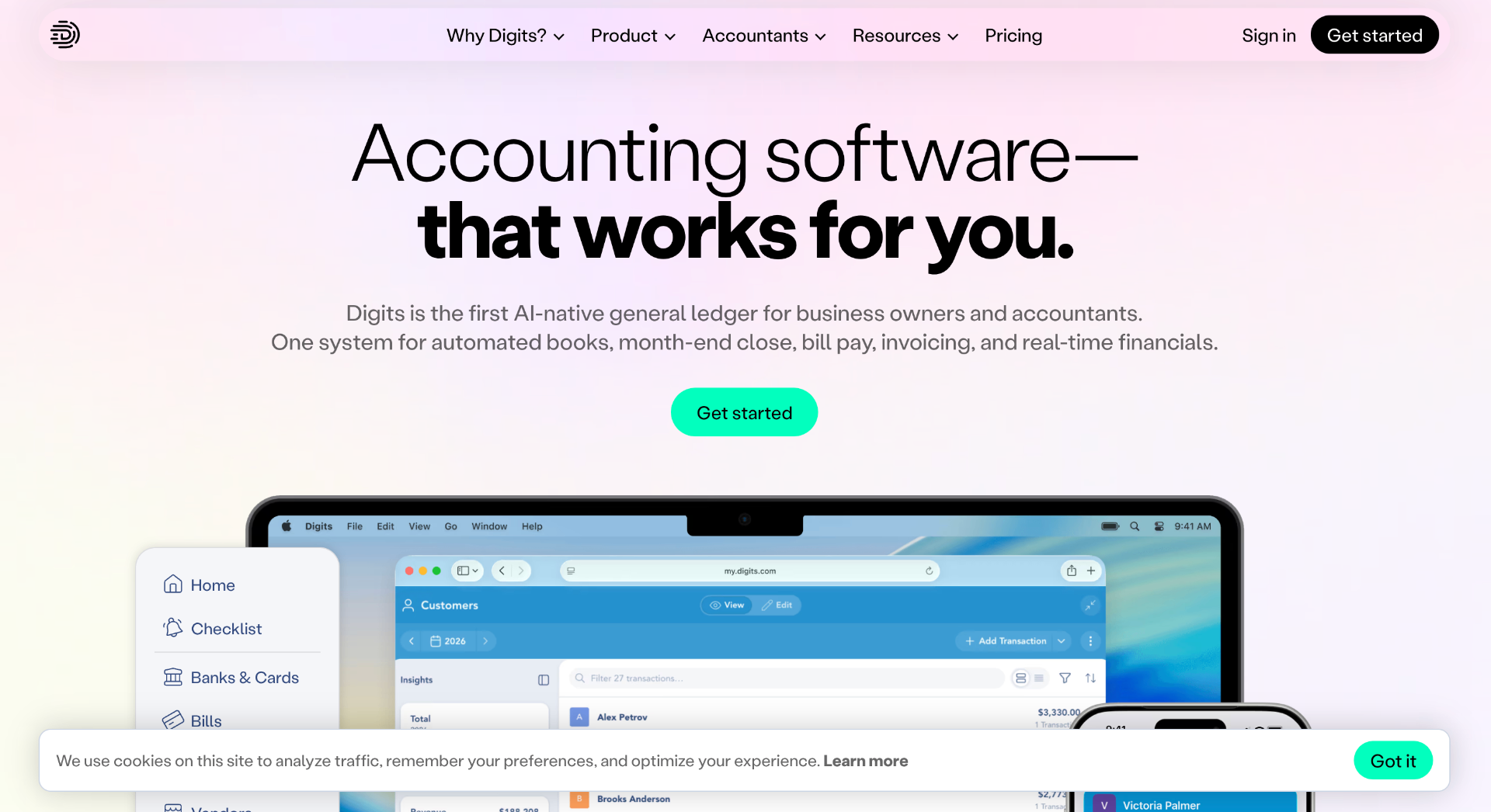
Small businesses often struggle to turn accounting data into actionable insights.
Digits uses AI to analyze financial transactions, generate plain-English explanations of business performance, and provide real-time dashboards for cash flow, expenses, and profitability. The platform is designed to be accessible even for founders without an accounting background.
Digits is best for small businesses, freelancers, and founders who want AI-driven financial insights without a complex setup. Key features include automated transaction analysis, real-time dashboards, cash flow monitoring, AI-generated financial explanations, and integrations with popular accounting platforms. Digits offers a free plan for basic usage, with paid plans available for advanced reporting, additional users, and enhanced analytics.
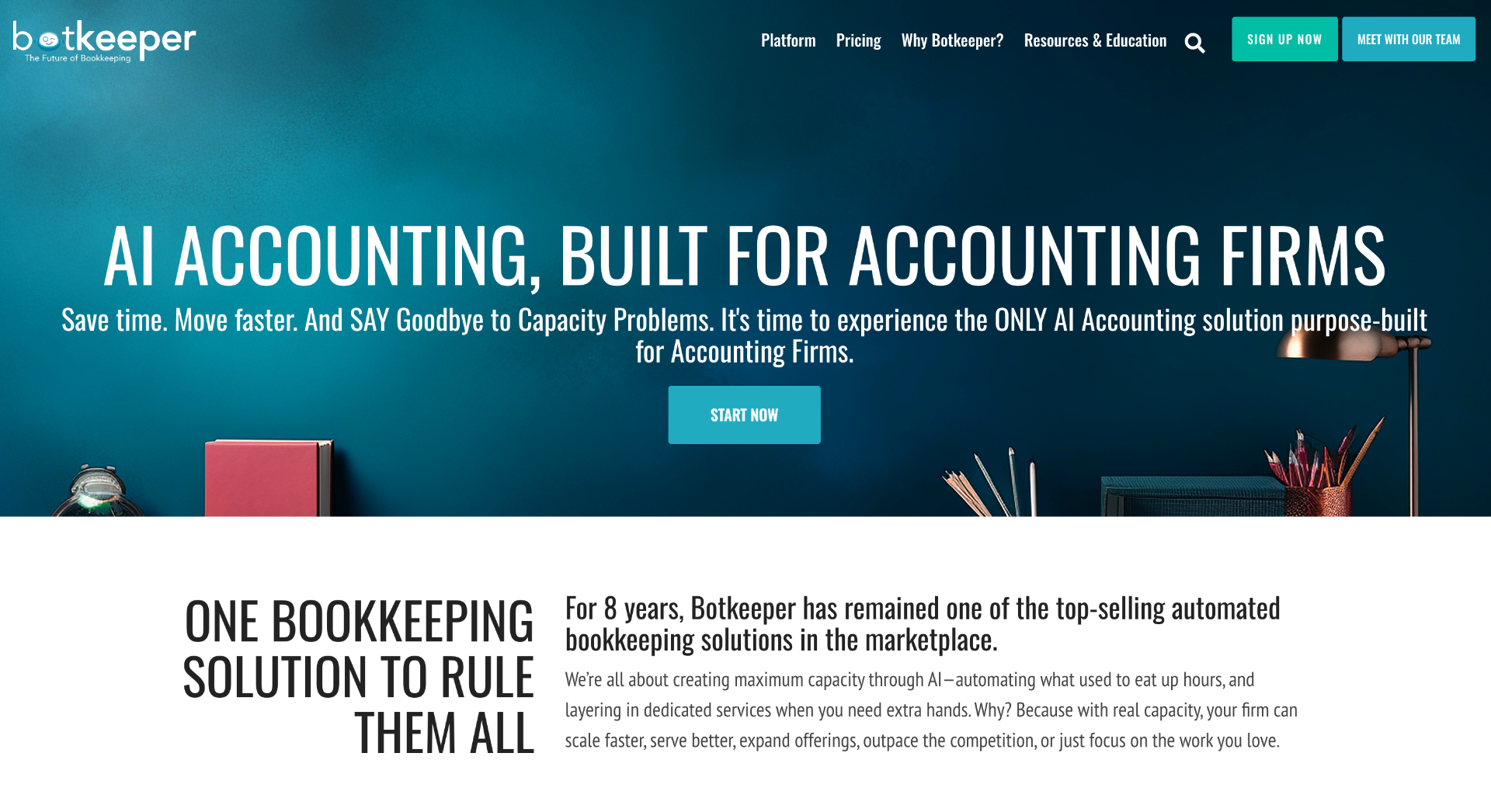
As accounting firms grow, so does the amount of repetitive bookkeeping work. Managing multiple clients, categorizing transactions, reconciling accounts, and preparing financial statements can quickly become overwhelming, especially during month-end and tax season.
Botkeeper helps accounting firms automate these repetitive workflows using AI while keeping accountants in control of client relationships and advisory services. The platform combines machine learning with human review to deliver accurate bookkeeping, automate transaction processing, and generate financial reports for multiple clients from a single dashboard. By reducing manual work, firms can focus more on consulting and less on data entry.
Botkeeper is designed primarily for accounting firms, bookkeeping services, and businesses managing multiple clients. Its standout features include AI-powered bookkeeping, automated transaction categorization, bank reconciliations, financial reporting, document management, and integrations with QuickBooks, Xero, and other accounting platforms. Pricing is customized based on the number of clients and transaction volume, with no public free plan available. Every implementation includes onboarding and dedicated customer support.
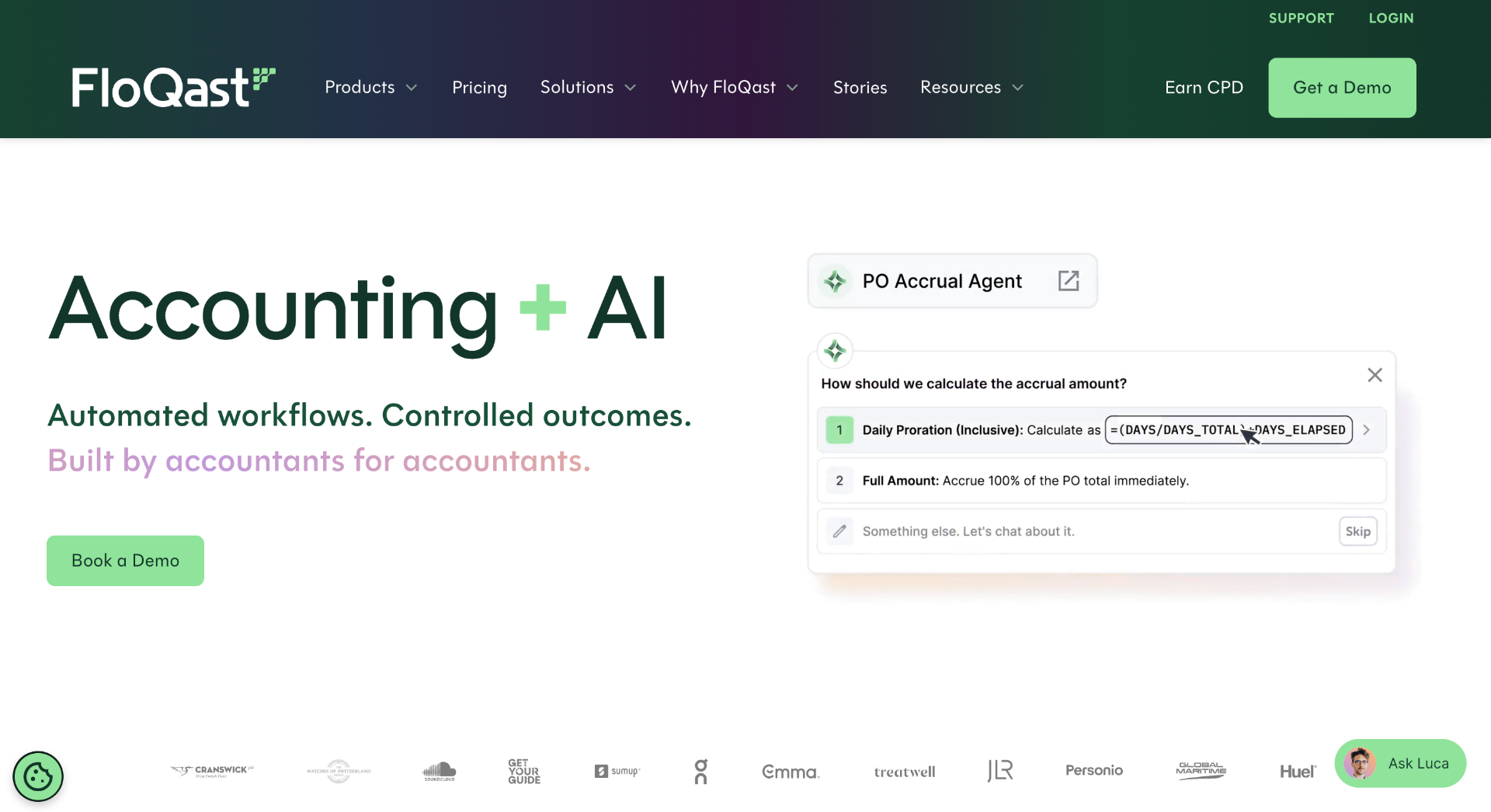
Month-end close is one of the most important processes for finance teams, yet it often involves countless spreadsheets, emails, and manual checklists.
FloQast modernizes this workflow by bringing every close activity into one collaborative platform. The software automatically tracks reconciliations, monitors close progress, highlights missing tasks, and helps accounting teams complete financial close significantly faster. With AI assisting throughout the process, finance leaders gain better visibility into bottlenecks before they become reporting delays.
FloQast is best suited for mid-sized and enterprise finance teams looking to accelerate financial close. The platform includes AI-assisted reconciliations, close management, workflow automation, audit preparation, compliance tracking, and integrations with leading ERP and accounting systems. Pricing is available on request, with no free plan currently offered. Enterprise customers receive implementation support, training, and ongoing customer success services.
While the tools above are among the strongest AI accounting platforms in 2026, several other solutions are also making an impact. Microsoft Copilot for Finance helps finance professionals automate spreadsheet analysis and reporting inside Excel and Microsoft 365. Oracle Fusion Cloud ERP brings AI-powered automation to enterprise finance operations, while SAP Joule assists finance teams with reporting and workflow automation inside SAP ecosystems. BlackLine continues to be a leading solution for account reconciliations and financial close management, and Rossum uses AI to automate invoice processing and document extraction for finance departments handling large document volumes.
Accounting has quietly become one of the biggest beneficiaries of artificial intelligence.
What began as simple automation for receipt scanning and invoice processing has evolved into intelligent AI agents capable of reconciling transactions, preparing financial reports, forecasting cash flow, managing accounts payable, identifying anomalies, and even supporting strategic financial planning. These tools are helping businesses spend less time on repetitive bookkeeping and more time making informed financial decisions.
The right platform depends largely on your business needs. Startups may benefit most from AI-native solutions like Puzzle, Truewind, or Zeni, while larger organizations often require enterprise-grade platforms such as Vic.ai, FloQast, or Datarails. Businesses focused on tax compliance, lease accounting, or invoice automation can also find specialized solutions that outperform traditional accounting software in those areas.
As AI continues to reshape finance operations, accounting software is becoming more than just a place to record transactions. It is evolving into an intelligent financial partner that helps businesses stay compliant, improve accuracy, uncover insights, and scale more efficiently. Choosing an AI accounting agent today is no longer just about saving time. It is about building a smarter financial foundation for the future.
| Trullion | Custom | ✘ | Lease accounting | AI document extraction | ERP |
| Datarails | Custom | ✘ | FP&A teams | Forecasting & reporting | Excel, ERP |
| Gridlex Sky | Free | ✔ | Small businesses | Accounting automation | CRM & business apps |
| Booke AI | From $10/mo | Trial | Bookkeepers | Transaction categorization | QuickBooks, Xero |
