
Best Open Source products of the week June 29, 2026
Explore the most innovative and popular open source products that captured the community's attention during week. These rankings help builders compare standout launches, understand what each product does, and discover practical tools shaping the future of technology.
Period
Weekly ranking
Published for
June 29, 2026
Selection
3 ranked products
Ranked list
Community-backed open source picks
Each product profile includes the launch story, visual preview, and direct product link so readers can move from discovery to evaluation quickly.
01

Conduit solves the latency issues caused by adding multiple MCP servers to your agents by using a local gateway that manages tool access. Instead of dumping every tool into your context, it exposes three meta-tools that the agent searches on demand, resulting in 97 percent less tool overhead and significantly fewer tokens used. It is a free, open-source tool that works locally or in the cloud while keeping your keys secure in your OS keychain.
02

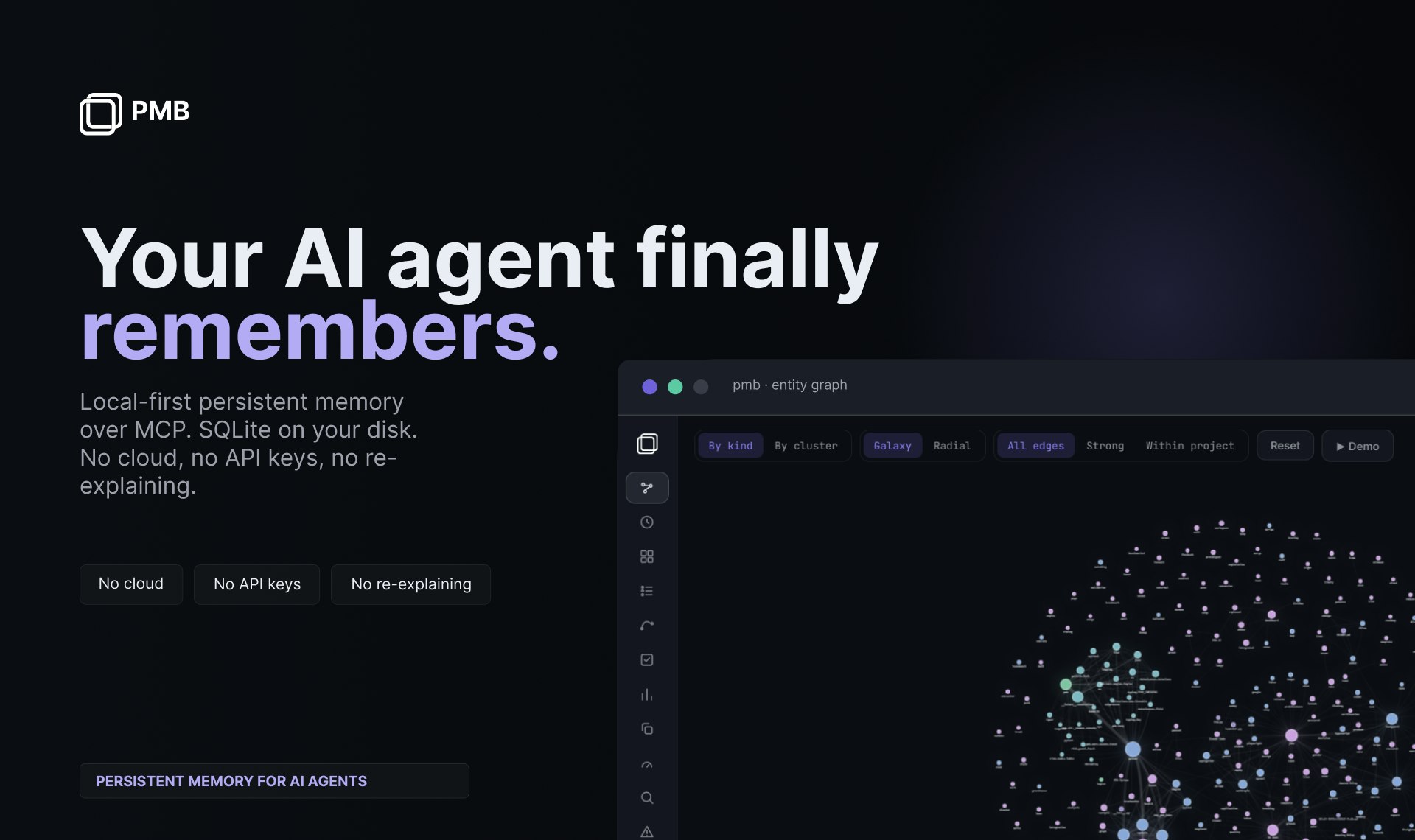
PMB provides persistent project memory for tools like Claude Code, Cursor, Codex, and Zed by using the MCP standard. It records your project goals, technical decisions, recent work, and documentation into a single SQLite workspace stored locally on your machine. Because it is an offline first and open source solution, there are no cloud dependencies, no API keys, and no LLM calls required to read your data. You get a local dashboard to track which memories are actually useful, and everything is fully inspectable and exportable.
03

Persona is a flexible, open-source AI chat library that works on any website, whether you are using a modern app or simple static HTML. It stands out by being framework-free and backend-agnostic, meaning you do not need to rely on specific React-based structures. Because it is WebMCP-native, your AI assistant can interact with tools directly on your page. You can easily add features like streaming chat, voice support, custom themes, and interactive copilot tools without needing to rewrite your existing frontend or build complex custom APIs from scratch.