

One platform for generative AI: run 1,000+ image, video, speech, music, 3D and LLM models through one API, chain them into workflows and deploy hosted AI agents. Webhooks, an OpenAI-compatible LLM endpoint, SDKs, an MCP server and pay-as-you-go model pricing.
Launch Team / Built with


Overview
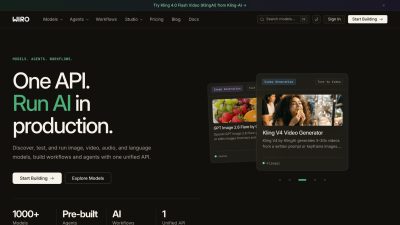
Wiro AI is a platform that lets you discover, test, and run image, video, audio, and language models, build workflows and agents, all through one unified API. It offers 1000+ models, pre-built agents, AI workflows, and a single endpoint for every output format.
The problem it solves is provider sprawl. Instead of wiring every model provider separately, teams standardize execution behind one API surface with task history, files, webhooks, and pricing visibility attached to every task.
Features
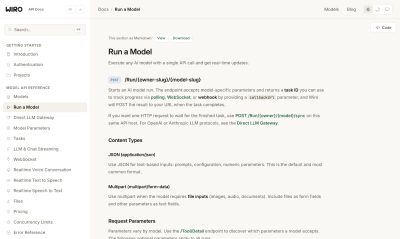
- One unified API: Run image, video, audio, language, and workflow models through a single POST request that returns a task ID immediately, with webhook support for completion events.
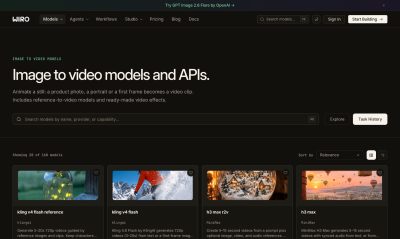
- Model marketplace with filters: Browse production models by modality, provider, and capability, then fetch the parameter schema before you run anything.
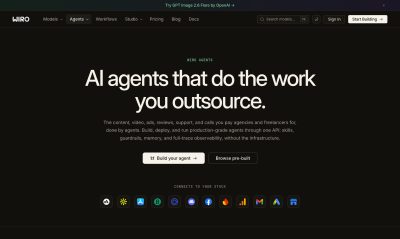
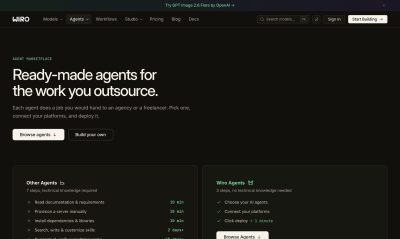
- Pre-built agents: Deploy autonomous AI assistants that connect to third-party services, keep conversation memory across sessions, and run scheduled tasks automatically.
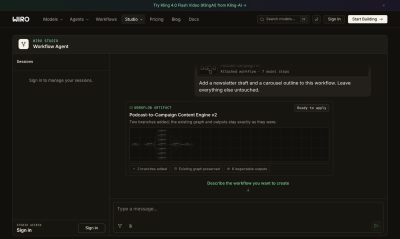
- Studio agents: Create and edit media by chatting with the Generative Media Agent, or build visual workflows with the Workflow Agent.
- Task tracking and outputs: Track tasks through WebSocket events or polling, and get completed outputs as file URLs with metadata plus totalcost and chargedcost.
Pricing
Pay-per-use, no subscriptions. Billed successful runs only. Completed task details return totalcost (list price) and chargedcost (billed after any discount).
Who It's For
Wiro is built for teams running repeated AI workloads, not one-off prompts. That includes AI product teams shipping features across providers, creative automation teams turning generation into pipelines, game and media studios prototyping content at volume, agencies and dev studios reusing one model layer per client, technical founders moving from prototype to production, and platform teams preparing for enterprise usage. The platform is designed for companies that need reliable model access, repeatable execution, and a clean way to operate across many model providers.
Funding
Y Combinator is an investor.
Founders
Wiro AI was founded in 2023 by Emin Budak and Serkan Leke, who both serve as Managing Partner and Co-founder. The company is headquartered in Istanbul, Turkey.
Frequently Asked Questions
How do I get an API key?
Sign up at wiro.ai, then create a project at wiro.ai/panel/project. Copy your API key and secret if you use signature-based auth, and store them securely. You can see them again on the Projects page after you confirm it's you.
Which authentication method should I use?
Signature-Based is recommended. It uses HMAC-SHA256 so your API secret never leaves your environment. API Key Only is simpler and fine for server-side applications where you control the environment. Use either method only from your own server, never in browser or mobile app code.
Is there a rate limit?
Yes. Every account has a concurrency limit that controls how many tasks can run at the same time. The limit scales automatically based on your account balance.
Do I pay for failed tasks?
No. If a task fails (non-zero pexit), you are not charged. Only successfully completed tasks are billed.
How do I check the cost before running a model?
Use the POST /Tool/Detail endpoint. The response includes the model's pricing information. If you're using the MCP server, the search_models and get_model_schema tools also return pricing.
How long are generated files stored, and are the URLs public?
Output files are stored on Wiro's CDN and available for a limited time. Download and store any files you need to keep long-term. Output URLs are publicly accessible, so anyone with the URL can access the file. If you need private storage, download the files to your own infrastructure.