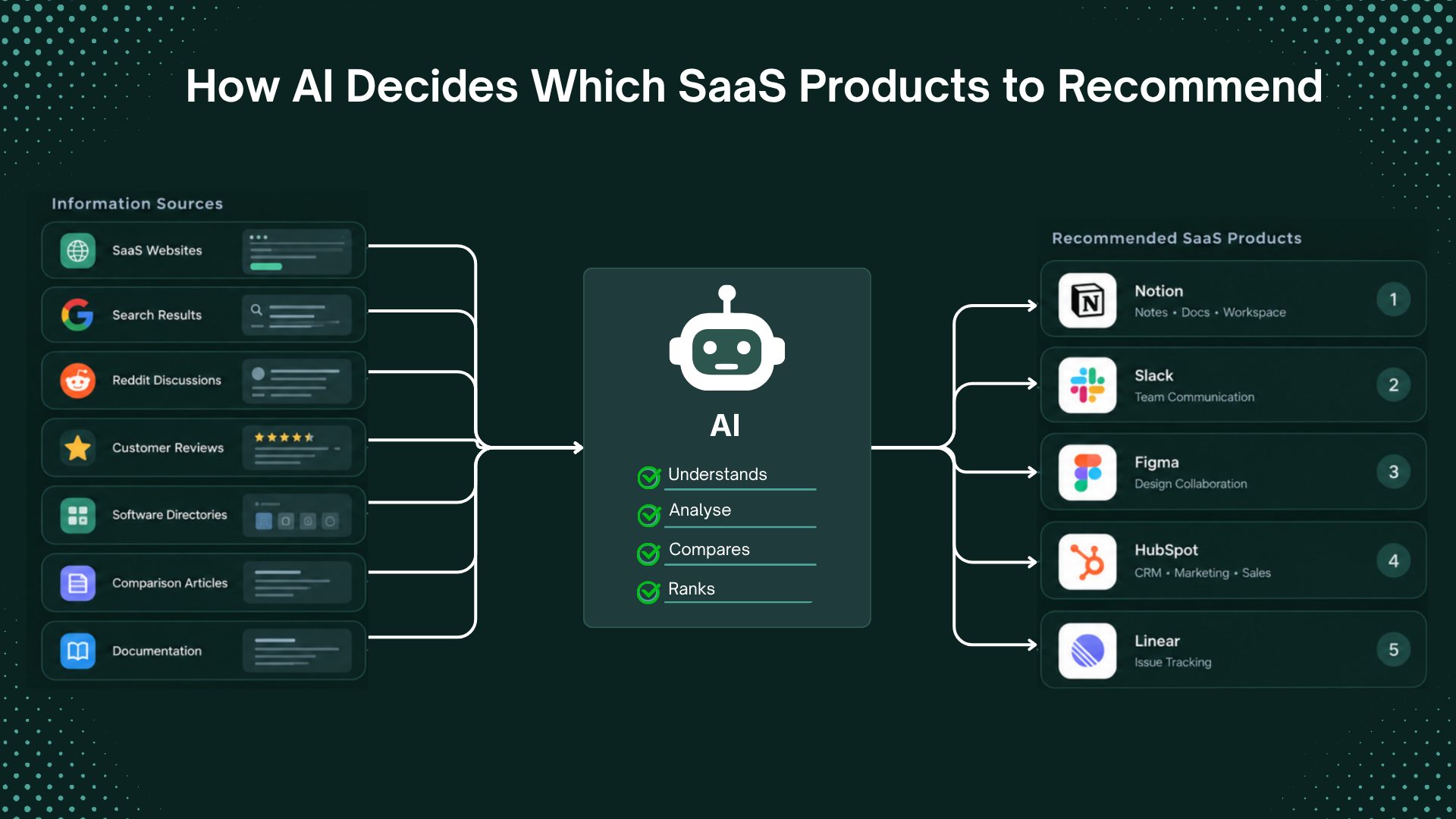
When someone asks an AI assistant to recommend a SaaS product, the answer may look like a simple list of software names. Behind that answer, however, can be multiple layers, including large language models, search engines, web retrieval systems, product databases, reviews, community discussions, and ranking systems.
For example, someone looking for “the best project management software for a small startup” may ask ChatGPT, Google AI Mode, Perplexity, Claude, or another AI search tool instead of manually comparing search results. This is changing SaaS discovery. It is no longer enough for a product to rank well in traditional search. AI systems also need to discover the product, understand what it does, evaluate whether it fits the user's needs, and find reliable evidence before recommending it.
This is often called AI visibility or AI search visibility. But one important distinction is often overlooked: an LLM is not the same as an AI application that uses an LLM.
Quick Summary
- SaaS products enter AI recommendations through model knowledge, web retrieval, or both.
- AI platforms do not publish a single fixed SaaS ranking formula.
- Define the product clearly: explain its function, target users, and problem solved. Use Semrush and Ahrefs for competitor and search-intent research.
- Publish complete information: features, pricing, documentation, use cases, integrations, and comparisons.
- Build third-party presence: maintain accurate profiles on G2, Capterra, Product Hunt, and Product Watch.
- Participate authentically on Reddit: useful discussions, experiences, and comparisons provide valuable product context.
- Keep information updated: maintain current pricing, features, integrations, and availability. Monitor indexing with Google Search Console.
- Collect customer evidence: genuine reviews, testimonials, and case studies on G2 and Capterra.
- Maintain technical SEO: use Screaming Frog and PageSpeed Insights to check crawling, indexing, structure, and performance.
- Track AI visibility: use Ahrefs Brand Radar and Semrush AI Visibility Toolkit.
- The goal: make the SaaS product easy to discover, understand, verify, and recommend.
Large language models (LLMs) primarily learn from training data. If a SaaS product appears frequently enough in the data used to train a model, the model may already have information about it.
However, training knowledge is not the same as a live search database. An LLM does not automatically know every new product, pricing change, feature release, or company launched after its training data.
AI applications can extend an LLM with web search, retrieval systems, databases, APIs, and other external sources. A simplified version looks like this image:
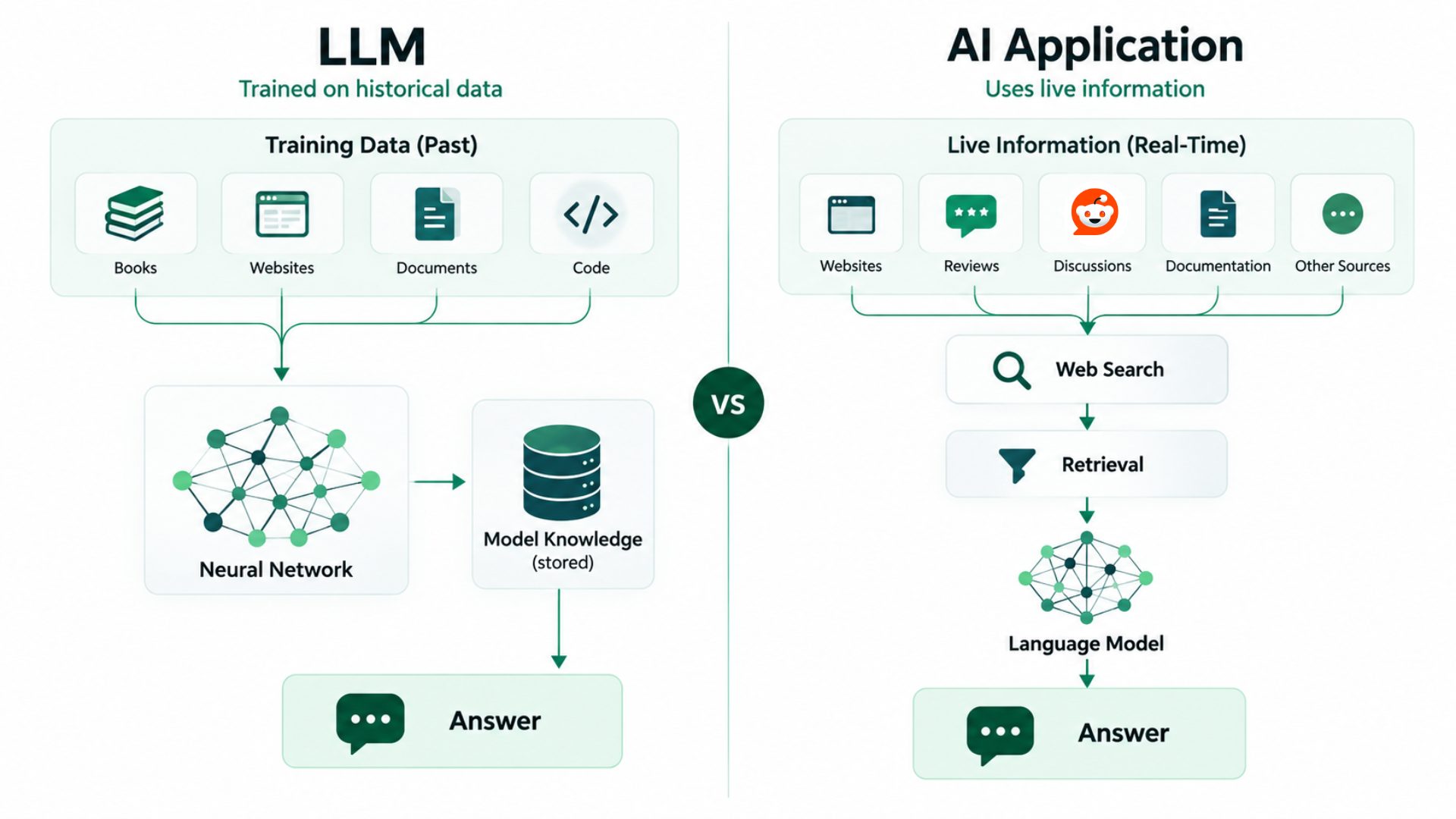
This means a SaaS product does not always need to be famous in historical training data. If an AI application can retrieve reliable current information about the product, that information can potentially influence its answer.
This creates two related visibility challenges:
There is no evidence of one universal AI ranking formula used across ChatGPT, Google AI features, Perplexity, Gemini, Claude, and other systems.
Each system can use different models, search engines, retrieval methods, ranking systems, source-selection processes, and application-level instructions.
The answer can also change based on the query, user requirements, available sources, freshness, and context.
For SaaS companies, the more useful question is:
What makes a SaaS product easy for AI systems to discover, understand, evaluate, and recommend?
AI recommendations are contextual.
A large enterprise CRM may not be the best recommendation for a five-person startup. A powerful project management platform may not be the best option for a development team that needs deep GitHub integration.
Clear positioning helps AI systems understand where a product fits.
A vague description such as:
“An innovative platform that helps teams work better.”
provides little useful context.
A more precise description explains the category, audience, problem, and differentiator:
"An AI-powered project management platform for SaaS development teams that connects engineering tasks with GitHub workflows"
The second description creates clearer associations between the product, category, audience, problem, and use case.
An AI system needs more than a company name. It needs enough information to understand what the company represents.
An entity can be thought of as a recognizable concept connected to attributes, categories, audiences, problems, competitors, integrations, and use cases.
For example:
Product → project management software → startup teams → task management → collaboration → Slack integration → alternative to Asana → customer reviews → Reddit discussions
The homepage is only one source of this information. External references help create a broader information footprint around the product.
Together, these sources create what can be called an information footprint.
A strong website helps explain a product, but it is only one part of the information ecosystem.
Compare:
Product A: Strong homepage, but almost no independent information.
Product B: Strong website plus customer reviews, product directories, comparison articles, tutorials, integration documentation, community discussions, and independent coverage.
Product B gives AI systems more sources from which to understand and verify the product.
This does not mean simply collecting mentions. The quality, relevance, independence, and consistency of information matter.
AI visibility is not only a website optimization problem. It is an information ecosystem problem.
Reddit has become particularly interesting in AI search because it contains a large amount of first-hand discussion.
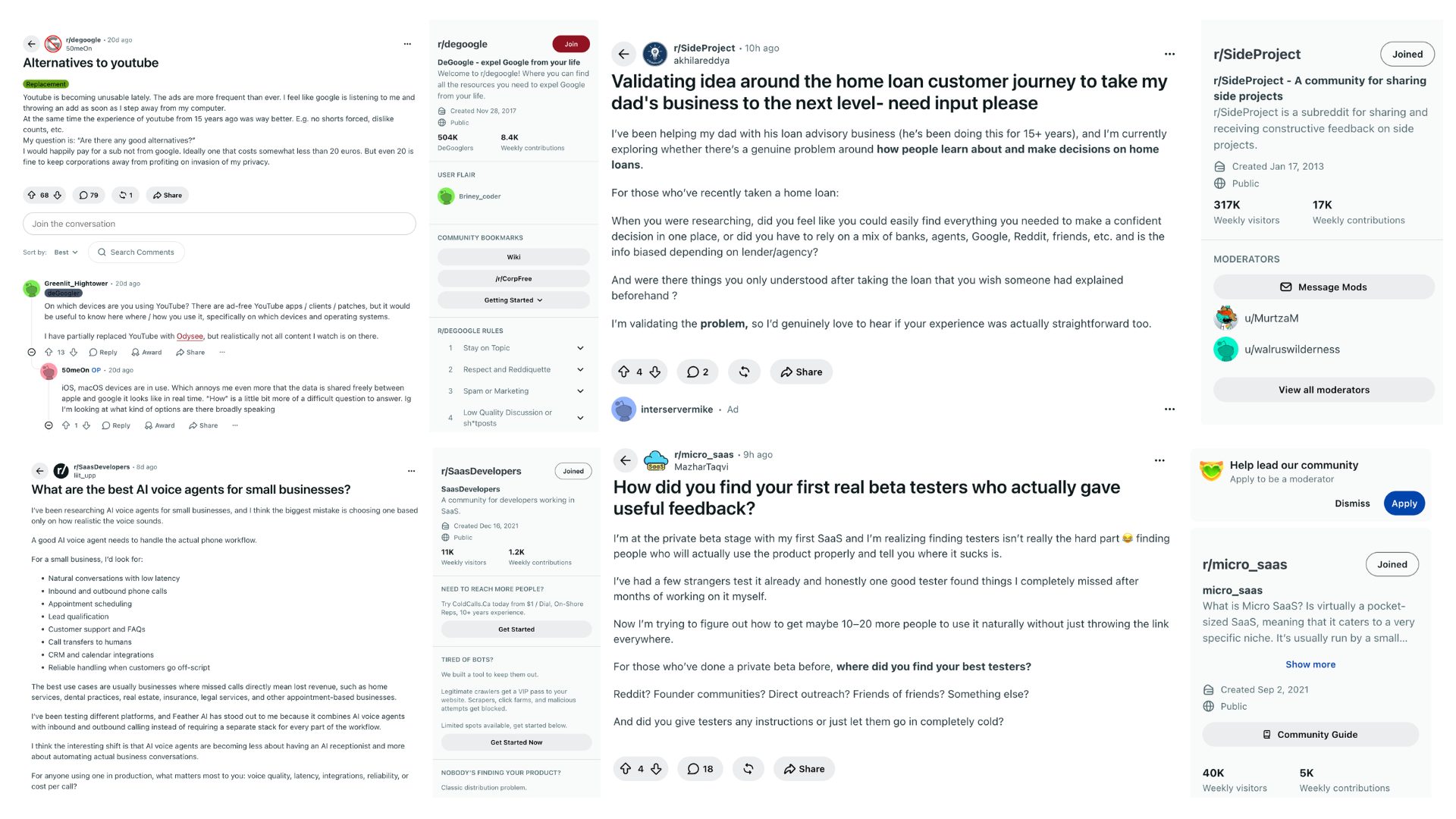
Traditional marketing content usually comes from companies attempting to explain why their products are useful. Reddit discussions can contain something different: people explaining what happened when they actually used a product.
A user may ask:
“Has anyone tried this CRM?”
“What's the best alternative to this tool?”
“Which project management platform works for a five-person startup?”
“Is this AI writing tool actually worth paying for?”
These conversations contain opinions, experiences, comparisons, complaints, recommendations, implementation details, and alternatives.
That information can be highly useful to an AI system attempting to answer a recommendation question.
Research from Semrush has found that Reddit URLs appear frequently among sources cited or mentioned by major AI search systems. Its research has also identified Q&A, comparison, and discussion content as important categories of Reddit pages appearing in AI-generated answers.
However, Reddit should not be misunderstood as a guaranteed high-weight ranking signal.
There is no reliable basis for saying that “Reddit gets a fixed 5x or 10x weight” in AI recommendations. Retrieval behavior changes between systems and over time.
The more useful conclusion is that Reddit provides independent, conversational, first-hand information, which can be especially relevant to recommendation and comparison queries.
This distinction is important because some SaaS companies may interpret Reddit's visibility as an opportunity to create large numbers of promotional posts.
That is usually the wrong approach.
Reddit communities have their own rules, and Reddit's platform policies prohibit spam and repetitive promotional behavior.
A better approach is to participate in relevant discussions with genuinely useful information.
If someone is asking how to automate a particular workflow, an expert can explain the architecture, tradeoffs, tools, implementation problems, and possible solutions. If a product is genuinely relevant, it can be mentioned naturally.
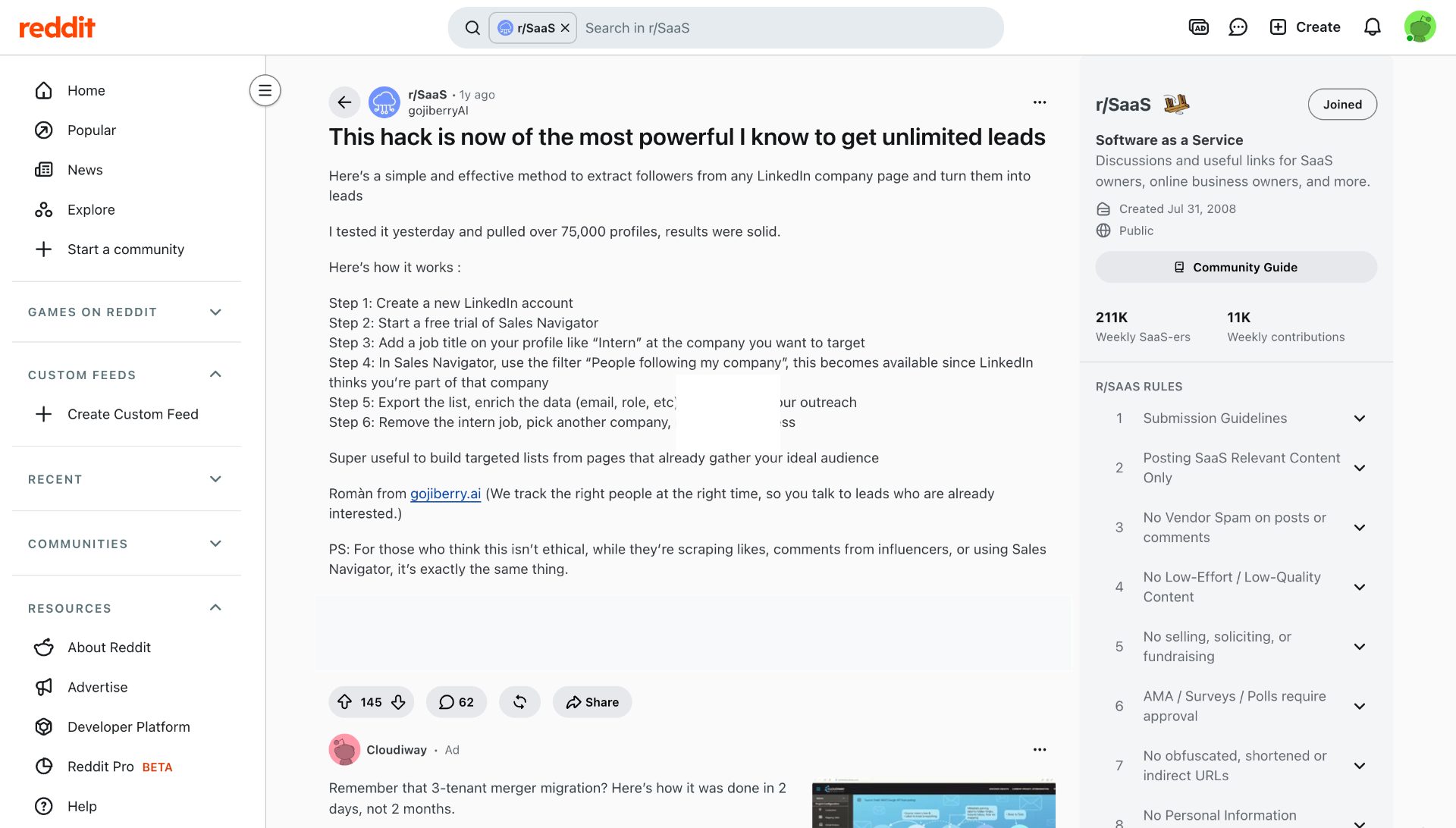
For a real-world example of how authentic community engagement can support SaaS growth, see how Goji Berry reached $4M ARR in under 12 months.
The objective should not be “get the product mentioned on Reddit.” It should be to provide information that is genuinely useful to the community.
A product's own website is naturally biased toward the company's preferred positioning.
Independent sources provide another layer.
A SaaS company might describe itself as a “complete AI sales platform,” while customers and independent publications may describe it more specifically as an “AI outbound prospecting tool for small sales teams.”
The second description may actually be more useful because it reflects how the market understands the product.
This is why SaaS companies should monitor not only what they publish, but also how other websites describe them.
Search for the brand alongside terms such as:
“alternative”, “review”, “vs”, “best”, “for startups”, “for agencies”, “for developers”
“pricing”, “integrations”, “API”, “competitors”, “use cases”
These searches reveal the language and categories that surround the product.
That surrounding language can be valuable for understanding brand positioning.
One of the biggest advantages of web-connected AI applications is access to newer information.
SaaS products change quickly.
Pricing changes. Features change. Products launch and shut down. Integrations are added or removed. Free plans disappear. Companies reposition themselves.
A product that was an excellent recommendation two years ago may not be the best option today.
This makes freshness increasingly important for SaaS companies.
Important product information should therefore remain current across the website and relevant external sources.
Pricing pages, feature documentation, integration pages, product comparisons, changelogs, help documentation, and major product pages should not be allowed to become outdated.
Freshness is particularly important for queries containing words such as “best,” “latest,” “current,” “2026,” “new,” or “updated.”
Recommendation engines naturally deal with comparisons.
Users rarely ask only:
“What is Product X?”
They often ask:
“What is the best alternative to Product X?”
“Product A vs Product B?”
“What should a startup use instead of Product X?”
“Which is better for a small team?”
These questions create opportunities for SaaS brands to establish competitive context.
A strong comparison page should not simply declare that the company's own product wins.
It should explain where each product is strongest, where each product has limitations, which customers each option suits, pricing differences, major feature differences, and situations where one option may be preferable.
That creates useful decision-making content.
It also gives AI systems clearer information about the relationship between products.
An “alternatives” page can serve a different purpose from a standard product landing page.
A product page answers:
Why should this product be considered?
An alternatives page answers:
Why might someone looking at another product consider this one?
That distinction aligns closely with how users interact with AI assistants.
Someone who has already identified a competitor is often much closer to a purchasing decision than someone searching for a broad category.
Therefore, SaaS companies should consider building high-quality pages around relevant competitor alternatives, but only when the comparison is genuinely useful and factually accurate.
Thin pages created solely to capture competitor names are unlikely to provide the same value as detailed comparison resources.
Independent customer experiences can provide information about usability, reliability, support, pricing, implementation, integrations, and real-world use cases.
No individual review should be treated as absolute truth. A broader collection of independent customer experiences provides better context.
Useful platforms for collecting and managing SaaS reviews include G2, Capterra, Trustpilot, and TrustRadius. Customer feedback tools such as Delighted and Typeform can also help collect structured customer feedback and testimonials.
AI visibility does not replace technical SEO.
Search engines still need to crawl, index, understand, and retrieve website content. Google has also stated that existing SEO fundamentals continue to apply to AI search features.
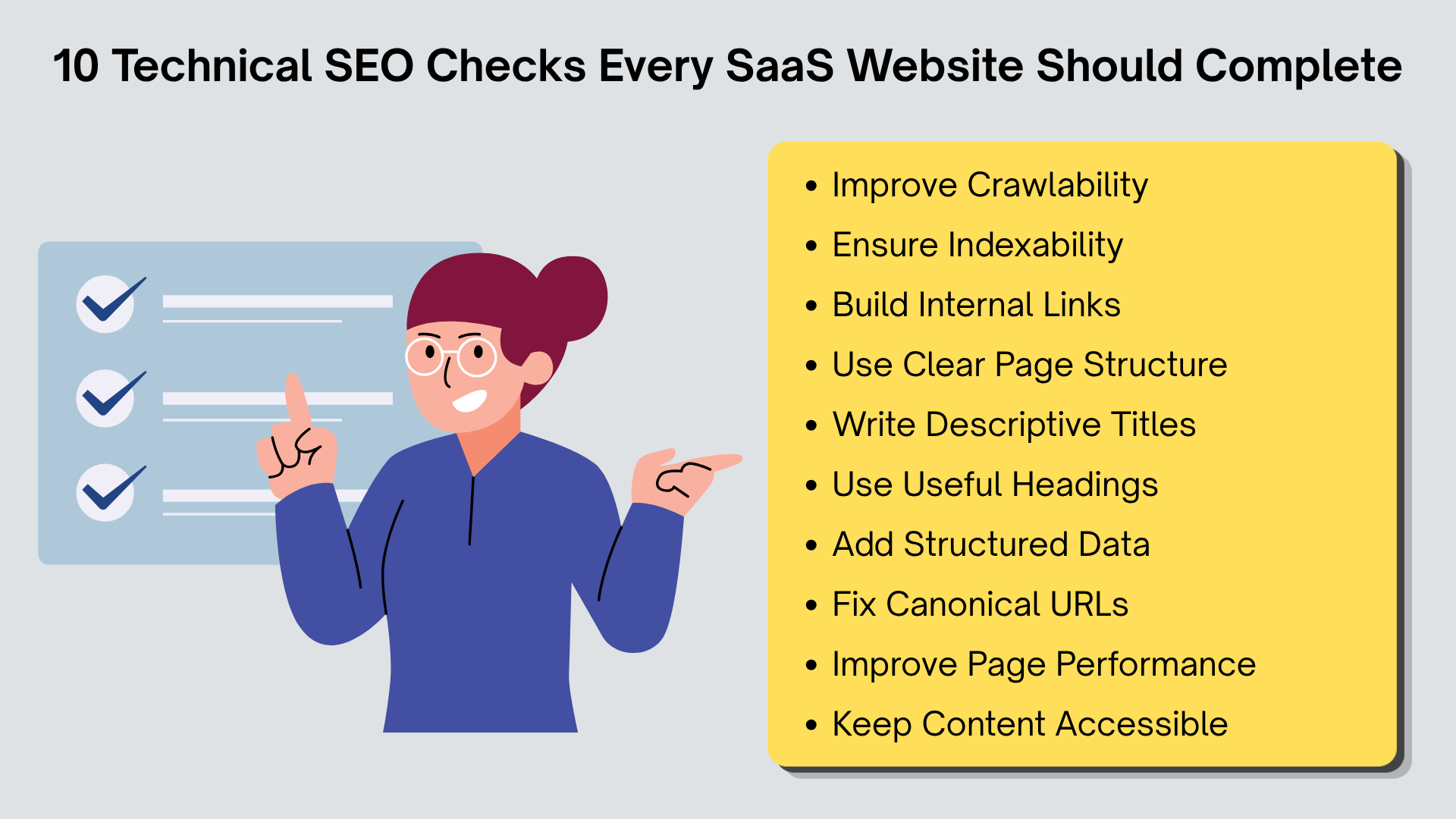
SaaS companies should therefore continue investing in technical fundamentals such as crawlability, indexability, internal linking, page structure, descriptive titles, useful headings, structured data where appropriate, canonicalization, performance, and accessible content.
AI optimization should not become an excuse to ignore SEO.
A better approach is to think of it as an extension of search visibility.
Traditional SEO asks:
Can the search engine find and rank this page?
AI search adds:
Can the AI system retrieve this information and use it to answer a user's question?
Tools such as Google Search Console, Screaming Frog SEO Spider, Google PageSpeed Insights, and Google Rich Results Test can help SaaS teams identify crawling, indexing, technical, structured-data, and performance issues.
Product information should remain consistent across websites, directories, reviews, documentation, communities, and other sources.
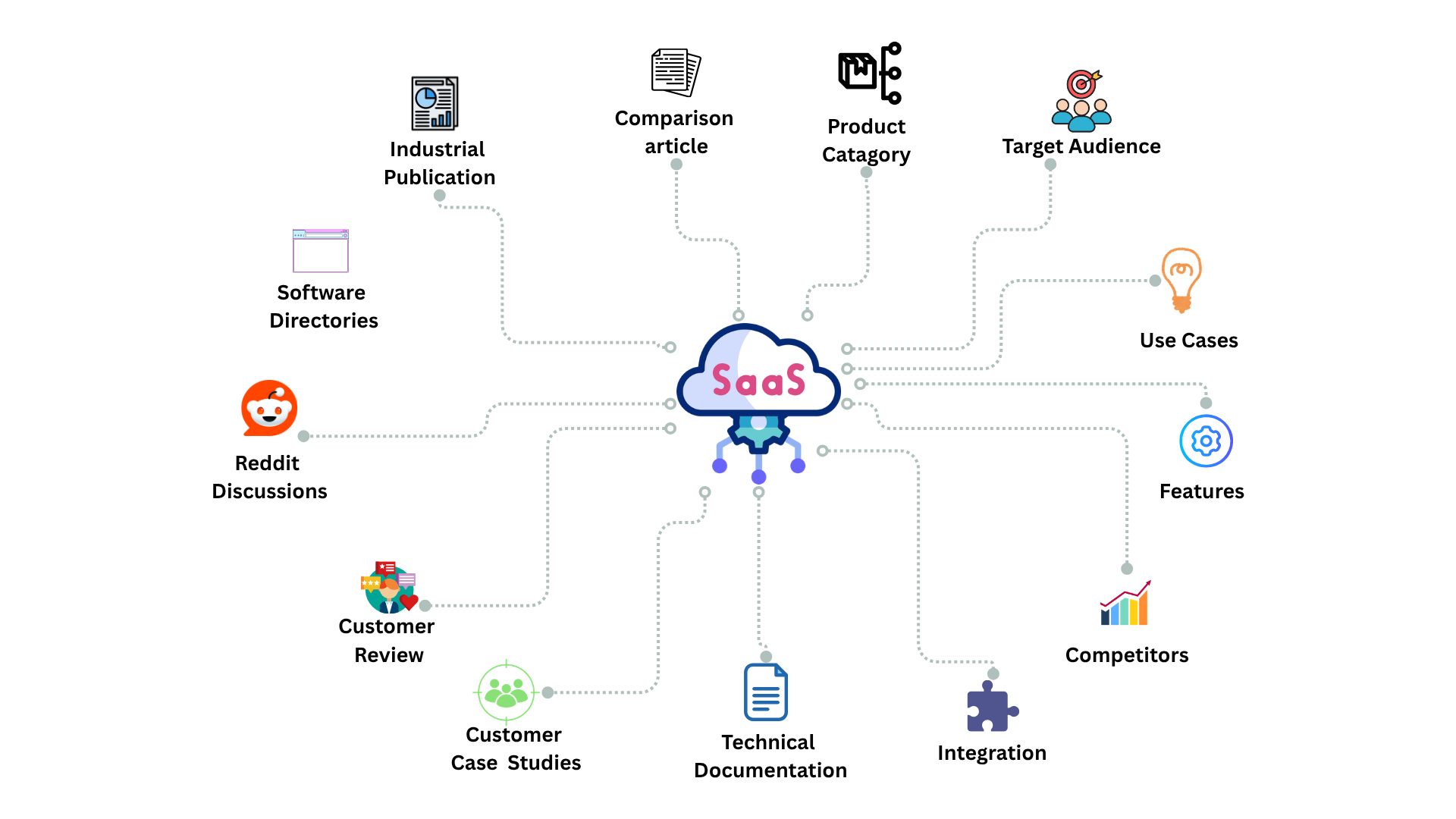
For example, if a product is positioned as an:
“AI-powered customer support platform for B2B SaaS companies,”
that core identity should remain consistent even when different sources use different wording.
The underlying relationships should make sense:
Brand → category → audience → problem → use case → competitors → integrations → outcomes
This is much stronger than simply trying to increase the number of brand mentions.
The homepage should clearly state what the product does, who it is for, and the main problem it solves. Avoid describing the same product with several unrelated categories.
For example, a developer-focused SaaS should clearly explain whether it is an API monitoring platform, developer analytics tool, CI/CD platform, or another specific category.
Tools such as Google Search Console and Google Search Central can help identify how search engines discover and understand the website. Product directories such as Product Watch and Product Hunt can also provide additional places where the product category and description are publicly defined.
Create dedicated pages for important customer problems instead of describing every feature on one generic product page.
For example:
/use-cases/remote-team-project-management/solutions/project-management-for-saas-teams/integrations/github/compare/project-tool-for-startupsTools such as Ahrefs and Semrush can help identify the searches, questions, competitors, and topics related to those use cases.
A SaaS product should have information available outside its own website.
Useful platforms include:
The goal is not to create hundreds of listings. The important part is having accurate, consistent product information on relevant third-party websites.
Reddit, developer communities, industry forums, and professional communities can provide first-hand product discussions.
For example, a developer tool can answer technical questions, explain implementation problems, share lessons from building the product, and participate in relevant discussions.
Reddit should not be treated as a link-building system. Communities can remove promotional content, and Reddit has rules covering spam and self-promotion. The useful approach is to contribute information that would still be valuable without the product link.
Comparison pages help users who are already evaluating products.
Useful formats include:
[Product] vs [Competitor]Best [Category] AlternativesBest [Category] for [Audience][Product] Alternatives for [Specific Use Case]For example, a project-management SaaS could create:
Asana alternatives for small SaaS teams
or:
ClickUp vs [Product] for software development teams
The comparison should contain specific differences in pricing, integrations, features, limitations, target users, and use cases rather than simply claiming that one product is better.
Maintain current information for: Pricing, Features, Integrations, API documentation, Product availability, Supported platforms, Security information, Use cases
A simple change log or regularly updated product documentation can help prevent outdated information from remaining on the web.
Google Search Console can be used to monitor search performance and indexing. Google also recommends maintaining accurate sitemaps and making updated URLs discoverable.
Important product and content pages should be crawlable and indexable.
Useful tools include:
Google specifically recommends checking crawlability, robots.txt, sitemaps, URLs, JavaScript rendering, and structured data when making websites search-friendly.
Instead of manually asking an AI chatbot one question occasionally, create a fixed list of prompts and track the results over time.
Useful tools include:
Ahrefs Brand Radar, for example, tracks metrics including mentions, citations, AI share of voice, and estimated impressions.
AI visibility affects more than initial discovery.
A customer may discover a product through an AI answer, visit the website, check reviews on G2, search Reddit for user experiences, compare competitors, check integrations, and then ask another AI system whether the product fits a specific use case.
Each stage requires accurate information.
This makes AI visibility a product research problem, not simply a ranking problem.
A strong SaaS visibility strategy can create a continuous cycle:
Better product → happier customers → stronger reviews → useful community discussions → independent mentions → stronger product information footprint → better search and AI discovery → qualified traffic → more customers
The strongest foundation is therefore not artificial visibility. It is accurate information supported by real customer experiences and independent sources.
Do not use a formula such as:
Publish 100 articles + create 50 Reddit mentions + build 1,000 backlinks = AI recommendations
Several tactics can weaken long-term visibility and trust:
Reddit is especially important here because promotional activity can violate community rules or result in content removal.
Discover: Can search engines, AI systems, directories, communities, and review platforms find the product?
Understand: Can they determine what the product does, who it serves, and which category it belongs to?
Validate: Are there reviews, customer experiences, technical documentation, comparisons, and third-party sources supporting the product information?
Recommend: Does the product match the user's requirements better than the available alternatives?
Convert: Does the website provide clear pricing, features, documentation, customer evidence, and a simple signup or purchase path?
A weakness at any stage can reduce the value of the other stages.
Traditional search often starts with a short keyword:
project management software
AI search can start with a detailed requirement:
A project management tool for a 15-person remote SaaS team with GitHub integration, simple sprint planning, and affordable guest access.
This means SaaS websites need to clearly communicate category, audience, problems solved, features, integrations, pricing, and use cases.
The brands most likely to benefit from this shift are not necessarily those targeting the broadest keyword. Stronger opportunities can come from building clear associations between the product, a specific audience, a specific problem, and a specific workflow.
AI recommendations are influenced by model knowledge, web retrieval, relevance, source quality, freshness, and product context, not a single ranking formula.
For SaaS companies, the goal is to build a clear and consistent information footprint through strong positioning, useful content, technical SEO, independent reviews, community discussions, comparisons, and current product information.
The goal is not simply to “rank in ChatGPT.” It is to make the product easy to discover, understand, verify, and confidently recommend.
