
Blogs in search-engines
stay updated with the latest news, insights, and guides on search-engines from ProductWatch.
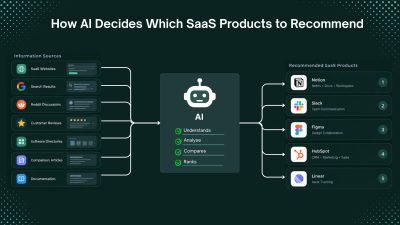
How AI Decides Which SaaS Products to Recommend
When someone asks an AI assistant to recommend a SaaS product, the answer may look like a simple list of software names. Behind that answer, however, can be multiple layers, including large language models, search engines, web retrieval systems, product databases, reviews, community discussions, and ranking systems. For example, someone looking for “the best project management software for a small startup” may ask ChatGPT, Google AI Mode, Perplexity, Claude, or another AI search tool instead of manually comparing search results. This is changing SaaS discovery. It is no longer enough for a product to rank well in traditional search. AI systems also need to discover the product, understand what it does, evaluate whether it fits the user's needs, and find reliable evidence before recommending it. This is often called AI visibility or AI search visibility. But one important distinction is often overlooked: an LLM is not the same as an AI application that uses an LLM. > QUICK SUMMARY > > * SaaS products enter AI recommendations through model knowledge, web retrieval, or both. > * AI platforms do not publish a single fixed SaaS ranking formula. > * Define the product clearly: explain its function, target users, and problem solved. Use Semrush and Ahrefs for competitor and search-intent research. > * Publish complete information: features, pricing, documentation, use cases, integrations, and comparisons. > * Build third-party presence: maintain accurate profiles on G2, Capterra, Product Hunt, and Product Watch. > * Participate authentically on Reddit: useful discussions, experiences, and comparisons provide valuable product context. > * Keep information updated: maintain current pricing, features, integrations, and availability. Monitor indexing with Google Search Console. > * Collect customer evidence: genuine reviews, testimonials, and case studies on G2 and Capterra. > * Maintain technical SEO: use Screaming Frog and PageSpeed Insights to check crawling, indexing, structure, and performance. > * Track AI visibility: use Ahrefs Brand Radar and Semrush AI Visibility Toolkit. > * The goal: make the SaaS product easy to discover, understand, verify, and recommend. LLMS AND AI APPLICATIONS WORK DIFFERENTLY Large language models (LLMs) primarily learn from training data. If a SaaS product appears frequently enough in the data used to train a model, the model may already have information about it. However, training knowledge is not the same as a live search database. An LLM does not automatically know every new product, pricing change, feature release, or company launched after its training data. AI applications can extend an LLM with web search, retrieval systems, databases, APIs, and other external sources. A simplified version looks like this image: This means a SaaS product does not always need to be famous in historical training data. If an AI application can retrieve reliable current information about the product, that information can potentially influence its answer. This creates two related visibility challenges: 1. Training-data visibility: Is the product already represented in model knowledge? 2. Retrieval visibility: Can current AI systems find useful information about the product? AI DOES NOT USE ONE UNIVERSAL RECOMMENDATION ALGORITHM There is no evidence of one universal AI ranking formula used across ChatGPT, Google AI features, Perplexity, Gemini, Claude, and other systems. Each system can use different models, search engines, retrieval methods, ranking systems, source-selection processes, and application-level instructions. The answer can also change based on the query, user requirements, available sources, freshness, and context. For SaaS companies, the more useful question is: What makes a SaaS product easy for AI systems to discover, understand, evaluate, and recommend? RELEVANCE IS MORE IMPORTANT THAN SIMPLY BEING FAMOUS AI recommendations are contextual. A large enterprise CRM may not be the best recommendation for a five-person startup. A powerful project management platform may not be the best option for a development team that needs deep GitHub integration. Clear positioning helps AI systems understand where a product fits. A vague description such as: > “An innovative platform that helps teams work better.” provides little useful context. A more precise description explains the category, audience, problem, and differentiator: > "An AI-powered project management platform for SaaS development teams that connects engineering tasks with GitHub workflows" The second description creates clearer associations between the product, category, audience, problem, and use case. PRODUCT POSITIONING CREATES AN ENTITY An AI system needs more than a company name. It needs enough information to understand what the company represents. An entity can be thought of as a recognizable concept connected to attributes, categories, audiences, problems, competitors, integrations, and use cases. For example: > Product → project management software → startup teams → task management → collaboration → Slack integration → alternative to Asana → customer reviews → Reddit discussions The homepage is only one source of this information. External references help create a broader information footprint around the product. Together, these sources create what can be called an information footprint. YOUR WEBSITE IS ONLY ONE PART OF YOUR AI VISIBILITY A strong website helps explain a product, but it is only one part of the information ecosystem. Compare: Product A: Strong homepage, but almost no independent information. Product B: Strong website plus customer reviews, product directories, comparison articles, tutorials, integration documentation, community discussions, and independent coverage. Product B gives AI systems more sources from which to understand and verify the product. This does not mean simply collecting mentions. The quality, relevance, independence, and consistency of information matter. AI visibility is not only a website optimization problem. It is an information ecosystem problem. WHY REDDIT DESERVES SPECIAL ATTENTION Reddit has become particularly interesting in AI search because it contains a large amount of first-hand discussion. Traditional marketing content usually comes from companies attempting to explain why their products are useful. Reddit discussions can contain something different: people explaining what happened when they actually used a product. > A user may ask: > > “Has anyone tried this CRM?” > > “What's the best alternative to this tool?” > > “Which project management platform works for a five-person startup?” > > “Is this AI writing tool actually worth paying for?” These conversations contain opinions, experiences, comparisons, complaints, recommendations, implementation details, and alternatives. That information can be highly useful to an AI system attempting to answer a recommendation question. Research from Semrush has found that Reddit URLs appear frequently among sources cited or mentioned by major AI search systems. Its research has also identified Q&A, comparison, and discussion content as important categories of Reddit pages appearing in AI-generated answers. However, Reddit should not be misunderstood as a guaranteed high-weight ranking signal. There is no reliable basis for saying that “Reddit gets a fixed 5x or 10x weight” in AI recommendations. Retrieval behavior changes between systems and over time. The more useful conclusion is that Reddit provides independent, conversational, first-hand information, which can be especially relevant to recommendation and comparison queries. REDDIT VISIBILITY CANNOT BE MANUFACTURED AT SCALE This distinction is important because some SaaS companies may interpret Reddit's visibility as an opportunity to create large numbers of promotional posts. That is usually the wrong approach. Reddit communities have their own rules, and Reddit's platform policies prohibit spam and repetitive promotional behavior. A better approach is to participate in relevant discussions with genuinely useful information. If someone is asking how to automate a particular workflow, an expert can explain the architecture, tradeoffs, tools, implementation problems, and possible solutions. If a product is genuinely relevant, it can be mentioned naturally. For a real-world example of how authentic community engagement can support SaaS growth, see how Goji Berry reached $4M ARR in under 12 months. The objective should not be “get the product mentioned on Reddit.” It should be to provide information that is genuinely useful to the community. INDEPENDENT SOURCES CAN STRENGTHEN BRAND UNDERSTANDING A product's own website is naturally biased toward the company's preferred positioning. Independent sources provide another layer. A SaaS company might describe itself as a “complete AI sales platform,” while customers and independent publications may describe it more specifically as an “AI outbound prospecting tool for small sales teams.” The second description may actually be more useful because it reflects how the market understands the product. This is why SaaS companies should monitor not only what they publish, but also how other websites describe them. Search for the brand alongside terms such as: > “alternative”, “review”, “vs”, “best”, “for startups”, “for agencies”, “for developers” “pricing”, “integrations”, “API”, “competitors”, “use cases” These searches reveal the language and categories that surround the product. That surrounding language can be valuable for understanding brand positioning. FRESHNESS MATTERS IN AI SEARCH One of the biggest advantages of web-connected AI applications is access to newer information. SaaS products change quickly. Pricing changes. Features change. Products launch and shut down. Integrations are added or removed. Free plans disappear. Companies reposition themselves. A product that was an excellent recommendation two years ago may not be the best option today. This makes freshness increasingly important for SaaS companies. Important product information should therefore remain current across the website and relevant external sources. Pricing pages, feature documentation, integration pages, product comparisons, changelogs, help documentation, and major product pages should not be allowed to become outdated. Freshness is particularly important for queries containing words such as “best,” “latest,” “current,” “2026,” “new,” or “updated.” WHY COMPARISON CONTENT IS SO VALUABLE Recommendation engines naturally deal with comparisons. > Users rarely ask only: > > “What is Product X?” > > They often ask: > > “What is the best alternative to Product X?” > > “Product A vs Product B?” > > “What should a startup use instead of Product X?” > > “Which is better for a small team?” These questions create opportunities for SaaS brands to establish competitive context. A strong comparison page should not simply declare that the company's own product wins. It should explain where each product is strongest, where each product has limitations, which customers each option suits, pricing differences, major feature differences, and situations where one option may be preferable. That creates useful decision-making content. It also gives AI systems clearer information about the relationship between products. ALTERNATIVES PAGES CAN BECOME IMPORTANT BRAND ASSETS An “alternatives” page can serve a different purpose from a standard product landing page. A product page answers: Why should this product be considered? An alternatives page answers: Why might someone looking at another product consider this one? That distinction aligns closely with how users interact with AI assistants. Someone who has already identified a competitor is often much closer to a purchasing decision than someone searching for a broad category. Therefore, SaaS companies should consider building high-quality pages around relevant competitor alternatives, but only when the comparison is genuinely useful and factually accurate. Thin pages created solely to capture competitor names are unlikely to provide the same value as detailed comparison resources. REVIEWS PROVIDE ANOTHER LAYER OF EVIDENCE Independent customer experiences can provide information about usability, reliability, support, pricing, implementation, integrations, and real-world use cases. No individual review should be treated as absolute truth. A broader collection of independent customer experiences provides better context. Useful platforms for collecting and managing SaaS reviews include G2, Capterra, Trustpilot, and TrustRadius. Customer feedback tools such as Delighted and Typeform can also help collect structured customer feedback and testimonials. TECHNICAL SEO STILL MATTERS AI visibility does not replace technical SEO. Search engines still need to crawl, index, understand, and retrieve website content. Google has also stated that existing SEO fundamentals continue to apply to AI search features. SaaS companies should therefore continue investing in technical fundamentals such as crawlability, indexability, internal linking, page structure, descriptive titles, useful headings, structured data where appropriate, canonicalization, performance, and accessible content. AI optimization should not become an excuse to ignore SEO. A better approach is to think of it as an extension of search visibility. Traditional SEO asks: Can the search engine find and rank this page? AI search adds: Can the AI system retrieve this information and use it to answer a user's question? Tools such as Google Search Console, Screaming Frog SEO Spider, Google PageSpeed Insights, and Google Rich Results Test can help SaaS teams identify crawling, indexing, technical, structured-data, and performance issues. BUILD A CONSISTENT PRODUCT KNOWLEDGE GRAPH ACROSS THE WEB Product information should remain consistent across websites, directories, reviews, documentation, communities, and other sources. For example, if a product is positioned as an: “AI-powered customer support platform for B2B SaaS companies,” that core identity should remain consistent even when different sources use different wording. The underlying relationships should make sense: Brand → category → audience → problem → use case → competitors → integrations → outcomes This is much stronger than simply trying to increase the number of brand mentions. HOW TO IMPROVE SAAS BRAND POSITION FOR AI RECOMMENDATIONS 1. MAKE THE PRODUCT CATEGORY UNMISTAKABLE The homepage should clearly state what the product does, who it is for, and the main problem it solves. Avoid describing the same product with several unrelated categories. For example, a developer-focused SaaS should clearly explain whether it is an API monitoring platform, developer analytics tool, CI/CD platform, or another specific category. Tools such as Google Search Console and Google Search Central can help identify how search engines discover and understand the website. Product directories such as Product Watch and Product Hunt can also provide additional places where the product category and description are publicly defined. 2. BUILD PAGES AROUND SPECIFIC USE CASES Create dedicated pages for important customer problems instead of describing every feature on one generic product page. For example: * /use-cases/remote-team-project-management * /solutions/project-management-for-saas-teams * /integrations/github * /compare/project-tool-for-startups Tools such as Ahrefs and Semrush can help identify the searches, questions, competitors, and topics related to those use cases. 3. STRENGTHEN INDEPENDENT VISIBILITY A SaaS product should have information available outside its own website. Useful platforms include: * G2 for software reviews and category pages * Capterra for software listings and reviews * Product Hunt for product launches and community discussions * Product Watch for SaaS and technology product discovery * Industry publications, newsletters, podcasts, and independent comparison websites The goal is not to create hundreds of listings. The important part is having accurate, consistent product information on relevant third-party websites. 4. PARTICIPATE IN COMMUNITIES WITHOUT TURNING THEM INTO ADVERTISING CHANNELS Reddit, developer communities, industry forums, and professional communities can provide first-hand product discussions. For example, a developer tool can answer technical questions, explain implementation problems, share lessons from building the product, and participate in relevant discussions. Reddit should not be treated as a link-building system. Communities can remove promotional content, and Reddit has rules covering spam and self-promotion. The useful approach is to contribute information that would still be valuable without the product link. 5. CREATE COMPARISON AND ALTERNATIVES PAGES Comparison pages help users who are already evaluating products. Useful formats include: * [Product] vs [Competitor] * Best [Category] Alternatives * Best [Category] for [Audience] * [Product] Alternatives for [Specific Use Case] For example, a project-management SaaS could create: > Asana alternatives for small SaaS teams or: > ClickUp vs [Product] for software development teams The comparison should contain specific differences in pricing, integrations, features, limitations, target users, and use cases rather than simply claiming that one product is better. 6. KEEP PRODUCT INFORMATION CURRENT Maintain current information for: Pricing, Features, Integrations, API documentation, Product availability, Supported platforms, Security information, Use cases A simple change log or regularly updated product documentation can help prevent outdated information from remaining on the web. Google Search Console can be used to monitor search performance and indexing. Google also recommends maintaining accurate sitemaps and making updated URLs discoverable. 7. IMPROVE THE WEBSITE'S TECHNICAL ACCESSIBILITY Important product and content pages should be crawlable and indexable. Useful tools include: * Google Search Console for indexing and search performance * Google PageSpeed Insights for page performance * Google Rich Results Test for structured-data testing * Screaming Frog SEO Spider for crawling and technical SEO checks Google specifically recommends checking crawlability, robots.txt, sitemaps, URLs, JavaScript rendering, and structured data when making websites search-friendly. 8. MEASURE AI VISIBILITY DIRECTLY Instead of manually asking an AI chatbot one question occasionally, create a fixed list of prompts and track the results over time. Useful tools include: * Ahrefs Brand Radar for monitoring AI mentions, citations, competitors, and AI share of voice * Semrush AI Visibility Toolkit for tracking AI mentions, cited pages, competitors, prompts, and technical issues * Google Search Console for measuring visibility from Google AI features such as AI Overviews and AI Mode Ahrefs Brand Radar, for example, tracks metrics including mentions, citations, AI share of voice, and estimated impressions. AI VISIBILITY AND SAAS GROWTH ARE CONNECTED AI visibility affects more than initial discovery. A customer may discover a product through an AI answer, visit the website, check reviews on G2, search Reddit for user experiences, compare competitors, check integrations, and then ask another AI system whether the product fits a specific use case. Each stage requires accurate information. This makes AI visibility a product research problem, not simply a ranking problem. THE NEW SAAS VISIBILITY FLYWHEEL A strong SaaS visibility strategy can create a continuous cycle: Better product → happier customers → stronger reviews → useful community discussions → independent mentions → stronger product information footprint → better search and AI discovery → qualified traffic → more customers The strongest foundation is therefore not artificial visibility. It is accurate information supported by real customer experiences and independent sources. WHAT SAAS COMPANIES SHOULD AVOID Do not use a formula such as: > Publish 100 articles + create 50 Reddit mentions + build 1,000 backlinks = AI recommendations Several tactics can weaken long-term visibility and trust: * Fake Reddit discussions * Repetitive promotional comments * Mass directory submissions * Hundreds of low-value AI-generated articles * Fake reviews * Inconsistent product descriptions * Outdated pricing and feature information * Optimizing AI visibility while ignoring website conversion Reddit is especially important here because promotional activity can violate community rules or result in content removal. THE PRACTICAL FRAMEWORK: DISCOVER, UNDERSTAND, VALIDATE, RECOMMEND, CONVERT Discover: Can search engines, AI systems, directories, communities, and review platforms find the product? Understand: Can they determine what the product does, who it serves, and which category it belongs to? Validate: Are there reviews, customer experiences, technical documentation, comparisons, and third-party sources supporting the product information? Recommend: Does the product match the user's requirements better than the available alternatives? Convert: Does the website provide clear pricing, features, documentation, customer evidence, and a simple signup or purchase path? A weakness at any stage can reduce the value of the other stages. THE FUTURE OF SAAS DISCOVERY IS MORE CONVERSATIONAL Traditional search often starts with a short keyword: > project management software AI search can start with a detailed requirement: > A project management tool for a 15-person remote SaaS team with GitHub integration, simple sprint planning, and affordable guest access. This means SaaS websites need to clearly communicate category, audience, problems solved, features, integrations, pricing, and use cases. The brands most likely to benefit from this shift are not necessarily those targeting the broadest keyword. Stronger opportunities can come from building clear associations between the product, a specific audience, a specific problem, and a specific workflow. CONCLUSION AI recommendations are influenced by model knowledge, web retrieval, relevance, source quality, freshness, and product context, not a single ranking formula. For SaaS companies, the goal is to build a clear and consistent information footprint through strong positioning, useful content, technical SEO, independent reviews, community discussions, comparisons, and current product information. The goal is not simply to “rank in ChatGPT.” It is to make the product easy to discover, understand, verify, and confidently recommend.
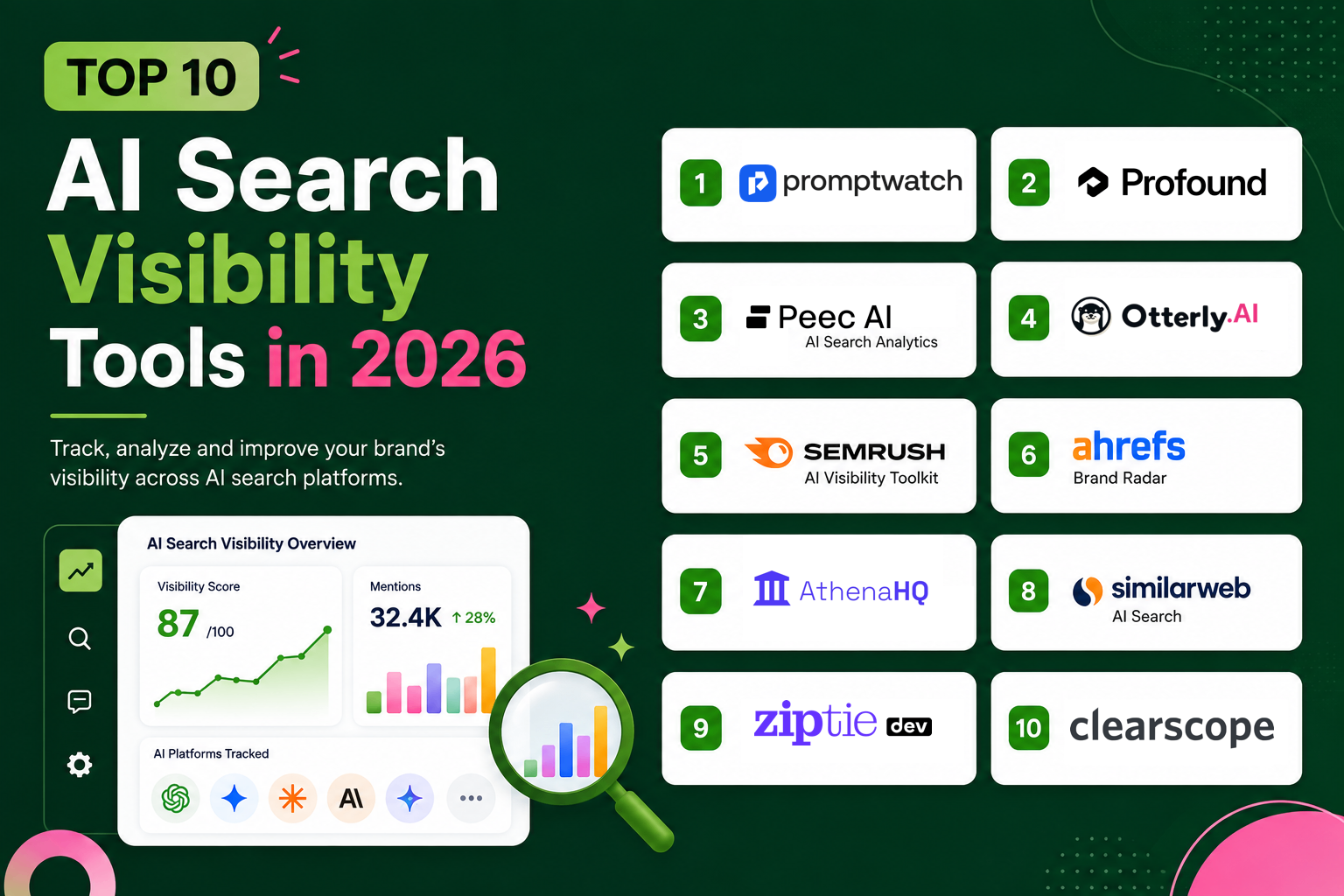
Top 10 AI Search Visibility Tools in 2026
AI-powered search is rapidly changing how people discover brands online. Instead of clicking through a list of blue links, users are increasingly asking ChatGPT, Google AI Overviews, Gemini, Perplexity, Claude, and other AI assistants for recommendations. These systems summarize information, cite trusted sources, and recommend products directly, making AI search visibility an important part of every modern SEO strategy. Traditional SEO metrics alone are no longer enough to measure online presence. Businesses now need to understand how often AI models mention their brand, which pages are being cited, how competitors appear in AI-generated answers, and where new opportunities exist. This has given rise to a new category of software known as AI search visibility or Generative Engine Optimization (GEO) tools. These platforms monitor brand mentions across AI search engines, analyze citations, measure share of voice, identify content gaps, and help marketing teams improve their visibility in AI-generated responses. Some focus entirely on AI analytics, while others combine AI visibility with traditional SEO, content optimization, and competitive intelligence. In this guide, we'll compare the best AI search visibility tools available in 2026. Whether you're a startup, SaaS company, agency, ecommerce business, or enterprise marketing team, this guide will help you choose the right platform to monitor and improve your visibility across the next generation of search engines. > SUMMARY > > AI search visibility tools help businesses measure and improve how often their brand appears in AI-generated answers across platforms like ChatGPT, Google AI Mode, Perplexity, Claude, and Gemini. Most platforms monitor AI citations, track prompts, analyze competitors, and provide insights to strengthen visibility in AI search results. > > The best platform depends on your needs, whether you're looking for enterprise monitoring, agency reporting, SEO insights, or AI content optimization. > > * PromptWatch - Best for monitoring AI search visibility, tracking prompts, and measuring brand performance across leading AI search engines. > * Profound - Ideal for enterprise AI visibility with prompt tracking, citation monitoring, and brand sentiment analysis. > * Peec AI - Built for agencies with competitor tracking, prompt analytics, and multi-brand reporting. > * Otterly AI - Helps brands understand and improve their visibility across AI search platforms with actionable optimization insights. > * Semrush AI Visibility Toolkit - Best for SEO teams that want to combine traditional search analytics with AI visibility tracking. > > Other leading AI search visibility tools include Ahrefs Brand Radar, AthenaHQ, and Similarweb AI Brand Visibility, which offer capabilities such as AI citation tracking, competitive intelligence, brand monitoring, and visibility analytics. COMPARISON TABLE | Tool | Best For | Core Feature | Starting Price | Free Plan | Platform | | : | : | : | : | : | : | | Promptwatch | Enterprise AI search optimization | AI visibility monitoring, prompt tracking, citation analysis, AI crawler analytics, competitor tracking, AI content agents | From $95/month | 7-day free trial | Cloud SaaS | | Profound | Enterprise AI visibility | AI brand monitoring, citations & sentiment | From $99/mo | ✗ | Cloud SaaS | | Peec AI | Agencies | Prompt tracking & AI share of voice | From $95/mo | ✗ | Cloud SaaS | | Otterly AI | AI search optimization | AI visibility tracking, prompt monitoring, competitor analysis, GEO insights | Custom | ✗ | Cloud SaaS | | Ziptie | AI search monitoring | Prompt tracking & GEO analytics | Custom | ✗ | Cloud SaaS | | Ahrefs Brand Radar | Existing Ahrefs users | AI citations & brand mentions | Included in Ahrefs plans | ✗ | Cloud SaaS | | AthenaHQ | Ecommerce & growth teams | AI visibility tied to revenue | From $295/mo | Limited | Cloud SaaS | | Clearscope | AI search content optimization | AI prompt tracking, content optimization, topic research, AI content grading, AI visibility tracking, content briefs | From $129/month | 14-day free trial | Cloud SaaS | | Similarweb AI Brand Visibility | Competitive intelligence | AI traffic & brand visibility analytics | Custom | ✗ | Cloud SaaS | | Semrush AI Visibility Toolkit | Existing Semrush users | AI visibility + SEO insights | $99/mo | Limited | Cloud SaaS | | Scrunch | Enterprise brands | AI visibility & governance | Custom | ✗ | Cloud SaaS | | Writesonic AI Visibility Tracker | AI search visibility + content optimization | AI visibility tracking, GEO optimization, AI Bot Analytics, AI Article Writer, competitor monitoring, Action Center, site audits | From $79/mo | ✓ | Cloud SaaS | 1. PROMPTWATCH Unlike traditional SEO platforms that primarily measure rankings and traffic, Promptwatch is built specifically for AI search optimization. The platform helps brands understand how they appear across ChatGPT, Gemini, Claude, Perplexity, Google AI Overviews, and other AI search engines while providing actionable insights to improve visibility. It combines AI visibility monitoring, citation analysis, prompt tracking, and AI-powered content optimization in a single platform. Promptwatch tracks real user prompts to show when and how AI models mention a brand, which sources they cite, and how competitors perform for the same queries. Its citation analysis identifies the websites and content types influencing AI-generated answers, while Agent Analytics monitors AI crawler activity to reveal which pages are being discovered, indexed, and cited. This helps marketing teams understand not only where they are visible, but also why AI models recommend certain brands over others. Another standout capability is its AI-powered Content Agents. Instead of simply reporting visibility metrics, Promptwatch analyzes citation gaps, generates AI-optimized content briefs, performs competitor analysis, and recommends content that is more likely to be referenced by AI search engines. The platform also supports country, state, and city-level tracking, API and MCP access, and integrations with major CDNs, making it suitable for businesses and agencies managing AI search performance at scale. With its combination of prompt monitoring, citation intelligence, crawler analytics, and AI-driven content optimization, Promptwatch serves as an end-to-end AI Search Optimization (AISO) platform rather than a standalone monitoring tool. It is particularly well suited for enterprises, agencies, and SEO teams looking to measure, improve, and scale their visibility across the rapidly growing AI search ecosystem. PRICING | Plan | Pricing | | : | : | | 7-day Free Trial | Available | | Essential | From $95/month | | Professional | From $245/month | | Business | From $579/month | | Enterprise | Custom pricing | BEST FOR Enterprise SEO teams, agencies, SaaS companies, publishers, and brands that want to monitor AI visibility, analyze citations, track competitors, and create content optimized for AI search engines. 2. PROFOUND As AI-powered search becomes a primary discovery channel, businesses need more than traditional SEO reports to understand their online presence. Search engines like ChatGPT, Google AI Overviews, Perplexity, Claude, and Gemini generate answers instead of simply listing web pages, making it increasingly important to know when and why your brand is mentioned. Profound is one of the first enterprise platforms built specifically for this purpose, helping brands monitor, measure, and improve their visibility across leading AI search engines. Rather than tracking keyword rankings alone, Profound analyses how AI models respond to thousands of prompts related to your business. It identifies when your brand appears in AI-generated answers, which sources are being cited, how competitors compare, and where opportunities exist to improve visibility. This gives marketing teams a much clearer understanding of their AI search performance than traditional SEO metrics alone. One of Profound's strongest capabilities is its comprehensive analytics dashboard. Businesses can monitor AI citations, analyse brand sentiment, track changes in share of voice, and evaluate prompt performance across multiple large language models. The platform also provides recommendations that help marketers optimise content likely to be referenced by AI systems, making it useful for both SEO and content strategy. Profound is designed primarily for enterprise organisations managing multiple products, brands, or international markets. Its reporting features allow teams to monitor AI visibility over time, compare performance against competitors, and measure how content updates influence AI-generated answers. As AI search continues evolving, these insights help businesses understand where they are gaining visibility and where further optimisation is needed. Although Profound focuses more on enterprise customers than on smaller businesses, it remains one of the most comprehensive AI visibility platforms currently available. Companies investing heavily in AI search optimisation can use its analytics to make informed decisions instead of relying on assumptions about how AI models reference their content. PRICING Profound offers custom pricing based on business size, monitoring requirements, and the number of brands being tracked. BEST FOR Enterprise businesses, global brands, large marketing teams, and organisations looking for comprehensive AI search visibility analytics across multiple AI search platforms. 3. PEEC AI For agencies and SEO teams managing multiple clients, monitoring AI search manually can quickly become impossible. Peec AI is designed specifically for Generative Engine Optimization (GEO), giving businesses a centralized platform to track how brands appear across AI-powered search engines. It combines prompt monitoring, citation analysis, competitor benchmarking, and reporting into a workflow built for both agencies and in-house marketing teams. The platform continuously evaluates thousands of prompts related to your business and records how AI platforms respond. It identifies when your brand appears, which competitors receive more visibility, what sources are being cited, and how your share of voice changes over time. This helps marketers understand not only whether they are visible in AI search, but also why competitors may be outperforming them. Peec AI also provides detailed competitor analysis and historical reporting, allowing teams to measure the impact of content updates and optimization campaigns. Because AI search results evolve rapidly, ongoing monitoring makes it easier to identify new opportunities before they become highly competitive. Agencies can manage multiple client workspaces, generate branded reports, and monitor several industries from a single dashboard. Another advantage is its collaboration features. Multiple users can access projects, compare brands, and share insights across marketing, SEO, and content teams. This makes Peec AI particularly valuable for organizations managing AI visibility across several clients or business units. Although newer than some traditional SEO platforms, Peec AI has quickly established itself as one of the leading dedicated AI visibility solutions by focusing entirely on helping businesses succeed in conversational search. 4. OTTERLY AI For businesses taking their first steps into AI search optimization, Otterly AI offers one of the simplest ways to monitor brand visibility across leading AI platforms. Instead of focusing on traditional keyword rankings, the platform tracks how often your website, products, and content appear in AI-generated responses from search engines such as ChatGPT, Google AI Overviews, and Perplexity. Its straightforward interface makes it accessible for startups, content creators, and marketing teams that want actionable insights without the complexity of enterprise software. Otterly AI automatically monitors a collection of prompts related to your business and records how AI platforms respond over time. It highlights whether your brand is mentioned, which competitors appear instead, and which webpages are most frequently cited. By tracking these changes continuously, businesses can quickly identify opportunities to improve their AI search presence and measure whether new content is increasing visibility. The platform also provides historical reporting, allowing teams to compare AI visibility across weeks or months instead of relying on one-time manual checks. Because AI search results change frequently, this ongoing monitoring helps marketers understand long-term trends and evaluate the effectiveness of their content strategy. Although Otterly AI doesn't include the extensive competitive intelligence found in larger enterprise platforms, its affordability and ease of use make it one of the best entry points for businesses beginning their Generative Engine Optimization (GEO) journey. PRICING | Plan | Pricing | | : | : | | Starter | $29/month | | Pro | $189/month | | Enterprise | Custom pricing | BEST FOR Startups, bloggers, content creators, small businesses, and marketing teams looking for an affordable AI search visibility monitoring platform. 5. SEMRUSH AI VISIBILITY TOOLKIT For businesses already using Semrush as their primary SEO platform, Semrush AI Visibility Toolkit provides a natural extension into AI search monitoring. Instead of managing a separate platform for Generative Engine Optimization (GEO), users can analyse AI visibility alongside keyword rankings, backlink performance, competitor research, and technical SEO from the same dashboard. The toolkit measures how frequently your brand appears in AI-generated responses across supported AI search engines while also identifying which competitors receive more visibility for similar prompts. Rather than simply counting mentions, it analyses citations, prompt performance, market share, and AI-generated recommendations, allowing marketing teams to understand how AI systems interpret their content. One of the platform's biggest advantages is its integration with the wider Semrush ecosystem. Users can move from identifying an AI visibility gap to researching keywords, analysing backlinks, improving content, and monitoring organic rankings without switching between multiple applications. This unified workflow makes it particularly attractive for established SEO teams that already rely on Semrush for daily optimisation. The toolkit also highlights emerging opportunities where businesses can improve AI visibility through stronger topical authority, more authoritative citations, or better content coverage. As Google AI Overviews and conversational search continue expanding, these recommendations help businesses adapt their SEO strategy to new search behaviours instead of focusing only on traditional rankings. For companies already investing in Semrush, the AI Visibility Toolkit provides one of the easiest ways to begin measuring AI search performance without adding another specialised platform to their marketing stack. PRICING The AI Visibility Toolkit is available as part of Semrush AI Toolkit, with plans starting at approximately $99/month. BEST FOR SEO professionals, agencies, content marketers, and businesses already using Semrush that want to measure and improve their visibility across AI-powered search engines. 6. ZIPTIE As AI search platforms become a major source of product discovery, simply tracking keyword rankings is no longer enough. Businesses also need to understand how frequently AI models recommend their brand, which prompts trigger those mentions, and why competitors appear more often. Ziptie is built specifically to answer these questions by monitoring brand visibility across leading AI search engines and helping businesses improve their presence in AI-generated responses. Rather than focusing on traditional SEO metrics, Ziptie continuously tracks prompts related to your products, services, and industry. It analyses responses from AI platforms to determine whether your brand is mentioned, which sources are cited, and how your visibility changes over time. This provides marketers with a clearer understanding of their performance across conversational search engines without manually testing hundreds of prompts every week. One of Ziptie's biggest strengths is its developer-friendly approach. The platform provides detailed prompt analytics, citation tracking, competitor comparisons, and historical reporting that help teams identify opportunities to improve their AI search presence. Businesses can monitor how content updates influence AI-generated answers while discovering new topics that deserve additional coverage. Because AI search is evolving rapidly, continuous monitoring is becoming increasingly valuable. Ziptie helps businesses detect changes early so marketing teams can adapt their content strategy before competitors gain an advantage. Its streamlined interface and focused feature set make it particularly useful for companies that want dedicated AI visibility analytics without the complexity of a broader enterprise SEO suite. PRICING Ziptie offers custom pricing based on monitoring requirements and business size. BEST FOR Developers, SaaS companies, startups, and marketing teams looking for dedicated AI search visibility tracking and prompt analytics. 7. AHREFS BRAND RADAR Understanding whether your brand is being mentioned by AI search engines is becoming just as important as tracking backlinks or keyword rankings. Ahrefs Brand Radar extends Ahrefs' SEO platform by helping businesses measure how frequently their brand appears in AI-generated answers and how that visibility compares with competitors. For teams already using Ahrefs, it provides a natural way to monitor AI search performance alongside traditional SEO metrics. Brand Radar continuously analyses AI-generated responses across supported search platforms to identify brand mentions, citations, and overall share of voice. Rather than simply reporting how often a brand appears, it highlights the topics and prompts that generate visibility, making it easier for marketers to understand where additional content or authority may be needed. Because Brand Radar is integrated into the broader Ahrefs ecosystem, users can quickly move from identifying an AI visibility gap to researching keywords, analysing backlinks, or auditing content without leaving the platform. This unified workflow saves time while helping SEO teams connect AI visibility improvements with traditional organic search performance. For businesses already relying on Ahrefs, Brand Radar offers an efficient way to begin monitoring AI search without investing in a completely separate analytics platform. It complements existing SEO workflows while providing valuable insights into how AI search engines are reshaping online discovery. PRICING Brand Radar is available as part of selected Ahrefs subscription plans, with pricing starting from $129/month for the broader Ahrefs platform. BEST FOR SEO professionals, agencies, publishers, and businesses already using Ahrefs that want to measure brand visibility across AI-powered search engines. 8. SIMILARWEB AI BRAND VISIBILITY Understanding how people discover your brand through AI search requires more than monitoring mentions alone. Businesses also need to know how AI search contributes to website traffic, how competitors are performing, and which prompts drive the highest visibility. Similarweb AI Brand Visibility extends Similarweb's market intelligence platform by providing insights into brand performance across AI-powered search experiences. The platform analyses how frequently brands appear in AI-generated responses while measuring share of voice, citation trends, and competitive performance across multiple industries. Unlike traditional SEO platforms that primarily focus on rankings, Similarweb combines AI visibility data with broader digital market intelligence, allowing businesses to understand AI search within the context of their overall online presence. Another major advantage is competitor benchmarking. Marketing teams can compare their AI visibility against competing brands, identify content gaps, and discover emerging trends before they become highly competitive. Because Similarweb already collects extensive web traffic and market intelligence data, these AI insights can be connected directly with broader digital marketing performance, helping businesses make more informed strategic decisions. For larger organisations, this integrated approach provides valuable context that goes beyond simple mention tracking. Instead of asking whether a brand appears in AI responses, teams can understand how AI visibility relates to traffic growth, market share, and customer discovery across different digital channels. PRICING Similarweb AI Brand Visibility is available through custom enterprise pricing. BEST FOR Enterprise businesses, large marketing teams, competitive intelligence analysts, and brands looking to combine AI visibility with broader digital market insights. 9. ATHENAHQ As AI search becomes a growing source of website traffic, marketers need more than visibility reports. They also need to understand whether AI-generated mentions are driving business results. AthenaHQ is built around this idea by combining AI search visibility tracking with revenue-focused analytics. Instead of simply reporting how often a brand appears in AI-generated answers, the platform helps businesses understand how AI visibility influences customer acquisition, conversions, and overall marketing performance. AthenaHQ continuously monitors prompts across major AI search platforms, including ChatGPT, Google AI Overviews, Gemini, Claude, and Perplexity. It tracks brand mentions, citation sources, competitor visibility, and share of voice while identifying content opportunities that can improve AI search performance. The platform also measures changes over time, allowing marketing teams to evaluate whether new content and optimization efforts increase AI visibility. One of AthenaHQ's strongest features is its business-focused reporting. Rather than treating AI search as a standalone metric, it connects visibility data with marketing outcomes, helping businesses prioritize the content and topics that generate meaningful results. Teams can monitor competitors, discover emerging trends, and identify which AI prompts influence customer discovery the most. For growing SaaS companies and enterprise marketing teams, AthenaHQ provides a practical way to measure the impact of AI search while integrating those insights into broader SEO and growth strategies. As conversational search continues expanding, understanding the business value behind AI visibility is becoming just as important as tracking rankings. PRICING | Plan | Pricing | | : | : | | Growth | From $295/month | | Enterprise | Custom pricing | BEST FOR Growth-stage startups, SaaS companies, enterprise marketing teams, and businesses that want to connect AI search visibility with revenue and marketing performance. 10. CLEARSCOPE While many AI visibility platforms focus primarily on monitoring brand mentions, Clearscope takes a content-first approach by helping businesses create pages that perform well in both traditional search engines and AI-powered search experiences. The platform combines content optimization, topic research, AI prompt tracking, and AI visibility monitoring to help marketers improve the chances of being referenced in ChatGPT, Google AI Mode, Gemini, and future AI search platforms. Clearscope brings together semantic content analysis, AI-assisted drafting, and search intent recommendations into a single workflow. Its content editor provides real-time optimization scores, identifies important topics and entities to cover, and generates detailed content briefs based on top-performing pages. The platform also includes AI Drafts and Topic Exploration, enabling teams to research, write, and optimize content that aligns with both user intent and modern AI search systems. A major addition is its AI visibility suite, which allows users to track prompts across ChatGPT and Gemini, monitor brand mentions, analyze AI citations, and understand the web searches AI models perform before generating responses. Rather than only showing visibility metrics, Clearscope provides actionable recommendations that help improve topical authority, content quality, and the likelihood of appearing in AI-generated answers. Integrations with Google Docs, Microsoft Word, and WordPress also streamline collaboration for editorial teams. Although Clearscope is best known as an enterprise SEO content optimization platform, its growing focus on Answer Engine Optimization (AEO) and AI visibility makes it a valuable solution for organizations that want to create authoritative content while measuring how it performs across both search engines and AI assistants. PRICING | Plan | Pricing | | : | : | | 14-day Free Trial | Available | | Essentials | From $129/month | | Business | From $399/month | | Enterprise | Custom pricing | BEST FOR Content marketing teams, enterprise SEO teams, publishers, agencies, and businesses looking to optimize content for both search engines and AI-powered search while tracking AI visibility and brand citations. 11. SCRUNCH For enterprise organisations, monitoring AI visibility involves more than measuring brand mentions. Teams also need governance, reporting, collaboration, and clear insights into how AI models represent their products and messaging. Scrunch is designed to help businesses manage this growing challenge by providing enterprise-grade AI search monitoring and brand intelligence. Scrunch continuously evaluates how leading AI platforms describe your business, what sources they rely on, and how competitor visibility changes over time. Instead of manually testing prompts across multiple AI models, businesses receive centralised reporting that highlights brand mentions, citation sources, sentiment, and visibility trends. This helps marketing and communications teams maintain a consistent understanding of how AI systems present their brand. One of Scrunch's strengths is its focus on collaboration. Reports can be shared across SEO, PR, content, and executive teams, making AI visibility part of broader marketing and brand governance efforts. As organisations increasingly invest in AI optimisation, having a shared view of brand performance helps different departments align their strategies and respond more quickly to changes in AI-generated search results. While Scrunch is primarily aimed at larger organisations, its combination of AI monitoring, reporting, and enterprise collaboration makes it a valuable platform for businesses that view AI search as a strategic marketing channel rather than simply another SEO metric. PRICING Scrunch offers custom enterprise pricing based on business requirements and monitoring volume. BEST FOR Enterprise brands, corporate marketing teams, communications departments, and organisations managing AI search visibility across multiple products or markets. 12. WRITESONIC AI VISIBILITY TRACKER Unlike many AI visibility platforms that only monitor brand mentions, Writesonic AI Visibility Tracker combines AI search monitoring with content creation and optimization in a single platform. It enables businesses to track how their brand appears across ChatGPT, Gemini, and Google AI Overviews while providing actionable recommendations to improve visibility. Recent updates have expanded the platform beyond GEO, adding AI Bot Analytics, competitor monitoring, and an AI Visibility Action Center that helps prioritize content, technical SEO, and citation opportunities. Writesonic integrates AI writing, SEO research, AI visibility tracking, and website auditing into one workflow. Users can generate long-form articles, optimize existing content, run site audits, monitor AI search performance, and identify gaps where competitors are being cited instead. The platform also offers AI-powered content strategy recommendations and automated SEO improvements, making it easier to publish content designed for both traditional search engines and AI-powered answer engines. A notable addition is the Action Center, which turns AI visibility insights into prioritized recommendations. Instead of only showing where visibility is lacking, Writesonic suggests on-page improvements, technical fixes, and content opportunities that can help increase citations in AI-generated responses. Teams can also monitor prompt performance, track sentiment, and measure visibility trends without relying on multiple SEO and analytics tools. Although Writesonic remains a strong AI writing platform, its expanded AI Search Visibility suite makes it a practical option for startups, agencies, and marketing teams looking for an all-in-one solution that combines AI visibility tracking, GEO optimization, content creation, and SEO workflows. PRICING | Plan | Pricing | | : | : | | Free Trial | Available | | Starter | From $79/month | | Basic | From $199/month | | Growth | From $399/month | | Enterprise | Custom pricing | BEST FOR Businesses and content teams looking for an all in one platform for AI search visibility tracking, GEO optimization, and AI-powered content creation. CONCLUSION AI search is rapidly becoming an important channel for online discovery, making visibility in ChatGPT, Google AI Overviews, Gemini, Claude, Perplexity, and other AI assistants just as valuable as traditional search rankings. Instead of relying solely on keyword positions, businesses now need to understand how AI models reference their brand, which sources they cite, and where new opportunities exist to improve visibility. Each platform in this guide addresses a different aspect of AI search optimization. PromptWatch, Profound and Peec AI specialize in enterprise-grade AI visibility monitoring, while Semrush AI Visibility Toolkit and Ahrefs Brand Radar extend familiar SEO platforms with AI search insights. Otterly AI offers an accessible solution for smaller teams, Writesonic AI Visibility Tracker helps create AI-friendly content, and platforms such as Ziptie, Similarweb AI Brand Visibility, Scrunch, and AthenaHQ provide specialized analytics for competitive intelligence and brand monitoring. The right AI search visibility tool depends on your business goals, existing SEO workflow, and budget. Whether you're a founder, agency, marketer, or enterprise team, investing in AI visibility today can help your brand stay discoverable as search continues shifting toward conversational AI. Businesses that monitor, optimize, and adapt their content for AI-powered search will be better positioned to build authority, increase brand awareness, and capture organic traffic in the years ahead.
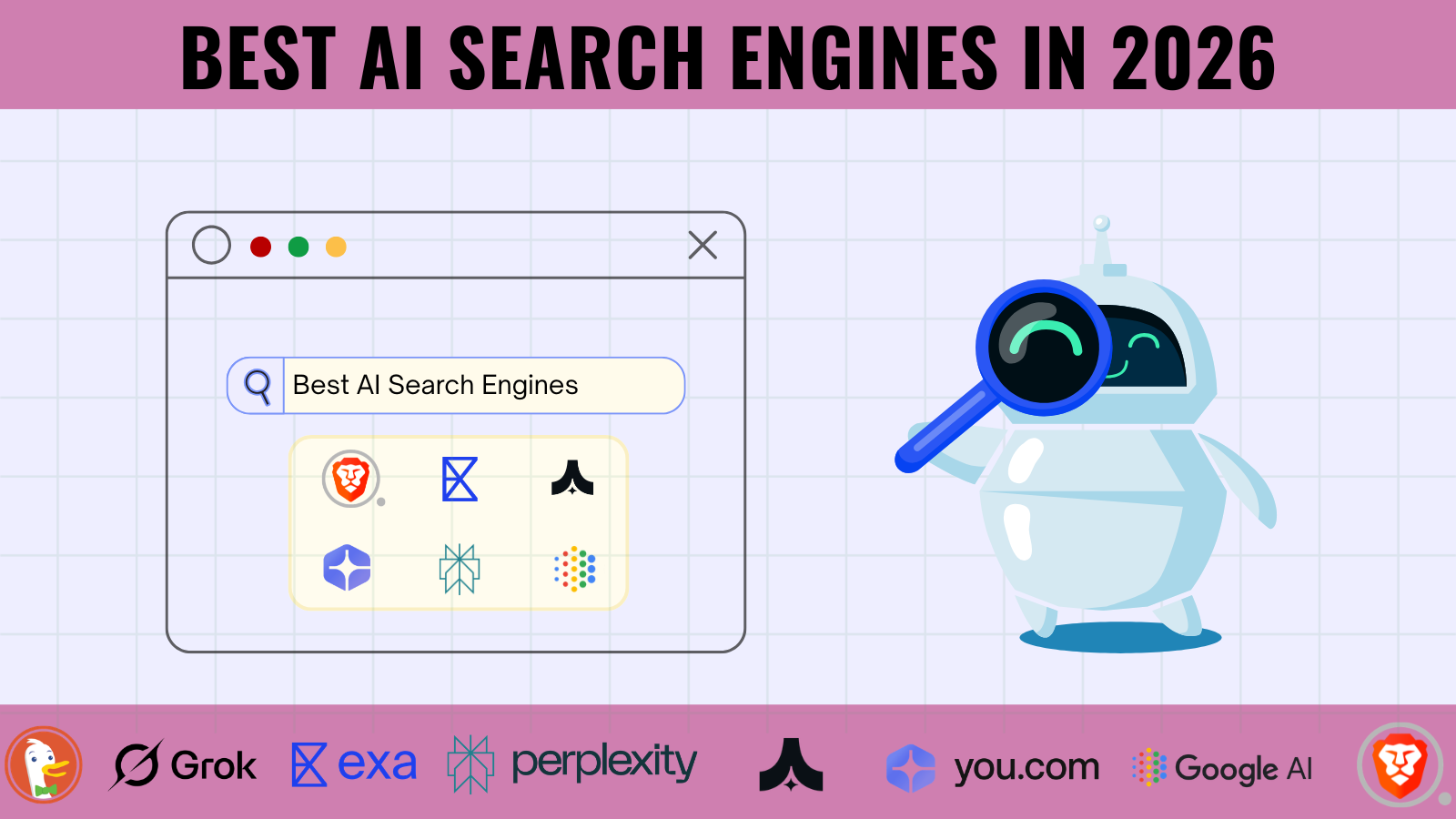
Best AI Search Engines in 2026
Search has changed dramatically over the last few years. Opening ten browser tabs, comparing articles, and manually verifying information is no longer the fastest way to find answers. Modern AI search engines combine large language models with real-time web indexing, citations, and reasoning to deliver answers that are easier to understand while still allowing users to verify the sources. The shift is particularly noticeable for developers, founders, researchers, marketers, and students. Instead of searching with several keywords and filtering through pages of links, users can ask complete questions, upload documents, compare products, debug code, summarize research papers, or generate structured reports in a single conversation. Traditional search engines still play an important role, especially for discovering websites and recent news. However, AI-powered search is becoming the preferred choice for complex questions that require explanation rather than a list of links. This guide explores the best AI search engines available in 2026, comparing where each one performs well, where it falls short, and which type of user benefits most from it. > SUMMARY > > AI search engines combine web search with large language models (LLMs) to generate direct, conversational answers instead of only displaying links. Many also provide citations, summarize webpages and documents, support follow-up questions, and help users find information faster. > > The best AI search engine depends on your workflow, whether you're researching, coding, creating content, or looking for quick answers. > > * Perplexity AI - Best for research, fact-checking, and citation-based answers. > * ChatGPT Search - Ideal for everyday search, writing, brainstorming, and productivity. > * Google AI Mode - Best for combining Google's search index with AI-generated summaries. > * You.com - Great for productivity, AI assistants, and customizable search experiences. > * Phind AI - Built specifically for developers, coding, debugging, and technical documentation. > > Other notable AI search engines include You.com, Exa, Felo AI, Komo AI, Duck.ai, and Grok, each offering unique features for productivity, AI applications, multilingual research, conversational search, private AI chat, and real-time web search. BEST AI SEARCH ENGINES COMPARED | AI Search Engine | Best For | Web Access | Citation Support | Developer API | Free Tier | Starting Paid Price | What You Get | | | | | | | | | | | Perplexity AI | Research & general search | Live | Full | ✓ | ✓ | $20/month (Pro) | More Pro searches, advanced AI models (GPT, Claude, Gemini), file analysis, image generation, API credits | | ChatGPT Search | Daily search & productivity | Live | Full | Limited | ✓ | $20/month (Plus) | GPT-5, faster responses, advanced reasoning, Deep Research, larger file uploads, higher usage limits | | Google AI Mode | General web search | Live | Full | ✗ | ✓ | Free | AI-powered search summaries, follow-up questions, Google Search integration | | You.com | Productivity & AI workspace | Live | Full | ✓ | ✓ | $20/month (Pro) | Premium AI models, higher limits, AI agents, document analysis, custom workflows | | Phind AI | Developers | Live | Full | ✓ | ✓ | $20/month (Pro) | Faster searches, GPT-5 and Claude access, larger context windows, more developer queries | | Brave Search AI | Privacy | Live | Full | ✓ | ✓ | $14/month (Premium) | Ad-free search, higher AI usage limits, premium privacy features | | Exa | AI applications & RAG | Live | Full | ✓ | Limited | Pay-as-you-go (API) | Semantic search API, web crawling, RAG-ready search, structured results | | Felo AI | Knowledge discovery | Live | Full | ✗ | ✓ | ~$15/month (Pro) | More AI searches, premium models, document analysis, higher usage limits | | Komo AI | Conversational search | Live | Full | ✗ | ✓ | ~$15/month (Pro) | Unlimited AI search, premium models, faster responses, increased usage | | Duck.ai | Private AI conversations | Limited | Partial | ✗ | ✓ | Free | Anonymous AI chat with multiple models, no account required | | Grok | Real-time search & X integration | Live | Full | ✓ | ✓ | $30/month (SuperGrok) | Higher usage limits, advanced Grok models, DeepSearch, Think mode, image generation, API access (separate API pricing applies) | WHAT MAKES AN AI SEARCH ENGINE DIFFERENT? A traditional search engine primarily retrieves pages that appear relevant to a query. Ranking algorithms determine which pages should appear first based on hundreds of signals such as relevance, authority, freshness, and user experience. An AI search engine introduces another layer between the user and the web. After retrieving relevant information, it processes multiple sources using a large language model before generating a conversational answer. Instead of asking users to manually compare 10 articles, it combines the most relevant information into a structured explanation and often provides citations to the original sources. This workflow significantly reduces the time required to understand unfamiliar topics, compare software, analyze documentation, or summarize technical reports. For developers, this means spending less time switching between Stack Overflow, official documentation, GitHub repositories, and blog posts. For founders and marketers, it becomes easier to compare competitors, research industries, and validate ideas without opening dozens of tabs. HOW AI SEARCH ENGINES WORK Although implementations vary, most AI search engines follow a similar pipeline. A user's prompt is first analyzed to understand its intent. The system then retrieves information from web indexes, proprietary databases, academic repositories, or trusted knowledge sources. The retrieved content is ranked according to relevance before being processed by one or more language models. The language model generates a natural-language response, often accompanied by citations, references, images, or suggested follow-up questions. Some platforms also maintain conversational memory, allowing users to continue exploring the same topic without repeating previous context. The quality of the final answer depends on several factors, including the freshness of indexed content, retrieval accuracy, the reasoning capabilities of the underlying language model, and transparency of citations. BEST AI SEARCH ENGINES PERPLEXITY AI Official Website: https://www.perplexity.ai/ Perplexity AI combines conversational AI with real-time web search to deliver direct answers backed by citations. Instead of presenting a list of links, it summarizes information from multiple trusted sources while allowing users to explore the original references for deeper research. The platform excels at follow-up conversations, enabling users to refine questions naturally without restarting their search. It also supports document analysis, image understanding, and research collections, making it suitable for long-form research and knowledge management. Perplexity frequently references official documentation, GitHub repositories, technical blogs, and research papers, making it a popular choice among developers, researchers, consultants, and startup founders. Best For Research, fact-checking, technical documentation, market analysis, and citation-based web search. CHATGPT SEARCH Official Website: https://chatgpt.com/ ChatGPT Search combines conversational AI with live web search, allowing users to ask natural questions while receiving answers enriched with current information and source references. Rather than switching between a chatbot and a traditional search engine, users can research, brainstorm, and solve problems within a single conversation. Its conversational memory makes complex research easier by maintaining context across multiple follow-up questions. Beyond web search, ChatGPT Search also assists with writing, coding, summarization, planning, and document analysis, making it a versatile AI assistant for both personal and professional use. Best For Every day search, writing, coding, productivity, brainstorming, and multi-step research. GOOGLE AI MODE Google AI Mode enhances traditional Google Search by combining AI-generated summaries with Google's extensive search index. Instead of only displaying ranked webpages, it provides concise answers while preserving access to the original sources, allowing users to continue exploring the web when needed. Built on Google's search infrastructure, it performs particularly well for everyday questions, shopping research, travel planning, local information, and discovering recent news. The familiar search experience makes it easy for users transitioning from traditional search to AI-assisted search. Best For General web search, shopping, travel planning, local information, and everyday research. PHIND AI Official Website: https://phindai.org/ Phind is an AI search engine built specifically for developers. It combines conversational AI with web search to help users understand programming concepts, debug code, compare frameworks, explain APIs, and explore technical documentation without manually searching across multiple websites. The platform maintains context throughout coding sessions, allowing developers to ask follow-up questions while referencing documentation, GitHub repositories, and other technical resources. Whether learning a new framework or troubleshooting production issues, Phind streamlines technical research and software development. Best For Software development, debugging, API documentation, programming tutorials, and technical research. GROK Official Website: https://grok.com/ Grok is an AI-powered search engine and conversational assistant developed by xAI. It combines advanced reasoning with real-time web search to answer questions, summarize news, generate content, write code, analyze images, and assist with research. Since it is integrated with X (formerly Twitter), Grok can also surface insights from public conversations, making it particularly useful for tracking breaking news and trending topics. Unlike traditional search engines that primarily return links, Grok generates direct answers while allowing users to ask follow-up questions and refine searches naturally. It also supports multimodal interactions, enabling users to analyze images alongside text-based queries. Best For Real-time news, web research, coding assistance, content creation, market research, and trending discussions. YOU.COM Official Website: https://you.com/ You.com combines AI search with a complete productivity workspace. Alongside conversational search, it includes AI writing, coding assistance, document analysis, image generation, and workflow automation, allowing users to complete research and content creation without switching between multiple applications. Its integrated approach makes it particularly useful for professionals, startup teams, marketers, consultants, and developers who frequently move between research, writing, and coding throughout the day. Best For Productivity, AI writing, coding, document analysis, and collaborative research. BRAVE SEARCH AI Official Website: https://search.brave.com/ Brave Search AI combines conversational AI with an independent search index while emphasizing user privacy. Unlike many search platforms that rely heavily on third-party search providers, Brave indexes the web independently and minimizes user tracking during searches. The platform delivers AI-generated summaries with citations while maintaining a privacy-first approach. This makes it especially appealing for users who want accurate search results without extensive personalization or advertising profiles. Best For Privacy-focused search, technical research, software comparisons, and everyday web browsing. EXA Official Website: https://exa.ai/ Exa is an AI-native search engine designed for semantic search and Retrieval-Augmented Generation (RAG). Rather than relying solely on keyword matching, it understands the meaning behind queries to retrieve highly relevant webpages and documents. Its powerful API has made Exa a popular choice for developers building AI agents, research assistants, knowledge management systems, and enterprise search applications that require access to current web information. Best For Semantic search, AI agents, RAG applications, developer tools, and AI-powered search infrastructure. FELO AI Official Website: https://felo.ai/ Felo AI focuses on knowledge discovery by organizing information into structured, easy-to-follow research paths. Instead of simply answering questions, it encourages users to explore related concepts, compare ideas, and build a deeper understanding of complex topics. Its conversational interface and multilingual capabilities make it well suited for students, researchers, founders, and professionals conducting market research, competitive analysis, or academic studies. Best For Knowledge discovery, multilingual research, learning, and exploratory analysis. KOMO AI Official Website: https://komo.ai/ Komo AI is a conversational search engine designed for idea exploration and interactive research. Instead of relying on short keyword searches, it encourages users to refine questions naturally, making brainstorming and discovery feel more like a discussion than a traditional search session. Its clean interface and conversational approach make it particularly useful for startup research, creative thinking, learning new subjects, and exploring unfamiliar ideas. Best For Brainstorming, startup research, idea validation, creative exploration, and conversational learning. DUCK.AI Official Website: https://duck.ai/ Duck.ai brings AI-powered conversations to DuckDuckGo's privacy-focused ecosystem. Users can interact with multiple AI models while benefiting from strong privacy protections, minimal data collection, and anonymous conversations without creating an account. The platform is designed for everyday questions, web exploration, summarization, and quick research while keeping user privacy at the center of the experience. Best For Privacy-first AI conversations, everyday search, web exploration, and quick research. WHICH AI SEARCH ENGINE IS BEST FOR DEVELOPERS? Developers often require more than conversational answers. Reliable citations, official documentation, API references, GitHub repositories, and code explanations significantly improve productivity. Phind AI remains one of the strongest choices for software development because its search experience is intentionally designed around programming workflows. Perplexity AI performs exceptionally well when combining technical explanations with trusted citations, making it useful for architecture research and framework comparisons. ChatGPT Search provides an excellent balance between reasoning, coding assistance, and conversational problem solving, while Exa stands out for teams building AI products that require semantic retrieval or retrieval-augmented generation. Choosing between them depends less on raw intelligence and more on workflow. A software engineer debugging production issues has different requirements from a startup building AI agents or a student learning Python. WHICH AI SEARCH ENGINE IS BEST FOR RESEARCH? Research often requires more than finding a single answer. The ability to compare multiple sources, identify contradictions, and continue asking follow-up questions makes AI search substantially more useful than conventional keyword search. Perplexity AI consistently performs well because of its transparent citations and structured responses. Google AI Mode remains valuable when original webpages are just as important as AI summaries. Felo AI encourages deeper exploration of related concepts, making it particularly effective for market research and long-form learning. For academic work, original papers should always remain the primary source. AI search engines should accelerate discovery rather than replace careful reading and verification. CONCLUSION AI search engines have become practical productivity tools rather than experimental technology. They reduce the time required to understand unfamiliar topics, compare software, explore documentation, and conduct research while keeping users connected to the sources. No single platform is the best choice for every situation. Perplexity AI stands out for research and citations, ChatGPT Search delivers an excellent conversational experience, Google AI Mode combines AI summaries with traditional search, Phind remains a favorite among developers, and Exa provides the infrastructure needed for modern AI applications. The most effective workflow combines AI-assisted reasoning with careful verification. Using conversational search to accelerate understanding while validating important information through official sources produces better results than relying exclusively on either AI or traditional search. As language models continue improving and search engines become increasingly context-aware, AI-powered search is likely to become the default way many professionals interact with information on the web.